The most desirable places to holiday right now are the ones that make you work for it. As Rome, Tokyo and the French Riviera drown in crowds, a counter-trend is emerging: destinations so logistically awkward that only the committed bother showing up.
Portugal's Comporta is a good example. Until a highway from Lisbon arrived in the late 1990s, reaching this stretch of Alentejo coast meant hours on single-lane roads or a car ferry from Setubal. Even now, without a car you're at the mercy of scarce ride-shares and a taxi meter that can top €100. The reward: 60 kilometres of wild Atlantic beach backed by rice paddies and umbrella pines, boho-chic boutiques, and a long-held ban on building within 500 metres of the shore that keeps the place feeling raw. It was long a summer hideout for old-money Portuguese families and design figures like Christian Louboutin and Philippe Starck — though word has spread.
Writer Plum Sykes has a name for the appeal: a little friction acts as a natural filter. Her pick, Antiparos in the Greek Cyclades, takes 14 hours from London via Mykonos, two ferries and a small boat. That final crossing has protected the island's single whitewashed village, its tavernas and its low-key regulars — reportedly including Tom Hanks, Barack Obama and Madonna — from Mykonos-style excess. Design-led stays like The Rooster and its eight-suite sister property The Beach House prove remote doesn't mean roughing it.
Even crowded Mallorca is manufacturing remoteness: Belmond's La Residencia is opening Cala Residencia, a private cove reachable only on a guided hike through the UNESCO-listed Serra de Tramuntana. And on France's Atlantic coast, Cap Ferret — a faff to reach via Bordeaux, buses and a shuttle boat — rewards effort with oyster shacks, pine forests and a crowd that's almost entirely French. Starck has just co-created a boutique hotel there, Villa Colette.
The data backs the mood: Skyscanner's Travel Trends 2027 report shows Bishkek, Kyrgyzstan as Australia's biggest breakout destination, with searches up 877 per cent year-on-year.
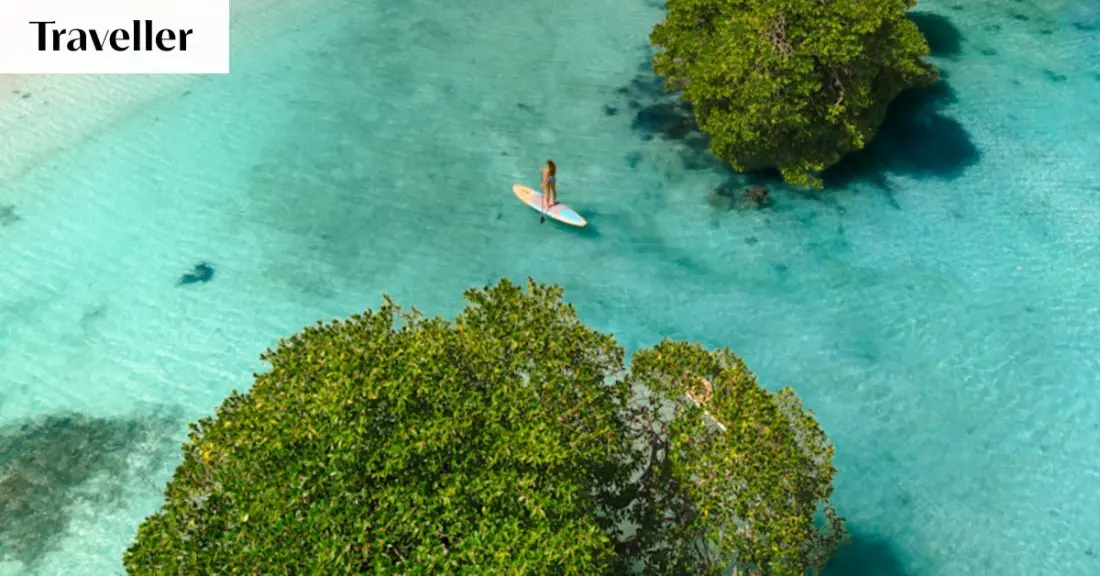
The strongest case study is Niue, a tiny Polynesian nation with around 1,800 residents, reachable only via two flights a week from Auckland. That cap means no more than roughly 450 tourists on the island at any moment. The payoff is extraordinary: crystal waters, healthy reefs, humpback whales (whose calls, some guests complain, keep them awake at night) and sea tracks where a parked car simply means you try the next cove. Large cruise ships are kept out, tourism is tightly managed, and the island's bees produce some of the purest honey on earth.
For travellers burned out on queues and manufactured glamour, the message is simple: the awkward journey is becoming part of the luxury — and the difficulty of getting there may be the only thing still protecting these places.