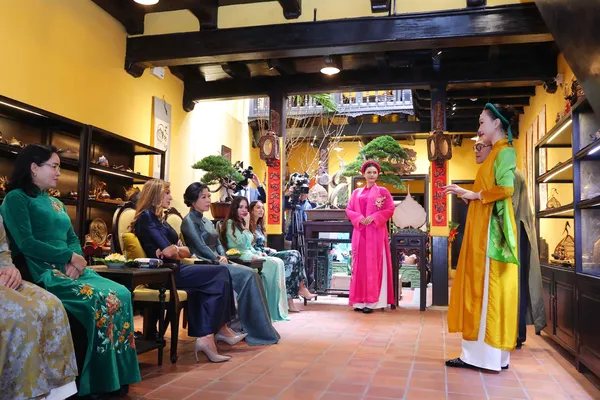
When Azerbaijan's First Vice President Mehriban Aliyeva stopped by an old tube house in Hà Nội's Old Quarter on November 21, it was a reminder that some of the best cultural introductions in Vietnam happen not in museums but in living heritage spaces you can actually visit.
The setting was House No. 87 on Mã Mây Street, a late-19th-century merchant home recognised as a national historical relic in 2004. These narrow 'tube houses' — shopfront at the street, rooms stretching back towards a small courtyard — are the signature architecture of the Old Quarter, and No. 87 preserves the layout and atmosphere of how Hanoians once lived and traded. It hosts regular performances of ca trù, a ceremonial singing tradition that accompanied such houses in their heyday.
The programme laid out many of the experiences travellers can seek out themselves. There was a tea session, complete with a demonstration of lotus-scenting — the laborious Hanoian craft of infusing tea with fresh lotus blossoms — plus tastings of several Vietnamese varieties. Vietnam's tea culture, as host Ngô Phương Ly pointed out, is built on hospitality: offering tea is how conversations begin. Azerbaijan, with its own tea tradition, turned out to be an appreciative audience.
Then came ca trù, the sung poetry genre once performed in these very houses, which Vietnam has been working to revive and pass on. It struck a chord with Aliyeva, a UNESCO Goodwill Ambassador for oral and musical traditions for nearly two decades and a champion of Azerbaijan's mugham singing — the two art forms share an emphasis on highly trained voice and poetry. The visit closed with a display of traditional dress, including the silk áo dài, and a parting gift of calligraphy featuring the character 'Phúc', meaning blessing.
Why does this matter to travellers? Because it's essentially a curated itinerary for an afternoon in the Old Quarter. You can tour surviving heritage houses on Mã Mây Street, book a ca trù performance in an atmospheric period room, and find tea houses around the Old Quarter that serve lotus tea and other Vietnamese specialities. Add a stop at a tailor for silk or an áo dài fitting, and you've replicated most of the diplomatic programme — minus the security detail.
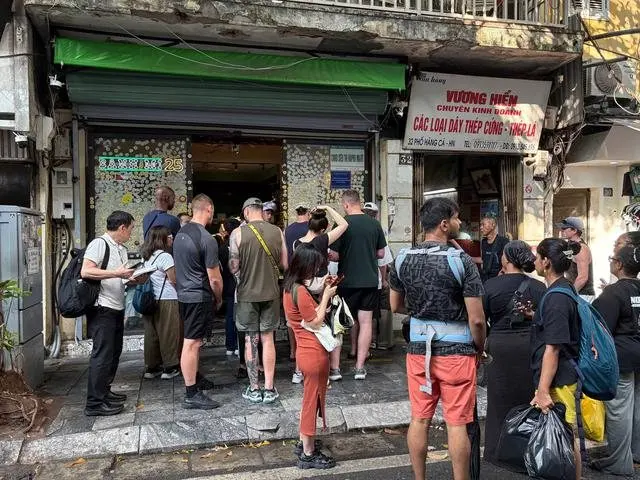
The Old Quarter itself rewards slow walking: 36 ancient streets once organised by trade guild, now a mix of colonial shophouses, street food, silk shops and coffee joints. A couple of hours around Hoàn Kiếm Lake bookending a heritage-house visit makes for one of Hà Nội's most satisfying half-days.