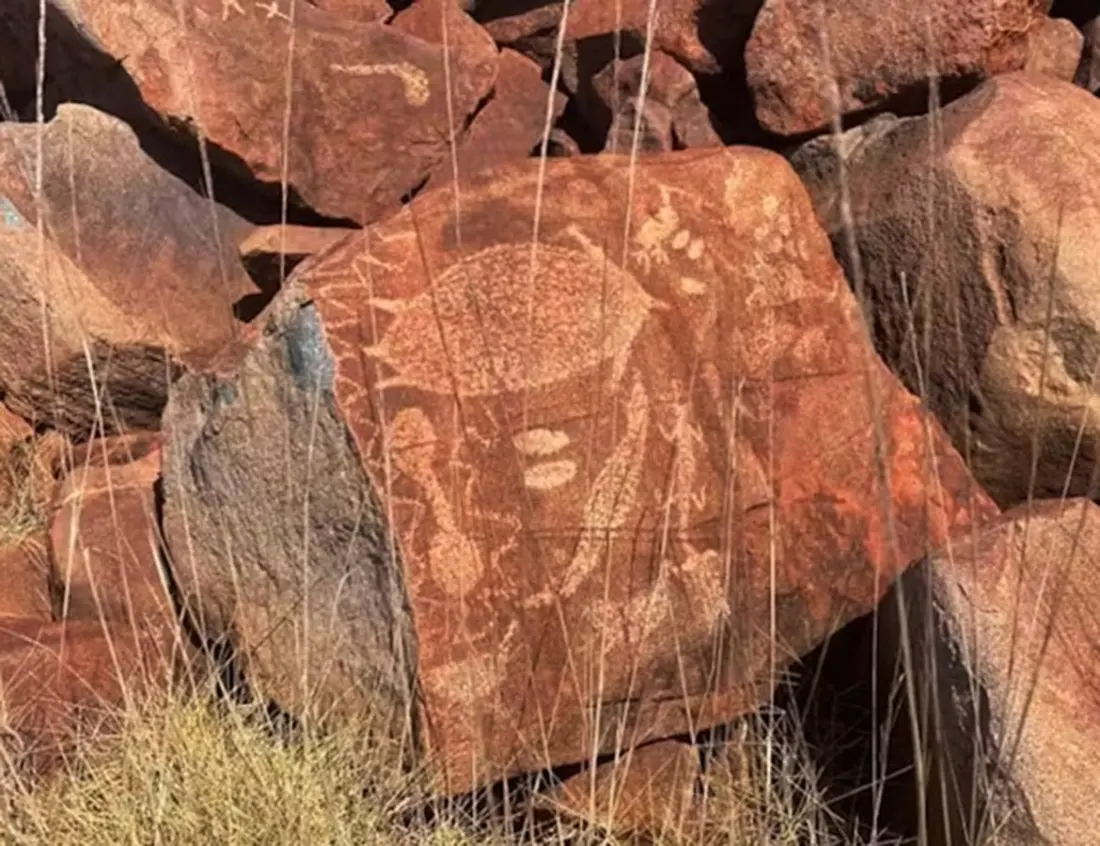
Murujuga, on Western Australia's Burrup Peninsula and the Dampier Archipelago, holds between one and two million petroglyphs carved over at least 50,000 years. It's one of the densest collections of rock engravings on Earth, and in July 2025 the cultural landscape was inscribed on the UNESCO World Heritage List. But it has long sat alongside heavy industry, including LNG processing, and debate has raged over whether pollution is eroding the art.
A three-year, peer-reviewed monitoring program led by Curtin University researchers has now offered its clearest answer yet. Measuring rock surfaces 186,000 times and running more than 5,500 lab tests, the team found rocks near industrial sites are measurably more porous — a sign of extra weathering and a risk of future fading or flaking — than those further away.
The twist is in the timing. Early work pointed the finger at nitrogen dioxide, the most abundant pollutant at Murujuga. But this year's expanded data points instead to sulphur dioxide — and specifically historic emissions. Sulphur dioxide forms sulphuric acid in the atmosphere or on the rock surface, dissolving the manganese and iron oxide minerals that give the rock varnish its dark colour. Sulphur emissions have dropped sharply since the 1980s, both locally and globally, so the damage appears to trace back to those earlier peak decades, possibly working alongside microbial activity on the rock surfaces.
As for current air quality: the researchers found no acid rain during monitoring, no readings above the environmental thresholds the program developed, and no measurable acceleration of deterioration linked to today's pollution. They're careful not to claim pollution has zero effect — monitoring can only rule out changes big enough to detect, and other scientists using smaller samples have reached different conclusions. A fourth and final report, due next year, will examine how air quality, rock surfaces and microbial communities interact, and will set long-term environmental criteria covering ammonia and ozone as well as sulphur and nitrogen dioxide.
Why it matters for travellers: Murujuga is now a World Heritage site you can actually visit, with guided rock art tours run through Murujuga National Park and the Ngarda-Ngarli Traditional Owners. Understanding the science helps separate genuine risk from alarm, and the ongoing monitoring is meant to safeguard the engravings for visitors and custodians alike. If it's on your Western Australia list, the story adds context — and a reason to see it sooner rather than later, respectfully and with a local guide.