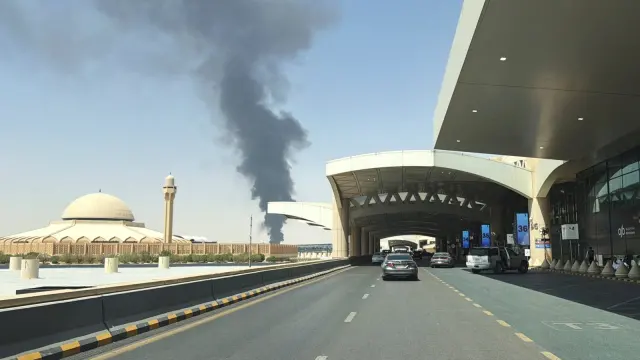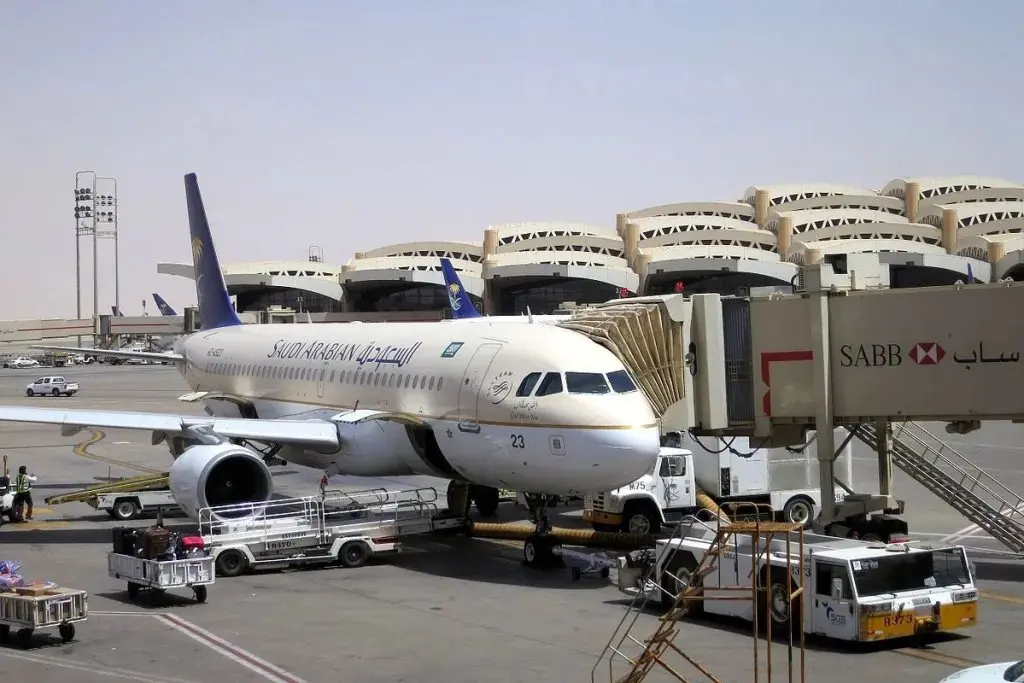
Flying out of Saudi Arabia just got a lot messier. On Thursday, 312 of the country's 1,194 scheduled departures — more than a quarter — were either cancelled or never took off, according to aviation data firm Cirium, as Iran-aligned Houthi rebels escalated attacks on Saudi airports.
The disruption follows strikes on two major hubs. On Tuesday and Wednesday, the Houthis targeted Abha International Airport in the kingdom's south and King Khalid International Airport in Riyadh. Saudi Arabia's General Authority of Civil Aviation reported three people killed and 36 injured in those attacks. On Thursday, Houthi spokesperson Yahya Sareea said a ballistic missile had struck the Riyadh airport, "causing damage and disrupting air traffic" there.
The situation in Riyadh was especially severe: by 6 p.m. local time on Thursday, nearly half of all departures from King Khalid International Airport had been cancelled or still hadn't flown. For an airport that serves as the kingdom's main gateway and a growing hub for new carriers like Riyadh Air, that scale of disruption ripples far beyond the capital — connecting passengers, business travellers and religious tourists alike were caught up in the chaos.
Anyone booked to fly to, from or through Saudi Arabia right now should treat their itinerary as tentative. Airlines typically rebook affected passengers, but with repeated strikes on the same airports, delays can stretch across several days rather than resolving in hours. Check your airline's alerts before heading to the airport, and consider flexible or refundable tickets if your travel dates are close in. Travellers with connections through Riyadh on long-haul routes — say, between Asia and Europe — may want to look at routing through alternative hubs such as Doha, Dubai or Abu Dhabi while the situation is volatile.
The attacks also land at a sensitive moment for Saudi tourism, which the kingdom has been pushing hard as part of its economic diversification plans. Rising safety concerns around its airports could dent the momentum of a country trying to court millions of international visitors.
We'll keep an eye on how the situation develops. Full credit to Skift for the original reporting.