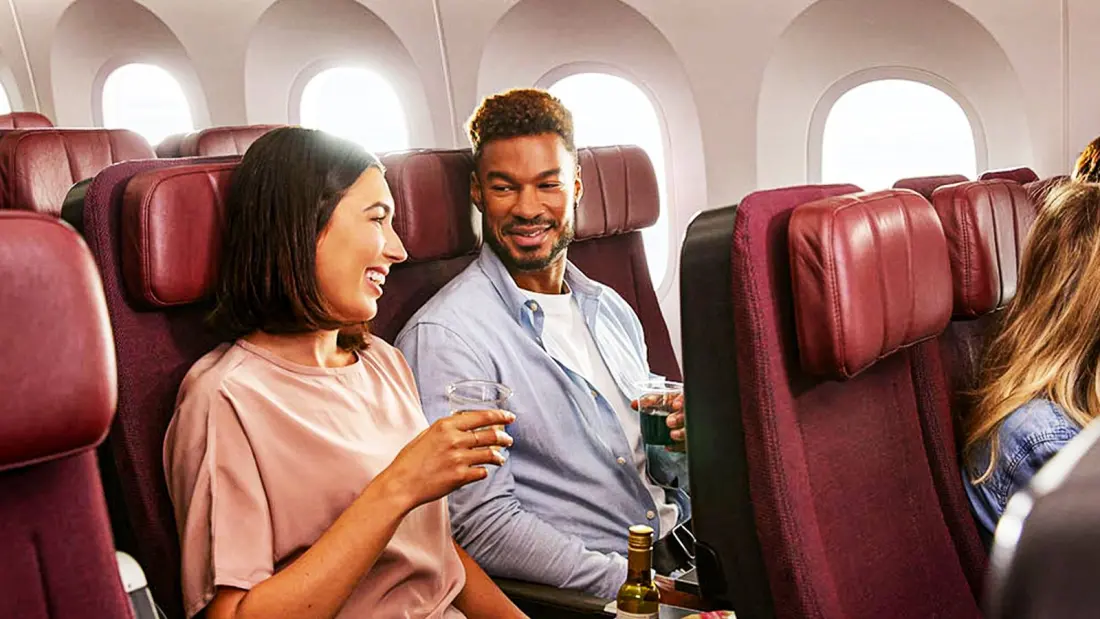
On a 10-hour flight, the difference between a good economy seat and a bad one can be several inches of legroom, a solid wall to sleep against, or a row of recliners jammed against a lavatory door. The trick, according to seat-selection experts, is knowing that a widebody economy cabin isn't one big room — it's a series of smaller zones split up by exit rows, galleys and toilets, each suited to a different type of passenger.
If you're chasing sleep, aim for a window seat towards the front of economy but behind the premium cabins — close enough to the aircraft's centre of gravity to feel less turbulence, far enough from both the engines and the galley clatter. Even better is a so-called mini-cabin: a small self-contained block of seats divided off by galleys or exits. These feel calmer and get faster service. Aircraft choice matters too — the Boeing 787 Dreamliner has the biggest windows in the widebody game at roughly 10.7 by 18.4 inches, beating the A350, the 777 and the A330. A few rare upper-deck economy sections, mostly on double-decker jets, offer extra room and views, though you'll wait longer to disembark via the stairs.
The exit row is the classic legroom play, and for tall passengers it can feel close to premium economy. But read the fine print. You must be physically able to operate the door in an emergency, most airlines set a minimum age between 15 and 18, you can't stow a bag under the seat in front of you during takeoff and landing, and many exit-row seats don't recline at all. The tray table lives in the fixed armrest, which also makes the seat slightly narrower — a real issue for larger passengers.
Aisle seats trade sleep for convenience. You get a bit of extra perceived width, easy bathroom and overhead-bin access, and a fast getaway at arrival — ideal for tight connections. The cost is constant traffic: crews, carts and seatmates clambering over you all flight long.
Two seats to avoid at almost any price: the final row and the middle seat. The last row often has no recline (it's up against a wall), partial or full overhead bins filled with emergency equipment, lavatory queues on top of you, last pick of meals, the roughest ride, and last place in the deplaning line — a nightmare for immigration queues or onward flights. And any middle seat means wedged between two strangers with no view and no easy escape.
One last strategy for solo flyers: some airlines charge hefty fees for reserved seats. Skipping paid selection is a gamble, but it occasionally beats paying premium prices for an exit row — as long as you're willing to risk being parked beside the toilets.