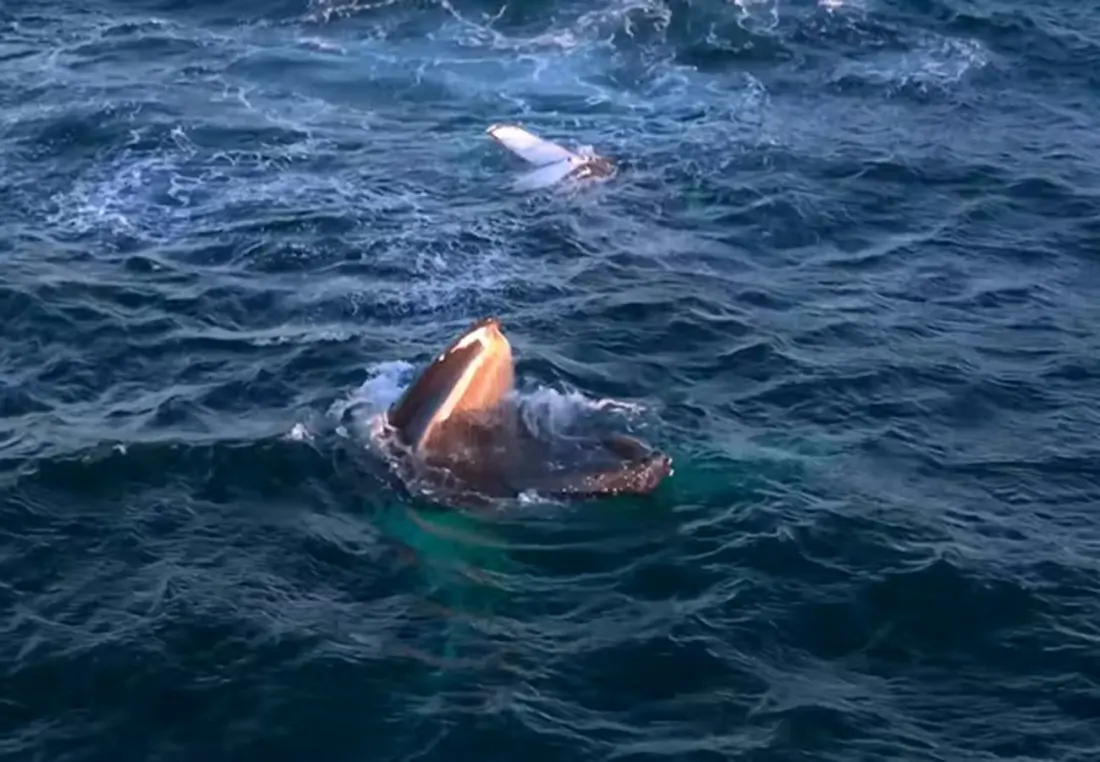
For decades, the textbook line on humpback whales was simple: they gorge on krill in Antarctica, then fast their way up to warm tropical breeding waters and back. New research has upended that idea. A study published in Marine Mammal Science, led by Griffith University researchers, found that humpbacks on Australia's east coast feed regularly in mid-latitude waters – right along the migration route, and right where whale watchers can see it.
The team didn't run expensive ocean surveys. Instead, they mined social media – Facebook and Instagram posts from whale-watching operators, drone pilots and enthusiasts – and kept only clips and photos showing clear feeding behaviour: mouths open, lunge-feeding, bubble-nets, or whales surfacing through baitfish schools. The result: 199 verified feeding events involving an estimated 1,417 whales between 2013 and 2024.
The hotspots will be familiar to anyone who's watched whales off south-eastern Australia. The NSW south coast near Eden, Merimbula and Bermagui accounted for 45% of all sightings, with eastern and southern Tasmania adding 28% and the Victorian coast 12%. Underreported gems like Phillip Island and northern Tasmania also appeared. Sightings peak between August and October, when southbound whales are running low on energy reserves and the East Australian Current pushes nutrient-rich, baitfish-packed upwellings close to shore. In 16 cases, researchers confirmed 'super-groups' of 20 to more than 150 whales feeding together.
Why should travellers care? Because it reshapes what a whale-watching trip can be. Spring on the NSW south coast or in Tasmania isn't just a chance to see whales passing by – it's increasingly a chance to see them actively feeding, sometimes in enormous aggregations, at a point in the migration when scientists once assumed they never ate at all.
There's a conservation flip side, too. These feeding zones overlap with commercial fishing grounds, shipping lanes and growing offshore development, raising risks of entanglement and vessel strikes. The researchers suggest seasonal, mobile protections – ship speed limits and adjusted fishing rules during the few peak feeding weeks each year. So if you're heading out with a whale-watching operator, choosing one that follows responsible boating practices genuinely matters.
For the best odds, aim for late winter to spring (August to October) on the southbound migration leg. Eden on the NSW far south coast is the standout – it has a whaling-era history, a killer whale partnership legend, and now solid bragging rights as Australia's humpback feeding capital. Pair it with Merimbula or Bermagui for a coastal road trip, or head to Phillip Island and Tasmania's east coast for fewer crowds. Bring binoculars, book morning trips when seas are calmer, and if you catch a lunge on camera, you might even be contributing to the next study – citizen footage is exactly how this discovery was made.