
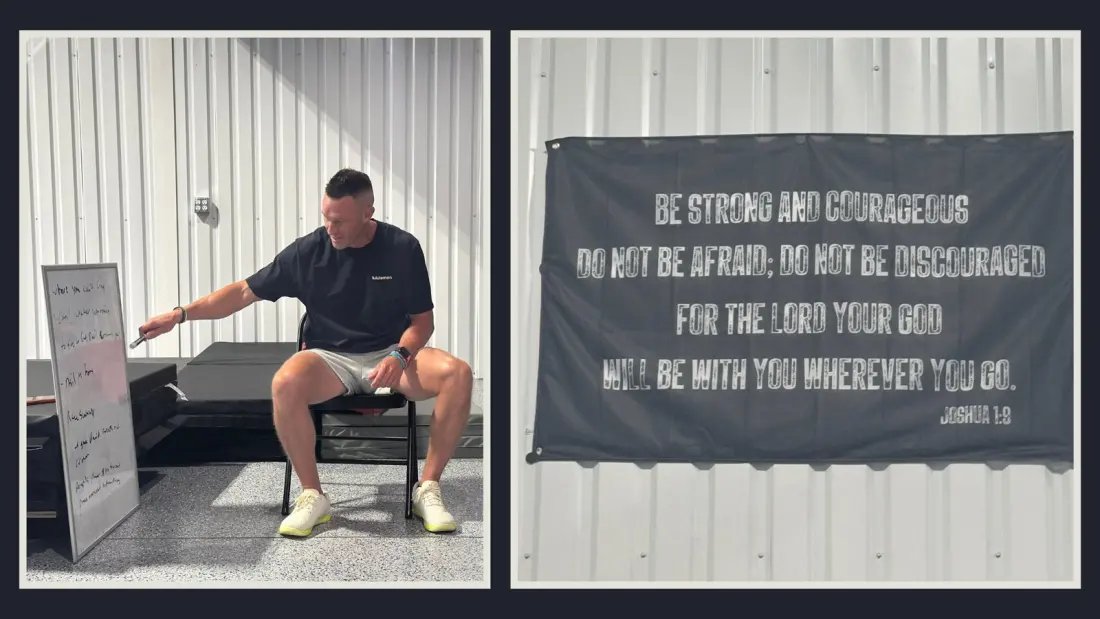
A gym in Oklahoma City has become the unlikely face of a growing American fitness trend: workout spaces that bar women entirely, on the theory that their presence tempts male members into infidelity. It's called Proverbs 27:17 Fitness, and when writer Nate Gunter signed up for a session for Outside Online, he expected locker-room braggadocio and, in his words, men who exclusively drove Cybertrucks. What he found was more complicated.
The gym launched in November 2025, founded by Jeff Hambrecht, a corporate wellness director and former college soccer player whose history includes alcohol addiction, pain-pill abuse and affairs. His programming is legitimately serious: two strength days, two light cardio days, and two Zone 2 sessions at 60 to 70 percent of maximum heart rate, informed by his background in exercise science and Olympic lifting. The pitch is faith-based accountability — Hambrecht says affairs frequently start at the gym, so he's removing the variable. In Denver, another entrepreneur, Mitch Parsons, is building a similar men-only facility called The Remnant, set to open in 2027 with coworking space, golf simulators and a coffee bar. He describes conventional big-box gyms as toxic environments closer to 'strip clubs'.
But Gunter's visit didn't match the headlines. At the post-workout circle downstairs — seven men of mixed ages and backgrounds, including a Super Bowl champion — nobody mentioned lust at all. Instead, the session sounded more like an AA meeting: a young founder choking up as older members encouraged him, several men discussing recovery from addiction, the word 'vulnerability' deployed almost as often as 'God'.
Not everyone is convinced. Edinburgh-based physical therapist and fitness influencer Michael Ulloa says the framing around these spaces feels 'incredibly gross', even if the spaces themselves might suit some people. Gym-culture historian Natalia Mehlman-Petrzela sees genuine promise in the in-person community — a counterweight to loneliness and sedentary life — with the caveat that it matters whether such groups integrate men into society or leave them alienated. Hambrecht, notably, says he wants his members to eventually return to coed gyms; Parsons wants nothing of the sort.
Why should a traveller care? Partly because fitness tourism and drop-in gym culture are big business, and partly because this is a window into a distinctly American cultural current you might encounter on the road — faith-adjacent third spaces filling the vacuum left by declining community institutions. Gunter's takeaway lands somewhere surprising: the concept is easy to mock, and the premise that women at a gym are the problem is genuinely hard to defend. But the gatherings themselves looked less like grievance politics and more like men, some of them visibly struggling, simply being honest with each other. As he puts it, maybe the strange thing is how strange we find that.