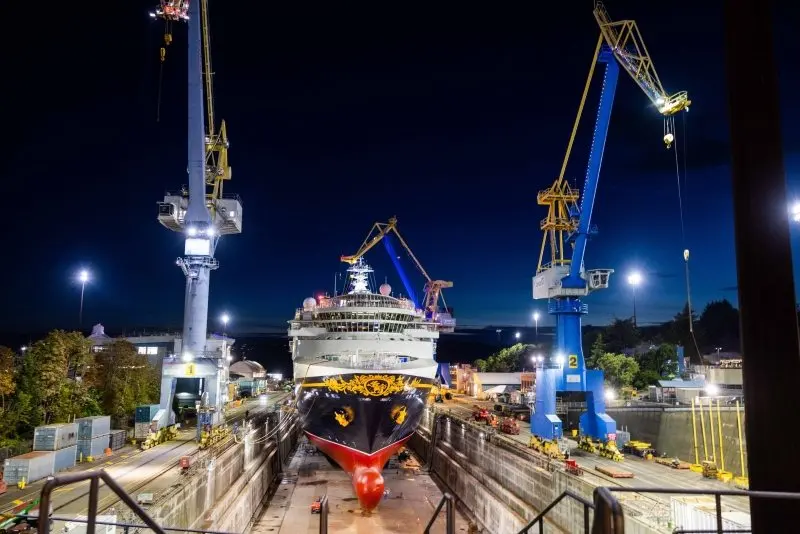
Disney Cruise Line has pulled back the curtain on what actually happens when one of its ships goes into drydock, using the recent overhaul of the Disney Wonder as the example. The short version: a lot of work, compressed into a very short window.
The Wonder entered drydock in Canada in August. Over 14 days, nearly 1,000 crew members and cast members completed more than 100 separate projects across the ship. The headline numbers are striking: over 12 miles of new carpet were laid — roughly the length of 46 basketball courts — and the hull received a new sustainable coating that Disney says equates to painting 10 football fields.
Drydocks like this happen roughly every five years for each ship in a fleet. It's the only chance to do essential below-the-waterline maintenance, so lines pack in guest-facing upgrades at the same time. For Disney, that means Walt Disney Imagineering gets involved: creative teams study how guests actually use each space, then rework areas to be more immersive and functional while weaving in new storytelling. Alexis Cummins, creative director at Walt Disney Imagineering, described each drydock as a chance to respond to guest behaviour and refresh the onboard "magic."
Not everything is visible to passengers. Much of the work targets efficiency and sustainability behind the scenes. The Wonder and the Disney Magic both received advanced hull coatings to cut drag, while the Disney Fantasy got a new bulbous bow during its own drydock last October at Damen shipyard, after its first summer season sailing in Europe — a change that improves performance and reduces environmental impact.
There's a commercial logic to all this. Tracy Wilson, senior vice president and general manager of Disney Cruise Line Operations, framed the investment around a single question: how can the guest experience be made better? The company says it pays off, pointing to satisfaction data showing nearly 90 percent of its guests rate their cruise as "excellent."
Why should a traveller care? If you've cruised on the Wonder before, a sailing after this refit means fresher interiors and reworked spaces shaped directly by guest feedback. It's also a useful reminder of how cruise maintenance cycles work: ships periodically disappear into shipyards for a fortnight and come back subtly transformed. If you're booking a Disney cruise, checking when a ship last emerged from drydock — or when one is due in — is a genuinely handy way to decide between sailing dates, whether you want the newest version of the ship or a quieter pre-refit deal.
With the Magic, Fantasy and Wonder all recently through the shipyard, the newer arrivals in the Disney fleet — including the Wish and the soon-to-launch ships built for the fleet's expansion — are currently the ones defining the brand's onboard look. But there's something reassuring about a 1990s-built ship like the Wonder still being actively invested in rather than left to age.