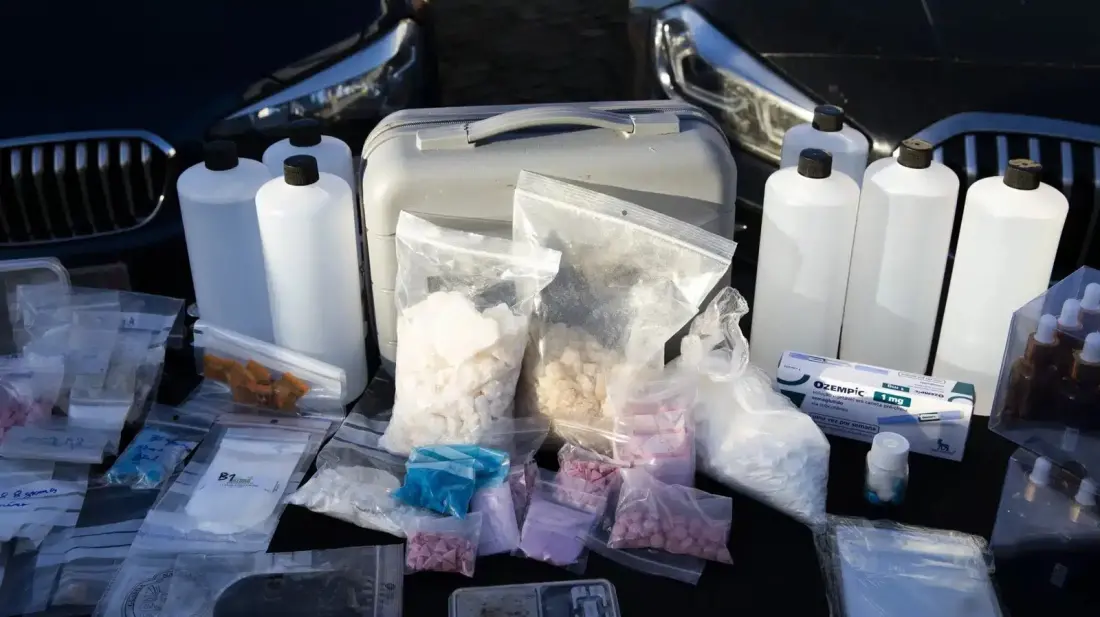
Portugal's Public Security Police (PSP) have been busy. Between 1 January and 31 July 2026, the force detained 1,919 suspects for drug trafficking and carried out 5,558 seizures across the country — averaging out at roughly one seizure every day, and often several. The total weight of drugs confiscated passed 500 kilos in those seven months.
Cannabis dominates the haul by weight: 386.15 kilos, comfortably ahead of cocaine at 99.95 kilos and heroin at 25.41 kilos. Ecstasy is counted differently — police took 5,454 tablets off the streets, plus around 50 kilos of an undetermined substance.
For context, the 2026 figures are on pace with previous years rather than a dramatic spike. Across all of 2025, the PSP recorded 2,949 detainees and 7,557 seizures, so this year's seven-month totals are already within touching distance. Cannabis has led the weight table for years, peaking in 2025 with 6,320 kilos seized. The record year for ecstasy was 2024, when a striking 443,901 tablets were confiscated.
The PSP describes its approach as continuous: street patrols, criminal investigation, dismantling trafficking networks, plus education programmes in schools and communities about the risks of drug use. But as the force itself and partner agencies acknowledge, resources never fully match the scale of the trade — and traffickers know it.
So what does this mean if you're planning a trip to Portugal? First, the headline numbers sound alarming but reflect enforcement activity, not a wave of violence aimed at visitors. Most tourists will notice nothing beyond the ordinary. Second, Portugal's drug laws are famously liberal when it comes to personal use — small quantities are treated as an administrative health matter rather than a crime — but trafficking is another matter entirely, and buying anything from a street dealer is both illegal and an easy way to be scammed. Third, busier nightlife areas in Lisbon, Porto and the Algarve are where opportunistic problems (pickpocketing, dodgy substances) tend to cluster, so the usual common sense applies.
The practical takeaway: Portugal remains one of western Europe's safest and most relaxed destinations, and these figures show police actively working to keep it that way. Just leave the souvenirs to the pastéis de nata.