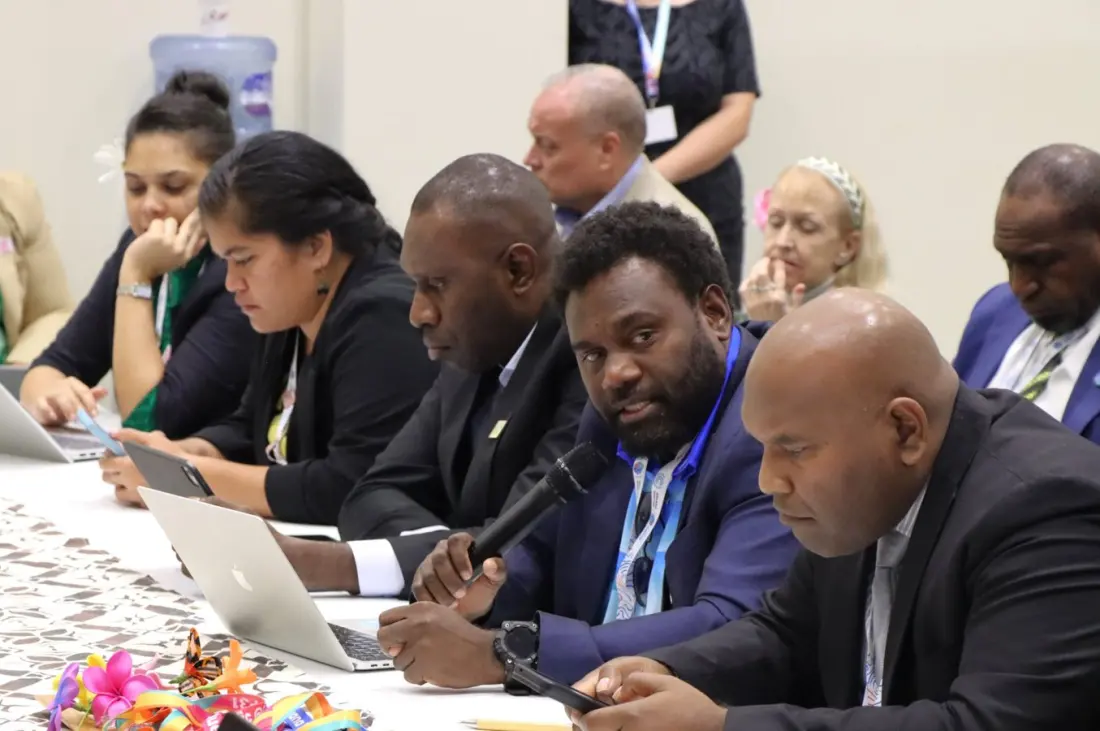
While ministers grab headlines with set-piece speeches, the real battle at COP31 is being fought over individual words in negotiating texts — and for Pacific delegates, those words decide how much protection their islands get from a warming world.
Karlos Lee Moresi, Team Leader for Climate Resilience at the Pacific Islands Forum Secretariat and a climate finance adviser under SPREP's One COP support initiative, says the closing days hinge on the COP presidency's cover decision and the final language on carbon finance, just transition and the 1.5°C goal. Climate finance, mitigation ambition and just transition all remain unresolved.
This round carries extra weight for the region because Australia holds the COP negotiations presidency for the first time. Moresi sees that as a diplomatic opening: the Pacific hopes to use its partnership with Canberra to push language that reflects island priorities into the final text.
Behind the ministerial theatre sits gruelling technical work. Charlene Hoff, a Cook Islands Ministry of Foreign Affairs delegate who coordinates mitigation positions for the Alliance of Small Island States (AOSIS), starts at six in the morning, sifting overnight WhatsApp updates and emails before daily AOSIS coordination meetings set the day's priorities. When new draft text drops, delegates comb through every clause, flag gaps and prepare interventions. Her one-word summary of the two-week process: unpredictable.
Hoff's core concern is mitigation — keeping warming within 1.5°C, managing overshoot, and holding major emitters accountable for cutting emissions, methane included. The fear is that commitments made at previous summits, including the COP28 Global Stocktake outcomes, could be quietly watered down in compromise texts. Informal consultations have wrapped, with the remaining disputes escalated to presidency-level bargaining.
Moresi's philosophy is blunt: a good negotiation leaves nobody fully happy. Compromise is the mechanism. But for the Pacific, compromise has a floor — the region's fundamental priorities on finance and 1.5°C cannot be traded away. Both delegates frame the stakes in human terms: communities back on the islands are counting on the people in the room. "We will not give up," Hoff says. "We are here to fight what is right for us."
Why does this matter to travellers? The Pacific's most beloved destinations — low-lying atolls in the Cook Islands, Kiribati, Tuvalu and beyond — are among the places most exposed to sea-level rise, coral bleaching and intensifying storms. The strength of the language agreed at COP31 shapes funding for coastal defences, resilient infrastructure and adaptation across the islands that visitors will explore for decades to come. The final outcome is still uncertain, but the region's negotiators, including a growing cohort of Pacific women in climate diplomacy, are pushing to ensure the countries most exposed to climate change aren't sidelined in the decisions that will shape their future.