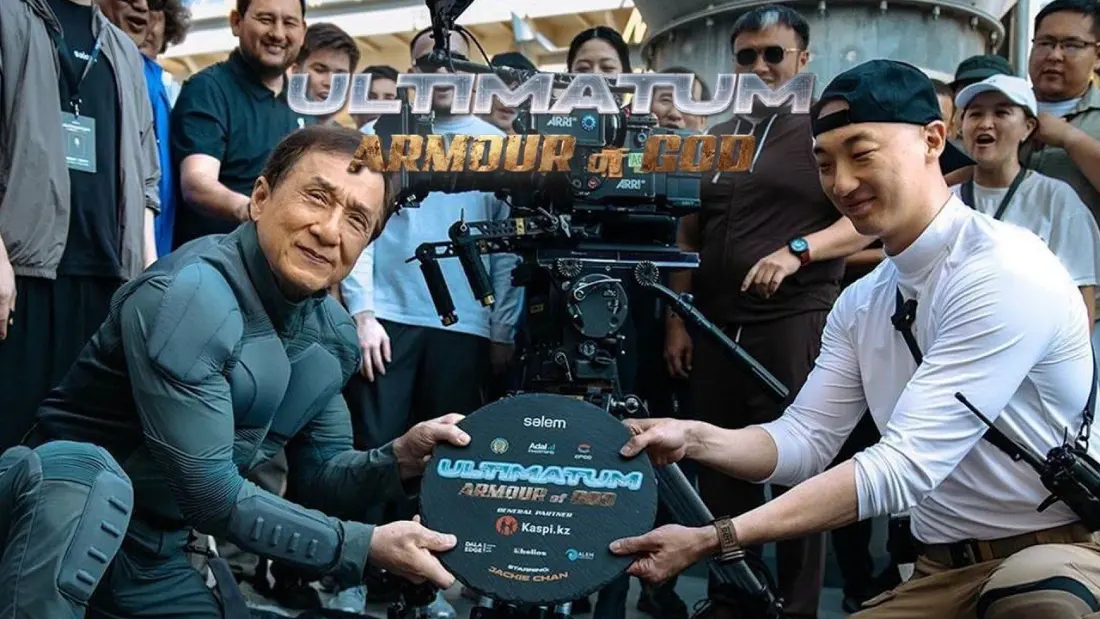
Jackie Chan has finished shooting scenes for his new action film in Kazakhstan, and the country is hoping the project does for its profile what big-budget shoots have done for destinations from New Zealand to Croatia.
The movie, "Armour of God IV: Ultimatum," is the first international production from Salem Entertainment, filmed with backing from Kazakhstan's Ministry of Culture and Information and China's Film Group Corporation. Locations spanned Almaty, the wider Almaty Region and the dramatic landscapes of Mangystau — the remote western region known for its otherworldly canyons, chalk cliffs and desert plateau that doubling for alien planets in recent films has already made a cult draw for road-trippers.
At a press conference in Astana on October 6, Chan revealed the idea took root after a meeting with Kazakh official Erlan Karin in China around 2017 or 2018. What surprised him was the follow-through: by the time he checked back in, a script was underway and a director attached. He singled out the shoot's organisation and the government's support as reasons the production ran smoothly.
It wasn't without bumps. Kazakh actor and producer Rustem Omarov said Chan injured his shoulder and later cracked a rib during filming — and, brushing off doctors' orders to rest, was back on set within days. Classic Chan, really.
The cameras now move to Shanghai, with an international release planned for 2027. That gives travellers a nice runway: you could watch the film, recognise a canyon or a mountain backdrop, and then plan the trip. Kazakhstan's tourism officials are banking on exactly that effect, hoping the movie will pull in visitors and more foreign productions alike.
Why should a traveller care? Because film-driven attention tends to arrive before the crowds. Mangystau's landscapes are still largely the domain of self-drive adventurers and photographers, and Almaty remains one of the more affordable and underrated city-and-mountain bases in Central Asia, with ski slopes and hiking trails on its doorstep. If Kazakhstan's on-screen moment lands the way the government hopes, the window for seeing these places quiet is now.
The story is also a signal of where Central Asia is heading: courting China's film industry, easing the path for foreign crews, and quietly building the infrastructure that makes a country easier — and more tempting — to visit. Source: The Astana Times.