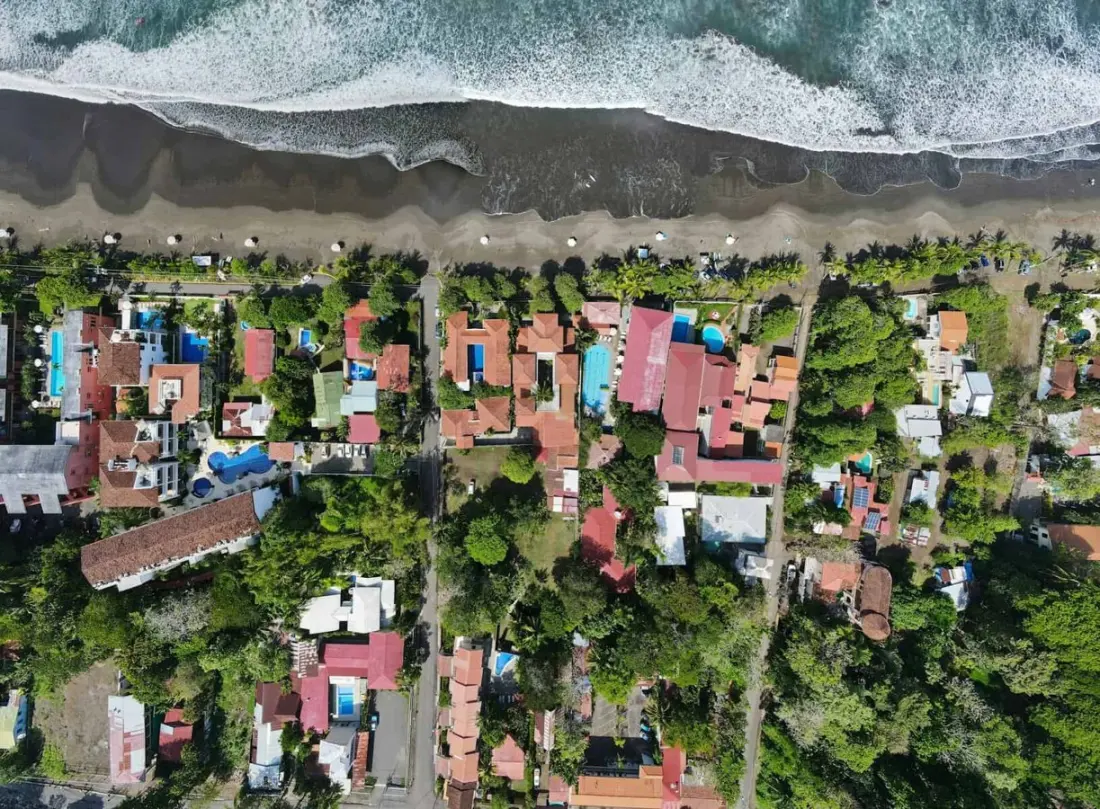
Jacó has long been the Central Pacific's go-to beach escape for San José weekenders, surfers and sun-seeking tourists. But the Costa Rican town's latest arrivals aren't tourists — they're permanent residents, and big brands are racing to serve them.
The clearest signals are commercial. McDonald's is preparing to open its first Jacó restaurant on Avenida Amapola along Route 34, near the Costa Nera shopping center, and has already run two local job fairs to staff it (no opening date announced yet). Fresh Market has opened at Plaza Comercial Costa Nera, the supermarket chain's first real push beyond the capital's metro area. KFC, already a local fixture, has moved to a larger spot closer to the highway after investing around $500,000 — a restaurant employing about 25 people. Coffee-and-bakery chain Mocapan also picked Jacó for its first store outside the Greater Metropolitan Area, spending roughly $200,000 and creating 16 jobs. Little Caesars is there too.
One burger joint doesn't transform a town. A cluster of them, plus a supermarket and a bakery chain, tells you something: companies now believe Jacó has enough full-time customers to stay busy 52 weeks a year, not just in high season.
The numbers back it up. Garabito, the municipality that includes Jacó, recorded 106,875 square metres (about 1.15 million square feet) of new residential construction in 2024 — the second-highest figure in Costa Rica, behind only Santa Cruz in Guanacaste, in a year when national housing construction actually fell. Population has surged too: Garabito went from 17,229 residents in the 2011 census to an estimated 26,672 by 2022, up roughly 55%.
Jacó's edge over other beach towns is geography. It's close enough to San José and the Central Valley for commuters and remote workers to split their week between capital and coast, and unlike smaller beach communities, it already has supermarkets, banks, schools, medical services and restaurants. Developers have noticed — instead of only catering to foreign buyers and short-term-rental investors, they're increasingly building apartments and condos for people who plan to live at the coast most of the year.
There are growing pains. Garabito ranked last among Costa Rica's 82 municipalities in the 2025 National Competitiveness Index, with security flagged as a major drag, and rapid growth is straining water, roads, healthcare and policing. Tourism still matters — hotels, surf schools and nightlife remain essential — but Jacó is now running two economies in parallel.
For travellers, the shift is mostly good news. More year-round residents mean more restaurants, better shops and services that don't shut down in the green season. The town feels less like a resort strip and more like a functioning coastal city with a beach attached. If you liked Jacó's rowdier, surf-town energy, it's still there — but expect a bigger, more self-sufficient place on your next visit.