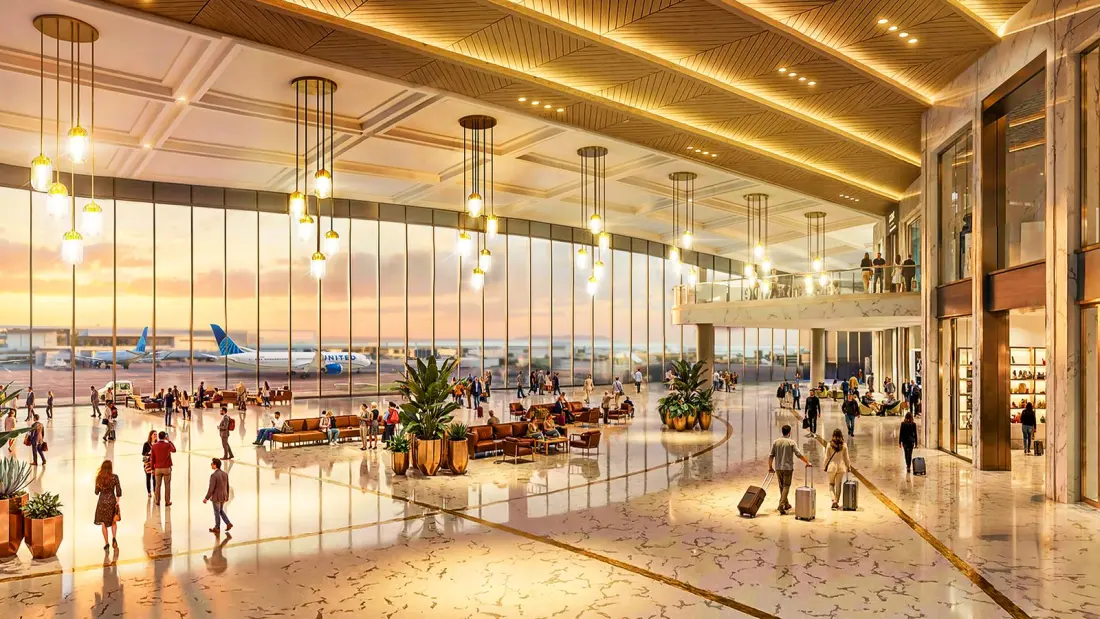
Walk through a growing US airport today and you'll notice something quietly changing: gates built for tiny 50-seat regional jets are disappearing, and roomier jet bridges are taking their place. It's a nationwide shift, driven by airlines retiring their oldest small jets, pilot and air traffic control shortages, congestion, and the sheer economics of moving more people per flight. The Government Accountability Office has flagged these forces as the reason airport construction is now designed around Boeing 737s and Airbus A320-family aircraft rather than the commuter planes of the 1990s.
Some of the most dramatic examples are former hubs that lost their legacy carriers. Pittsburgh International's iconic X-shaped terminal opened in 1992 with a dedicated commuter concourse, Concourse E, built around USAir Express flights. When US Airways walked away from its Pittsburgh hub in 2004, that concourse became obsolete — and it has now been demolished as part of the airport's "Transformed PIT" project, making way for more frequent A320 and 737 flights from low-cost carriers like Frontier and Allegiant.
Smaller airports are adapting too. Northwest Arkansas National Airport (XNA), historically a regional-jet-only operation, is building a terminal addition as United, Delta and American all add mainline service to hubs like Denver, Atlanta and Dallas/Fort Worth, with Allegiant now holding roughly 10% of the market share. Wilmington International in North Carolina — a fast-growing coastal city that logged a record 907,753 enplanements in 2025 — is expanding a $69 million terminal project begun in 2018, adding curb space, a pedestrian tunnel and extra parking as airlines like Avelo, Sun Country, JetBlue and mainline American arrive, sometimes with A321s.
Even giants are reworking layouts. Charlotte Douglas, once one of the most regional-jet-dependent airports in the country under US Airways, is upgrading gates under its Master Plan 2050 as American swaps 50-seat jets for larger Embraers and mainline aircraft. Minneapolis-St. Paul finished a Terminal 1 modernization of six concourses between 2023 and 2025; next, Concourse A will trim its 14 gates to handle fewer but larger aircraft, and Concourse B is slated for demolition by 2040. Washington Dulles may be the boldest: United-backed plans will replace outdoor regional boarding stands with enclosed, international-capable gates, plus a new 14-gate Tier-2 Concourse. And at Bemidji Regional in northern Minnesota, a 2012 project that doubled terminal size and added a jet bridge rated for 737-900s and A320s shows this thinking has been coming for more than a decade.
Why should travellers care? Bigger aircraft generally mean more seats per flight, more reliable schedules, air bridges instead of outdoor boarding in the rain, and often lower fares as low-cost carriers expand. If you fly from a smaller US city, expect your regional jet to be replaced by a roomier E175 or a full-size narrowbody sooner rather than later — and expect airports to be under construction while they catch up.