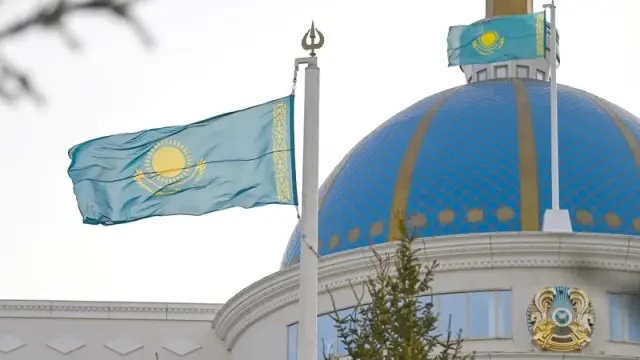
Oct. 25 is Republic Day in Kazakhstan, and this year it carries extra weight: 36 years since the Declaration of State Sovereignty was adopted in 1990, the document that set the legal and political foundations for full independence, declared on Dec. 16, 1991. For visitors, it is one of the country's key national holidays and a good moment to see Kazakh identity on full display.
The declaration itself was a bold piece of drafting for a Soviet republic at the time. It asserted autonomy for republican authorities, territorial integrity, its own citizenship, economic independence and the right to conduct an independent foreign policy. Everything that followed — joining the United Nations in 1992, building a national currency and legal system, managing a multinational society of more than 100 ethnic groups — grew from those principles.
Kazakhstan's foreign policy has become its calling card. The country famously gave up the nuclear arsenal it inherited from the USSR and closed the Semipalatinsk Nuclear Test Site in 1991, a decision that still defines its international reputation. Today it pursues a 'multi-vector' diplomacy, balancing relations with Russia, China, the EU and its Central Asian neighbours, and prioritises non-proliferation, regional cooperation and transit between Asia and Europe.
The economy is the other half of the story. Long dependent on oil, uranium and metals, Kazakhstan is pushing diversification: it targets $150 billion in additional foreign investment by 2029, its short-term economic indicator rose 4.8 percent year on year in the first nine months of 2026, and S&P upgraded its sovereign rating to BBB in August 2026. The World Bank estimates the country holds over 5,000 unexplored rare and rare-earth metal deposits worth more than $46 trillion. Total foreign trade hit $143.9 billion in 2025, and Kazakhstan climbed to 73rd in the WIPO Global Innovation Index 2026 — its biggest regional improvement.
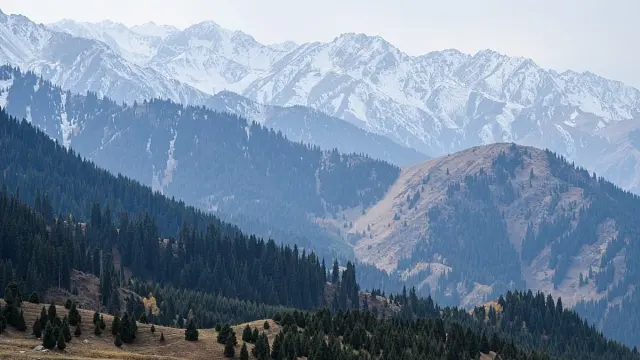
Why should a traveller care? Because Kazakhstan is increasingly easy to justify on a map and a spreadsheet: a stable middle power straddling Europe and Asia, investing in transport links, with Almaty and Astana offering a mix of Soviet-era architecture, gleaming new cityscapes, bazaars and easy access to the mountains and steppe. Republic Day itself is a public holiday worth timing a trip around — expect celebrations, concerts and a palpable sense of national pride in both capitals.
Kazakhstan Marks 36 Years Since the Declaration That Set It on the Road to Independence
Originally reported by
The Astana Times.
This is an independent curation by click.holiday — see the source for the full story.
Drafted by our editorial model from the source above and checked automatically for accuracy against it and for originality. How we work