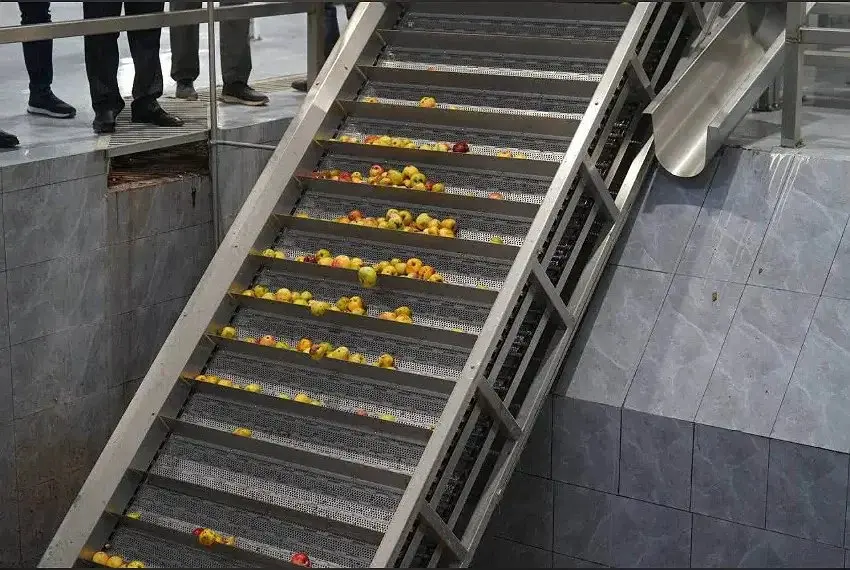
A new apple juice plant has started operating in Kyrgyzstan's Jalal-Abad region, and it's sized to make a real dent in the country's harvest. The facility, built by Global Eco Green in the Ala-Buka district, cost around $11.5 million and can process enough concentrate to turn out up to 500 tonnes of juice a day. Once it hits full capacity, it should employ roughly 100 people.
The logic behind it is simple. In bumper years, Kyrgyz farmers often struggle to sell their apples — fruit that looks less than perfect typically fetches rock-bottom prices or doesn't sell at all. Local officials, including regional presidential representative Tilek Tekebayev, who attended the opening, framed the plant as a way to process produce at home, cut post-harvest losses and give growers a steadier buyer.
The numbers behind the apple sector are worth knowing if you travel in the region. Kyrgyzstan has about 26,324 hectares of fruit-bearing orchards, and the 2026 harvest is forecast at nearly 179,400 tonnes. To protect growers, the government has also kept a temporary ban on imported apples in place until 1 February 2027.
Why should a traveller care? Jalal-Abad sits in the fertile Fergana Valley fringe of southwestern Kyrgyzstan, an area most visitors rush through on the way between Bishkek and Osh. Fresh juice, orchards and roadside fruit stands are part of the appeal of slow travel here, and a bigger local processing industry means more farm income flowing into rural towns like Ala-Buka — the kind of places where homestays, bazaars and walnut-and-apple country reward anyone who stops instead of driving straight through. For food-focused travellers pairing the region with Arslanbob's walnut forests or the Toktogul reservoir road, it's a sign the local food economy is growing.