Kyrgyzstan packs an unlikely amount into a country most travellers can barely place on a map. Alpine lakes, summer yurt camps, Silk Road ruins and a nomadic culture that's still very much alive — and thanks to improving access, it's never been easier to see all of it.
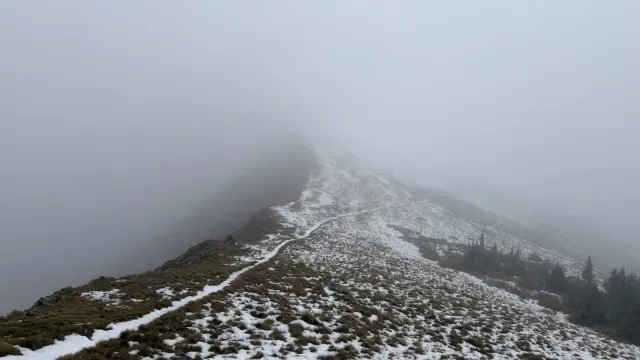
Start with the history. Tash Rabat, a 15th-century stone caravanserai, sits half-buried in a hillside at 3,530m, its thick walls hiding around 30 small rooms that once served merchants as bedrooms, prayer rooms and storage. It's proof that Kyrgyzstan isn't just about scenery. From the site, a demanding 4–5-hour climb up the At-Bashy Range ridge (horses hireable from the caretaker for around 300 som an hour) rewards you with views over Lake Chatyr-Köl from nearly 4,000m — pack for sleet, whatever the season.
For something older still, Saimaluu-Tash is a high plateau scattered with an estimated 11,000 petroglyphs, some carved on basalt as long ago as 2000BC. Reaching it means getting to the remote village of Kazarman, then a 4x4 transfer followed by a long hike or horse ride up to 3,200m — budget four hours up, three down, and arrange a guide through a CBT (Community Based Tourism) office.
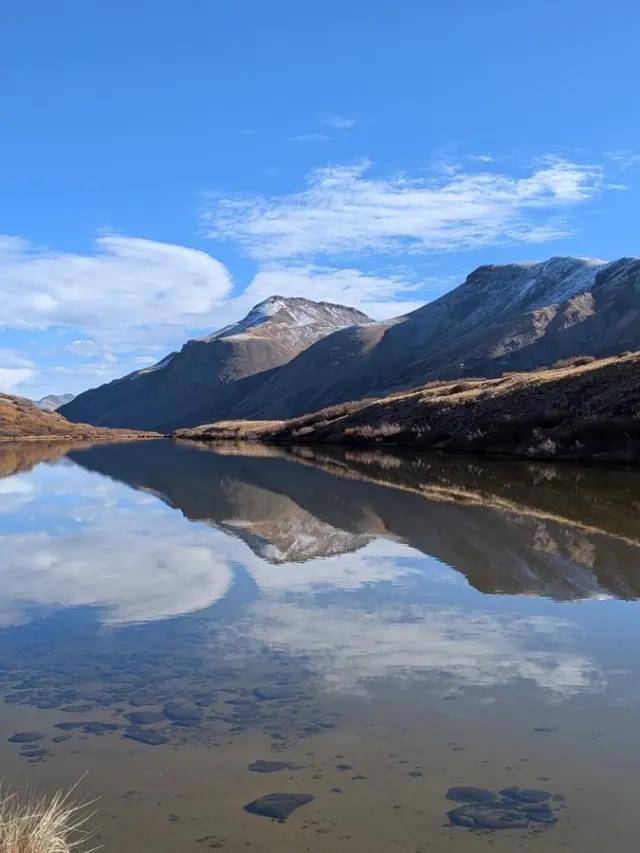
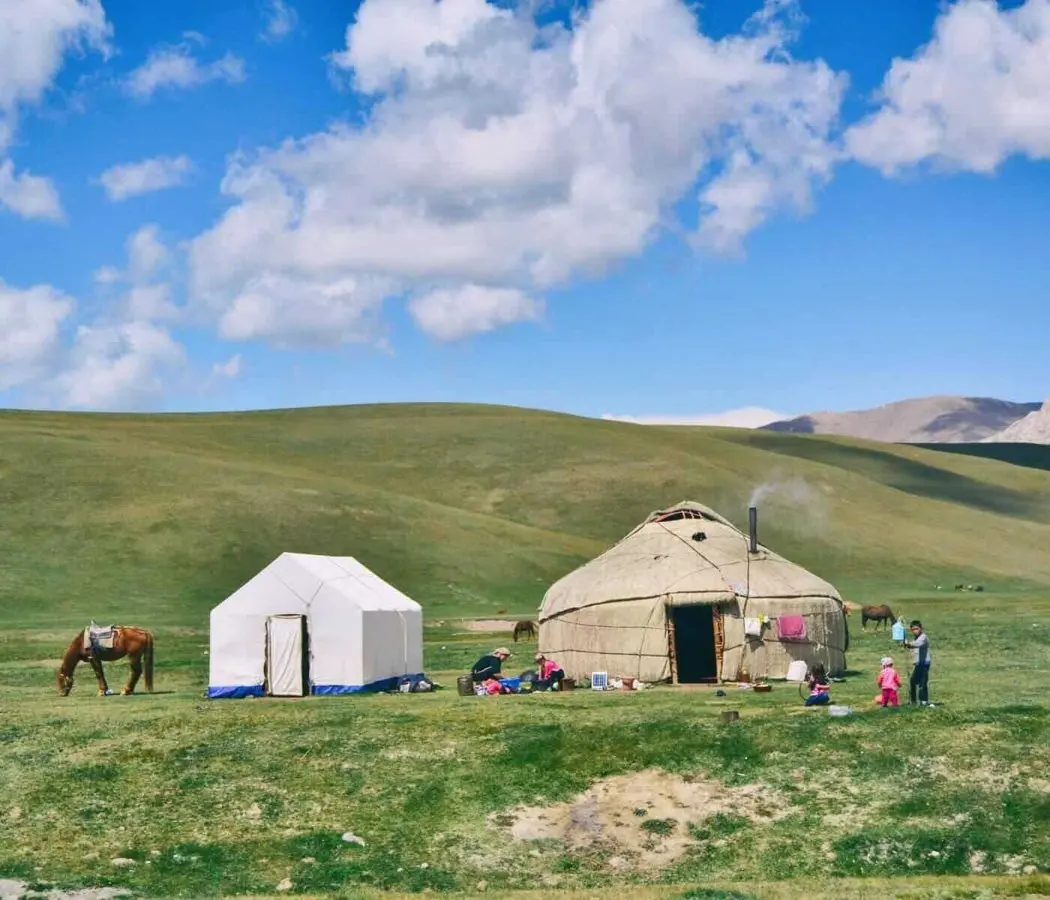
Then there are the lakes. Issyk-Kul, the world's second-largest alpine lake at 1,606m, famously never freezes despite brutal Central Asian winters — something to do with deep water, slight salinity and thermal activity. The quiet village of Tamchy on the northwest shore has a proper sandy beach and homestays, a low-key alternative to the busier resort town of Cholpon-Ata. Higher up, Song-Köl is the postcard: yurt camps, herds, horsemen, snow-capped peaks. It's only viable June to September, when the herders are up on the pastures — outside that window the yurts come down and there's nowhere to sleep.
Two more detours earn their keep. Sary-Chelek, a small alpine lake at 1,873m inside a biosphere reserve with seven lakes, bear, lynx and snow leopard, is fiddly to reach but gorgeous; go midweek to dodge the summer weekend crowds. And Arslanbob, an almost entirely Uzbek village surrounded by an 11,000-hectare ancient walnut forest, works in every season — waterfall day trips, hill hikes and a pilgrimage shrine in summer, guided skiing in winter.
Who is this for? Anyone who wants big mountain country without Alpine prices, and who's happy for a rough road or a long walk to be part of the deal. Independent travel is possible, but guides and local CBT networks make the remote stuff — Tash Rabat, Saimaluu-Tash, Song-Köl — far easier and far more interesting.