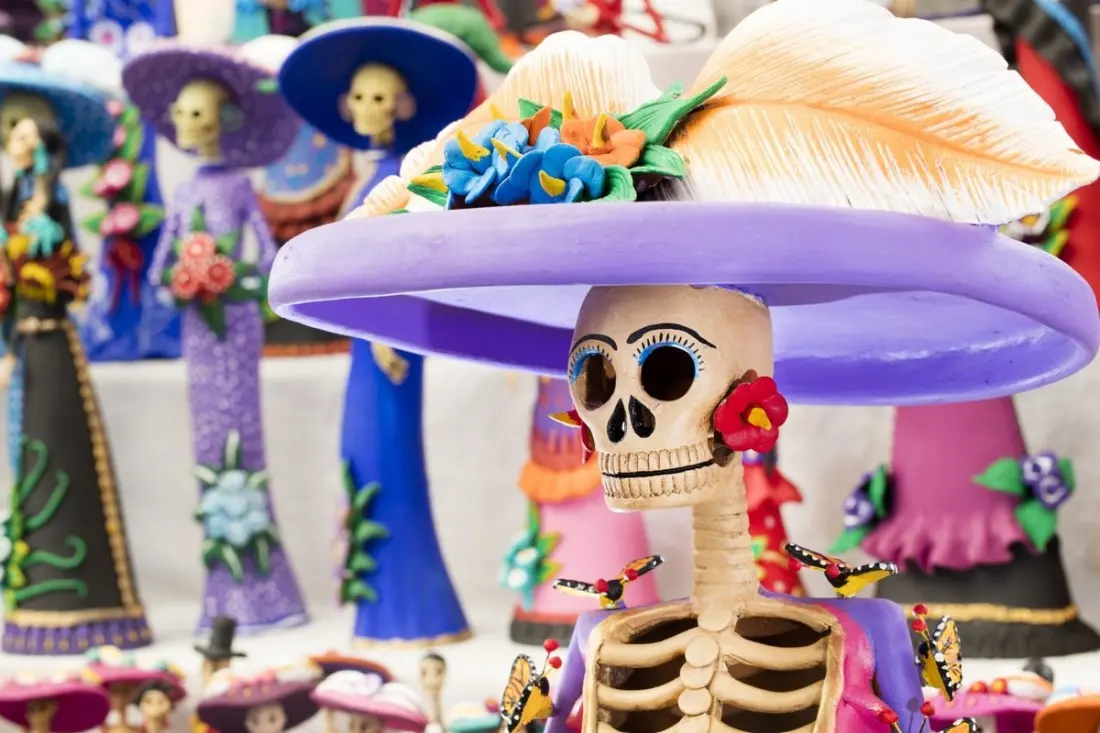
Spot a gorgeously dressed skeleton figure with a wide-brimmed feathered hat anywhere in Mexico and you're looking at a Catrina — a character with more than a century of history behind her, and one of the most recognisable symbols of Day of the Dead.
The original was drawn by engraver José Guadalupe Posada around 1910, first titled La Calavera Garbancera. It was political satire: a zinc etching mocking Mexicans who aspired to European aristocratic manners, which explains that grand plumed hat so fashionable in Europe at the time. The figure might have stayed a footnote if Diego Rivera hadn't painted her into his famous 1940s mural in Mexico City's Alameda Central — a work depicting four centuries of Mexican figures, including Posada, Frida Kahlo and Rivera himself. It was Rivera who gave the character the name La Calavera Catrina, 'the elegant skull', and turned her into a national icon.
Today Catrinas are a genuine art form. Artisans craft them in ceramic, clay, wood, papier-mâché, crepe paper, resin and even compressed sugar and chocolate, with finely detailed pieces selling for serious money in galleries. Her birthplace, the colonial city of Aguascalientes, honours Posada with a national fair featuring a giant Catrina statue, plus an annual festival of music, costume, dance and artwork devoted to the character.
Come Day of the Dead (late October into early November), Catrinas are everywhere: on altars, in markets, as paper cut-outs, and striding through processions. Face-painting in the Catrina style has become a signature look for participants in parades and parties, especially in famous celebration cities like Oaxaca and Pátzcuaro.
For travellers, the Catrina story is a neat entry point into Day of the Dead itself — a tradition that treats death with wit and warmth rather than gloom. Timing a trip to coincide with the festivities, and picking up a hand-finished figurine as a souvenir, is about as Mexican as travel experiences get.