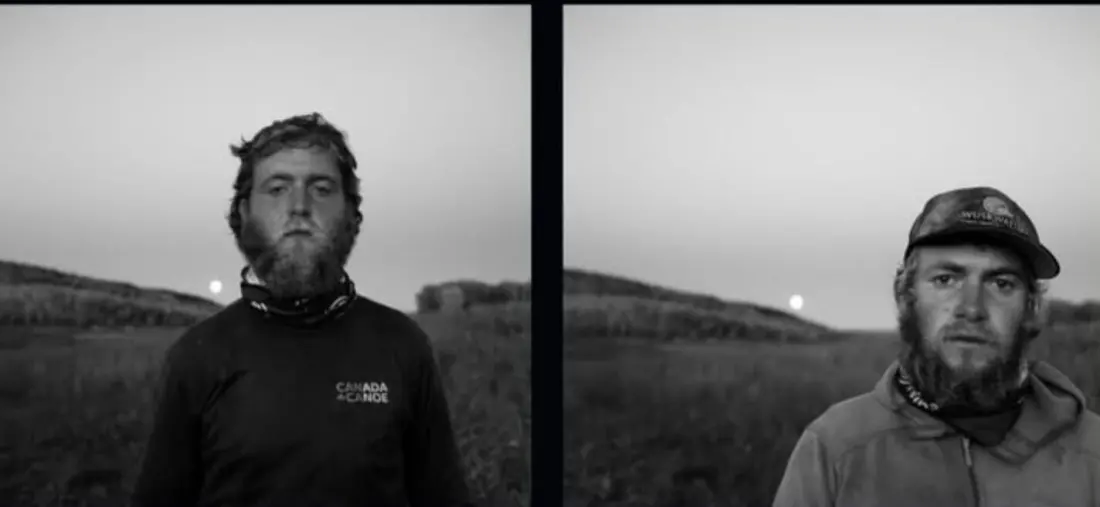
Somewhere on the Peace River in northern British Columbia, two Canadians are paddling the final kilometres of an absurdly ambitious expedition: roughly 8,000km by canoe from the Atlantic to the Pacific in a single season. Will Vyse and Nolan Aziz set out from Tadoussac in Quebec and, after 184 days on the water, crossed into British Columbia on October 10 — the last province on their route. A third teammate, Georges Kirijian, had to drop out earlier because of injury, leaving the pair to finish alone.
They've already covered well over 6,000km, and the recent stretch hasn't been gentle. The Peace River, which took them through Alberta for 34 days before the border crossing, is described as long and punishing. What comes next is no picnic either: a 17km portage to Williston Lake (the biggest lake in British Columbia), the southern branch of the Crooked River, the crossing of the Continental Divide, and the historic Giscome Portage linking Summit Lake to the Fraser River. From there, the Fraser carries them through Prince George and all the way down to Vancouver.
There's one change of plan worth knowing. The original finish line was the northern port town of Prince Rupert, but the pair have rerouted to end at Wreck Beach in Vancouver instead. Even with the shorter coastal leg, they estimate the total distance still tops 8,000km — which, if they pull it off, makes this the longest single-season canoe trip ever recorded.
For travellers, the story doubles as a showcase of Canada's wild interior. The route threads together places most visitors never see: the tidal waters near Tadoussac where the Saguenay meets the St Lawrence, the boreal vastness of northern Alberta, and the lake-and-portage country of central British Columbia. Williston Lake and the Giscome Portage, near Prince George, are reachable by road and offer a taste of this kind of backcountry travel without a six-month commitment. If you want to follow the expedition's final days or even cheer them in at Wreck Beach, Vancouver makes an easy base.
For anyone drawn to human-powered adventure, this is a reminder that some of the world's great expeditions are still being done the slow way — paddle stroke by paddle stroke, gear wearing thin, across an entire continent.