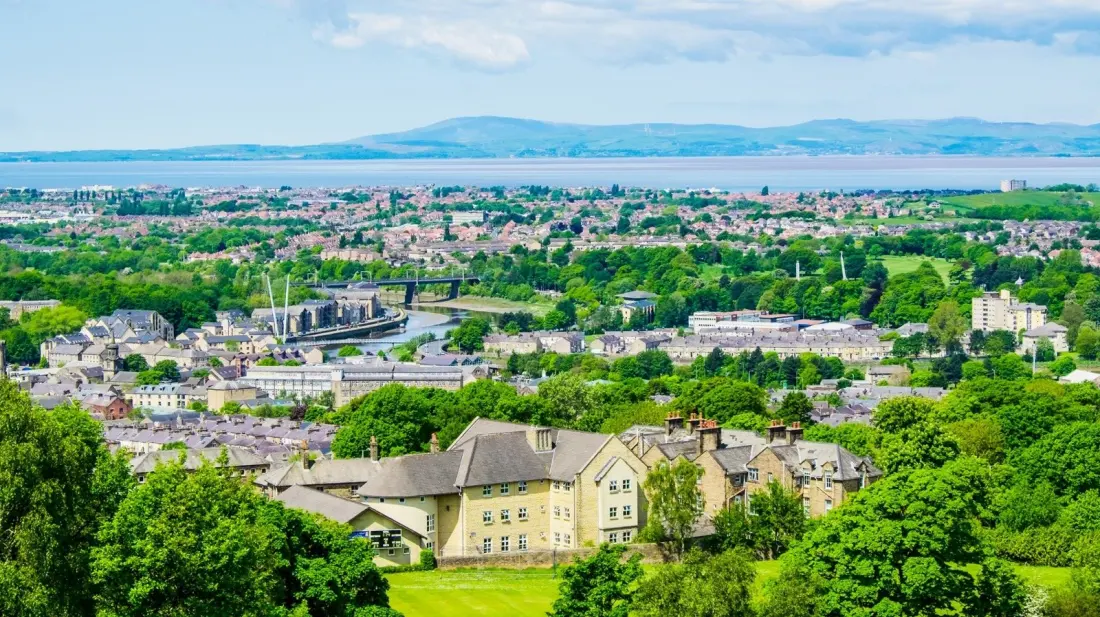
Lancaster doesn't get the crowds of York or Edinburgh, but this small city on England's northwest coast packs in more history per square mile than most places twice its size. It sits about 40 minutes by road north of Blackpool, and it makes a genuinely good day trip or quiet weekend base — especially if you like your shopping done among medieval stone rather than in a featureless mall.
The city's roots go back to a Roman fort built around A.D. 80, and the layers have kept stacking ever since. The district now holds more than 1,300 listed historic buildings, many of them housing the independent shops and cafés that line the cobblestoned streets around Market Square. It only officially became a city in 1937, but it has been a centre of the region for far longer.
Coffee culture here runs deep — literally generations deep. Atkinsons has been roasting coffee and blending tea since 1837, and you can still buy it on-site or settle in at its Priory Hall café, which draws strong reviews for its food and easygoing atmosphere. For a proper pre-shopping breakfast, the Old Bell hides down Bashful Alley, a rustic stone pub serving a hearty full English. From there, Market Square puts you at the centre of the retail action: covered arcades like King's Arcade and Marketgate sit alongside curiosities such as Penny Street Collectables and The Little Shop of Handmade Loveliness, plus the reliable big names — a Waterstones for book lovers and Marks & Spencer for anything else.
The star attraction, though, is Lancaster Castle, and it's in far better condition than most of Britain's crumbling ruins. Norman builders started it in the 12th century, and towers, walls and a priory were added over the centuries. For most of its life it was a working prison and courtroom — the prison only shut in 2011, and the court is still in use today, making it the oldest surviving such court in the country. It hosted the infamous 1612 trial of the Pendle Witches, and executions took place at a spot grimly known as Hanging Corner.
Guided tours run daily for a modest admission fee and take in the sobering Drop Room — where relics of executions are displayed and where more than 200 people died — plus the courtroom, holding cells and the tower. The reward at the end is the castle's green courtyards, plus access to the royal tower, recently reopened to visitors after nearly 400 years of closure.
Getting there is easy. Manchester Airport is about an hour's drive away, or you can take a train, bus or transfer north — the route passes through small towns and hedgerow-lined farmland that sets the mood nicely before you arrive.
Lancaster suits travellers who want substance without crowds: history buffs, browser-shoppers, café lingerers and anyone combining a trip with Blackpool or the Lake District, which is only a short hop further north. Come for the castle, stay for the coffee.