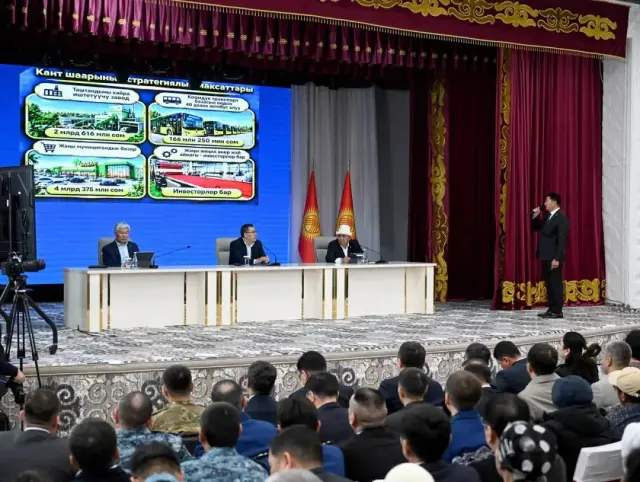
Kyrgyzstan has signed off on new rules for radioecological monitoring at former uranium production sites and radioactive waste storage facilities, once rehabilitation work is complete. Cabinet Chairman Adylbek Kasymaliev approved the resolution, which takes effect 10 days after publication.
The idea is straightforward: cleaning up a site is not the same as walking away from it. Under the new framework, radiation levels and the overall condition of rehabilitated areas must be assessed on an ongoing basis. Three ministries share responsibility — Emergency Situations, Natural Resources and Ecology, and Health — with funding drawn from the republican budget and other lawful sources.
There are some gaps worth noting. The published text does not spell out how often inspections should happen, which specific sites are covered, what radiation indicators will be measured, or what authorities must do if safe limits are exceeded. Those details are tucked into the accompanying regulations rather than the resolution itself, so how rigorously this plays out in practice remains to be seen.
Why does this matter beyond the policy world? Kyrgyzstan inherited a string of radioactive waste sites from Soviet-era uranium mining and processing, including tailings ponds and waste dumps scattered across the mountainous south. Some sit close to residential areas and rivers — the town of Mailuu-Suu has long been flagged by international agencies as one of the more problematic spots. Travellers who hike, ride or drive through regions like Jalal-Abad and the Fergana Valley foothills may pass near these areas without realising it.
Ongoing monitoring is good news for anyone exploring the country beyond Bishkek and Lake Issyk-Kul. Rehab work funded over the past decade by international donors has already stabilised several of the worst sites, and this resolution adds a formal safety net to keep checking them. For visitors, the practical takeaway is modest: stick to marked trails and established routes, avoid exploring unfamiliar industrial ruins or mining settlements, and you are very unlikely to encounter any issue. The remote gorges and high pastures that draw trekkers to Kyrgyzstan are a world away from the legacy tailings sites, which are concentrated in the country's populated southern valleys rather than the alpine trekking heartland.
For a travel audience, this is less an alarm than a quiet reassurance that the country is taking its environmental inheritance seriously — and a reminder that Kyrgyzstan's appeal goes far deeper than its scenic reputation. The same southern regions that carry this industrial history also hold some of Central Asia's most rewarding road-trip country, walnut forests at Arslanbob and Soviet nostalgia in towns few foreign visitors ever see. Awareness, not avoidance, is the right response.