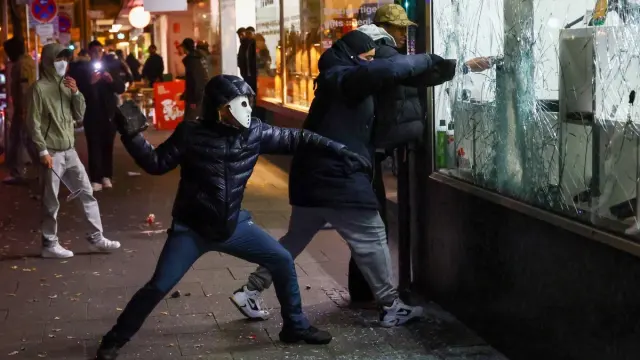
Portugal's two biggest cities have become the stage for some of the country's most tense scenes in years, as a month-long wave of 'right to housing' protests keeps drawing heavy-handed police responses in central Lisbon and Porto.
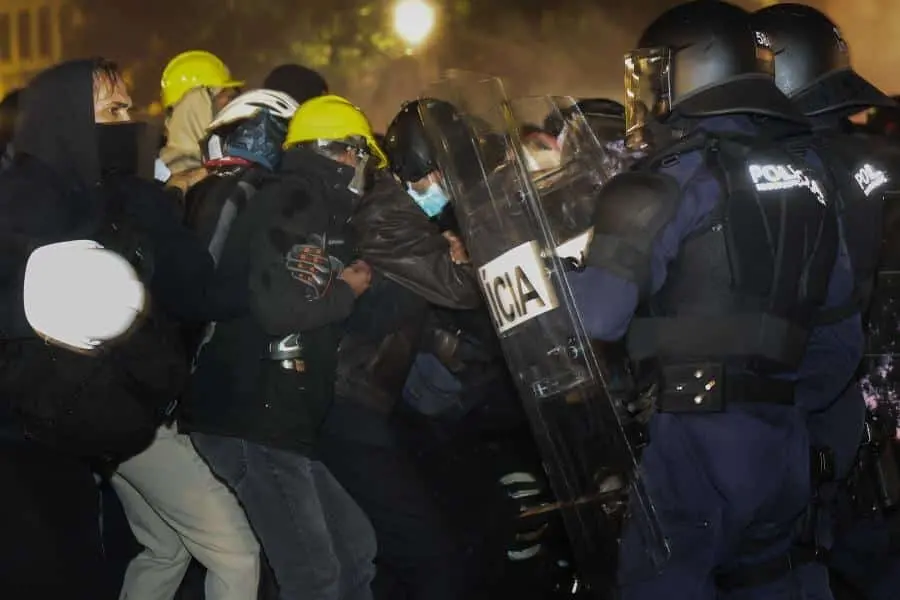
In the early hours of a recent morning, police cleared tent camps that had been set up in Rossio Square in Lisbon and Praça D. João I in Porto, after issuing three warnings to demonstrators. The intervention involved dozens of officers with shields and face protection, supported by police dogs. Demonstrators responded by forming human chains and throwing firecrackers. Reports describe protesters struck with truncheons, at least one journalist among the injured, and even warning shots fired into the air. Around a dozen people were arrested, and the Ombudsman's Office had observers monitoring the arrests at the scene.
It was the second such clearance in a week, and it left dozens injured - yet organisers remain defiant, scheduling new gatherings daily in the same squares. MPs from the left-wing parties LIVRE and the Left Bloc positioned themselves at the front of the Lisbon protest and were removed by police, underscoring how politically charged this has become.
What started as anger at astronomical rents and house prices has widened into something bigger: a dispute over the right to protest itself, with some participants framing it as a defence of Portuguese democracy against authoritarian drift. For a country whose tourism boom is often blamed for squeezing locals out of the housing market, the tension is hard to separate from the visitor economy - and the images circulating nationally are prompting many Portuguese to ask where all this is headed.
If you have a trip to Lisbon or Porto coming up, there's no need to cancel, but a little awareness goes a long way. The flashpoints are the main central squares - Rossio, Praça da Figueira and Martim Moniz in Lisbon; Praça D. João I and Avenida dos Aliados in Porto - and the action tends to unfold late at night and in the pre-dawn hours. If you're out late in either city and see a heavy police presence or a crowd with banners, give it a wide berth; dispersals have pushed crowds running through surrounding streets. Daytime sightseeing in these areas continues as normal, and Portugal remains a safe and welcoming destination overall. But with fresh gatherings planned every day and emotions running high, it's worth checking local news before setting out in the evening.