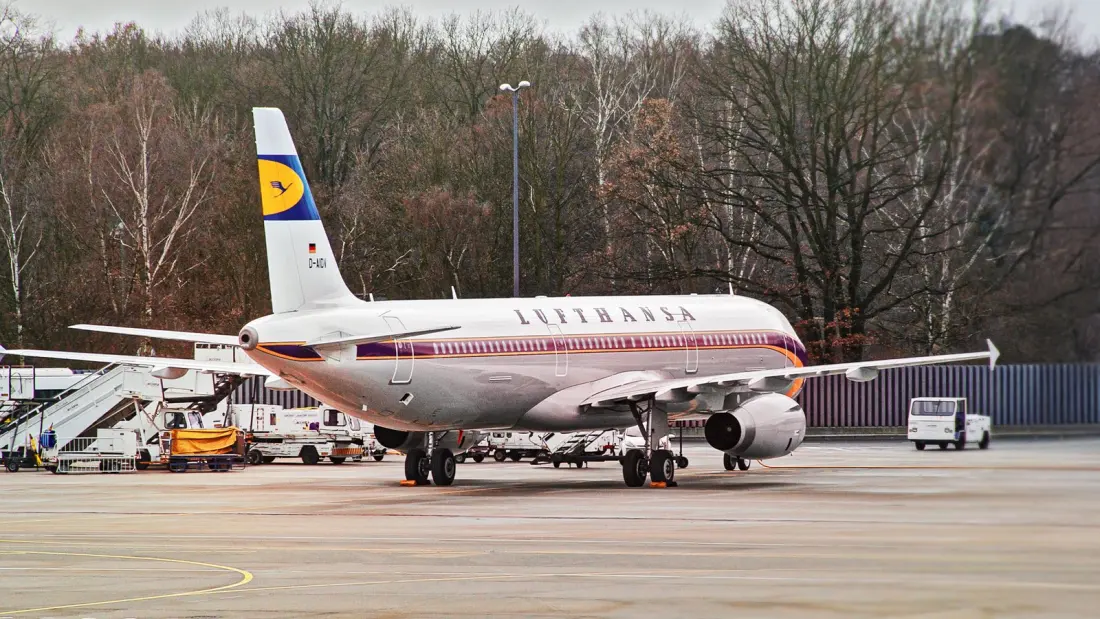
Some of the very first Airbus A321s ever built are still hauling passengers around Europe under Lufthansa colours. The airline was the launch customer for the stretched A320 back in the 1990s, and six airframes from that original delivery batch remain on its fleet — including D-AIRA, named Finkenwerder after the Hamburg district where Airbus built the type, delivered on 27 January 1994. A trio of these veterans, D-AIRH Garmisch Partenkirchen, D-AIRA and D-AIRC Erlangen, have each logged around 65,000 flight hours and up to 51,000 takeoff-and-landing cycles. That last figure matters: the A320 family was originally designed for 48,000 cycles, though later engineering approvals stretched the limit to 60,000.
The irony is that these narrowbodies are outliving jets that seemed far more glamorous. Lufthansa retired its last Airbus A340-600s in October after 23 years of service, yet keeps 14 A321-100s that are all over three decades old. The reason is simple money. The old A321s are fully paid off, so their higher fuel burn costs less overall than the finance payments on a new jet. The A321neo burns roughly 20% less fuel, but that saving doesn't beat a plane that owes nothing — at least not yet.
The maths is shifting, though. Fuel prices have climbed sharply since the Russian invasion of Ukraine, and European carbon rules force airlines to buy emission allowances for every flight within the EU. A thirsty 1994-vintage narrowbody now carries a real tax penalty, so Lufthansa has already started sending its oldest A321-100s to the aircraft graveyard at Teruel in Spain. The group still has 18 A321neos on firm order, with deliveries running through 2027.
There's a neat engineering story here too. The A321-100 was a simple stretch of the A320 — about 6.9 metres longer — but it kept the same fuel tanks, so it flew shorter distances than its smaller sibling. Airbus fixed that quickly with the A321-200 in the late 1990s, and the type has grown ever since: maximum takeoff weight has climbed around 20%, and today's A321XLR can fly up to 4,700 nautical miles. Lufthansa now uses A321neos on routes its old A340s once flew, such as Frankfurt to Cairo and Amman, packing 215 seats into an efficient twinjet instead of 270 into a four-engine fuel hog. Sister airline SWISS is running a parallel story, retiring classic A321-100s inherited from Swissair — including the famous 'Olympic Plane' HB-IOC, which carried seven million passengers over 27 years before retiring in 2023.
For travellers, this is worth knowing in two ways. Spot a Lufthansa A321 on a short European hop and you may well be boarding a piece of aviation history built when the Berlin Wall was fresh memory. And if you prefer newer cabins, the A321neo routes — Frankfurt–Rome, Munich–Athens and similar high-frequency city pairs — are where Lufthansa's fleet renewal is most visible right now.