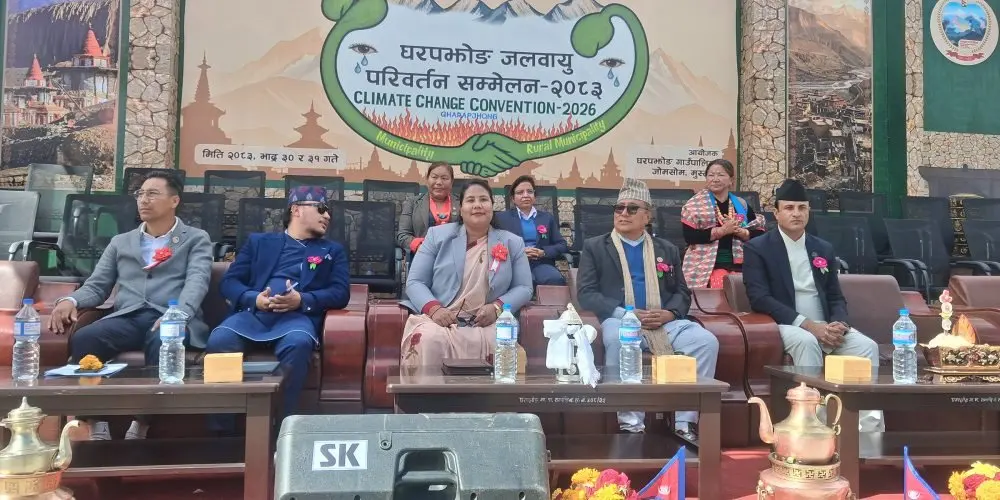
A two-day gathering opened this week in Mustang, the high-altitude district on Nepal's northern border with Tibet, and it has an unusually local flavour. The Gharpajhong Climate Conference began on Tuesday and pulled in more than 2,000 guests, including representatives from 431 local governments across Nepal.
The point of the event is simple but significant: it hands the microphone to local governments, the tier of administration closest to the communities actually living with climate change. In Nepal, where melting glaciers, erratic monsoons and shifting water supplies are daily realities rather than abstract forecasts, municipal and rural officials often see the impacts first and have the least say in national policy. This conference is designed to give them a platform to voice those concerns collectively.
Why should a traveller care? Because Mustang is one of Nepal's most extraordinary and most vulnerable destinations. The trans-Himalayan landscape of Upper Mustang — walled cities like Lo Manthang, sky caves, arid valleys that rarely see rain — exists in a delicate balance. Changing precipitation patterns are already affecting agriculture, water sources and the trails trekkers use. What local leaders decide, or fail to decide, shapes what this region looks like for visitors over the coming decades.
There is also a broader takeaway for anyone travelling in Nepal. With 431 local governments represented, the event signals how decentralised Nepal's governance has become since the 2015 constitution. For trekkers and travellers, that matters in practical ways: permits for restricted areas like Upper Mustang, road construction decisions, lodge regulations and conservation rules are increasingly made at the local level. The people discussing climate policy in Mustang this week are, in many cases, the same officials whose offices stamp trekking permits and who will decide whether new roads push deeper into trekking territory.
Conferences like this rarely make travel headlines, but in a country where tourism revenue depends heavily on fragile mountain environments, the intersection of local politics and climate is where the future of destinations like Mustang gets decided. Watch how its outcomes filter down — the recommendations from gatherings of local representatives often feed into provincial and national climate plans, which in turn shape infrastructure and conservation funding in the regions travellers love most.
If you are planning a trip to Mustang, this is a good moment to pay attention to conditions on the ground: trail status, water availability and weather patterns are all shifting, and local updates are the most reliable source.