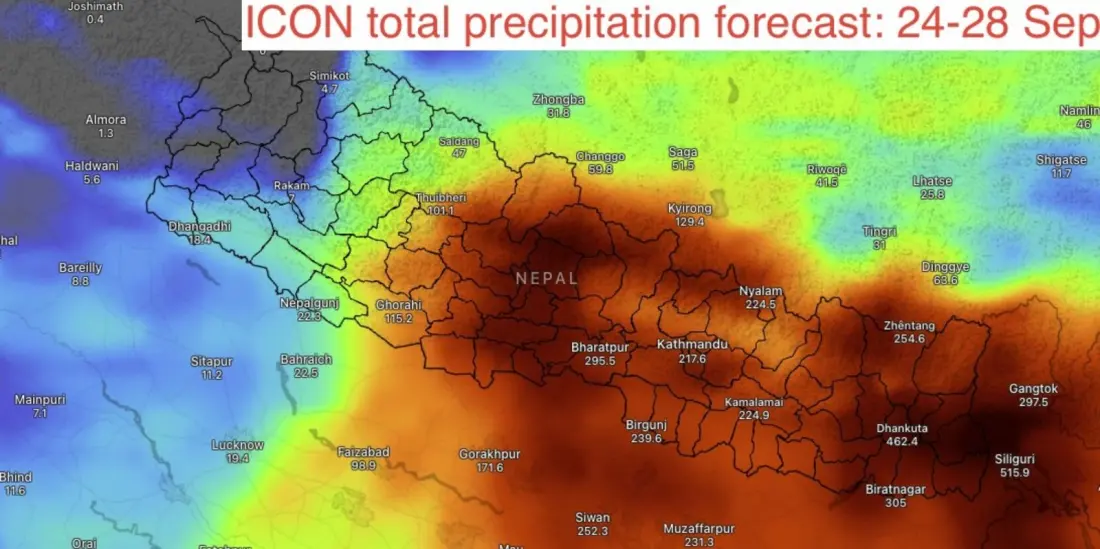
A Bay of Bengal depression named Arnab could intensify into the season's first cyclone and dump extreme rain across Nepal from 23-27 September, just as the autumn climbing and trekking season hits full swing. Forecast models suggest 400-600mm of rain in four days over parts of the country — more than some western districts normally receive in an entire year.
Meteorologists are watching the Bhote Kosi-Trisuli valley with particular concern. On 26 August, a collapse on Mt Langtang Lirung's north face sent an estimated 500 million tons of ice and rock into the river system, destroying everything along 100km of the valley. The disaster left more than 6,100 people missing, and the flood left behind a huge load of loose sand, gravel and boulders that fresh heavy rain could sweep downstream again. Only 1,451 bodies have been recovered so far.
The timing is bad for the mountains. Around 1,000 climbers are on Mt Manaslu (8,163m) this autumn, including 461 foreign nationals, and the season has already claimed four lives — two of them, a German climber and his Nepali guide, died in an avalanche near Camp III on a Sunday in late September. Most expeditions have pulled back to Base Camp rather than push for the summit through the unstable weather.
Officials are treading carefully because past Bay of Bengal systems have been unpredictable. Some storms fizzled out before reaching Nepal; a weak 2024 depression, by contrast, dropped 600mm of rain in 24 hours south of Kathmandu, triggering floods that killed 100 people and wiped out riverside settlements. The 2014 Annapurna blizzard, which killed 39 people including trekkers, remains a cautionary tale about gaps in early warning.
The World Weather Attribution consortium links the Langtang avalanche to climate breakdown destabilising the rockface, and scientists say warming is intensifying post-monsoon storms too. If Arnab does become a cyclone, it would be the first of the season — notable given the Atlantic hurricane season has produced no storms at all so far.
For travellers, the practical takeaway is simple: if you're trekking in Nepal in late September, keep a close eye on Department of Hydrology and Meteorology forecasts, stay flexible with itineraries, and treat river valleys and steep slopes with extra caution. Official agencies may pause rescue operations during the heaviest rain, meaning help could be slow if things go wrong.