More than 50 small earthquakes shook the area around Irazú Volcano in Costa Rica on Sunday morning, prompting questions from travellers and locals alike about whether the country's tallest volcano was stirring. According to scientists, it isn't. The swarm — recorded between roughly 6:30 a.m. and 11 a.m. — appears to be ordinary movement along a shallow fault, not magma on the move.
Seismologist Marino Protti of OVSICORI, Costa Rica's volcano and earthquake monitoring agency, said the quakes were all very shallow, at less than 3 kilometres deep, and lined up in a northwest-to-southeast pattern. That alignment is the giveaway: it matches slip along a fault plane rather than the kind of deep, scattered activity you'd expect from rising magma. The strongest quake measured a modest magnitude 3.1 near the village of San Juan de Chicuá in Oreamuno, and most of the activity clustered around the farming communities of Llano Grande, Tierra Blanca and San Juan de Chicuá on the Cartago side of the volcano — the same side visitors use to drive to the summit. Only a handful of the quakes were felt at all.
This part of Irazú has seen swarms before. Protti pointed to a notable episode after the magnitude 7.7 Limón earthquake in April 1991. Swarms like Sunday's typically fizzle out on their own within hours or days, though a few small aftershocks are possible while the fault settles.
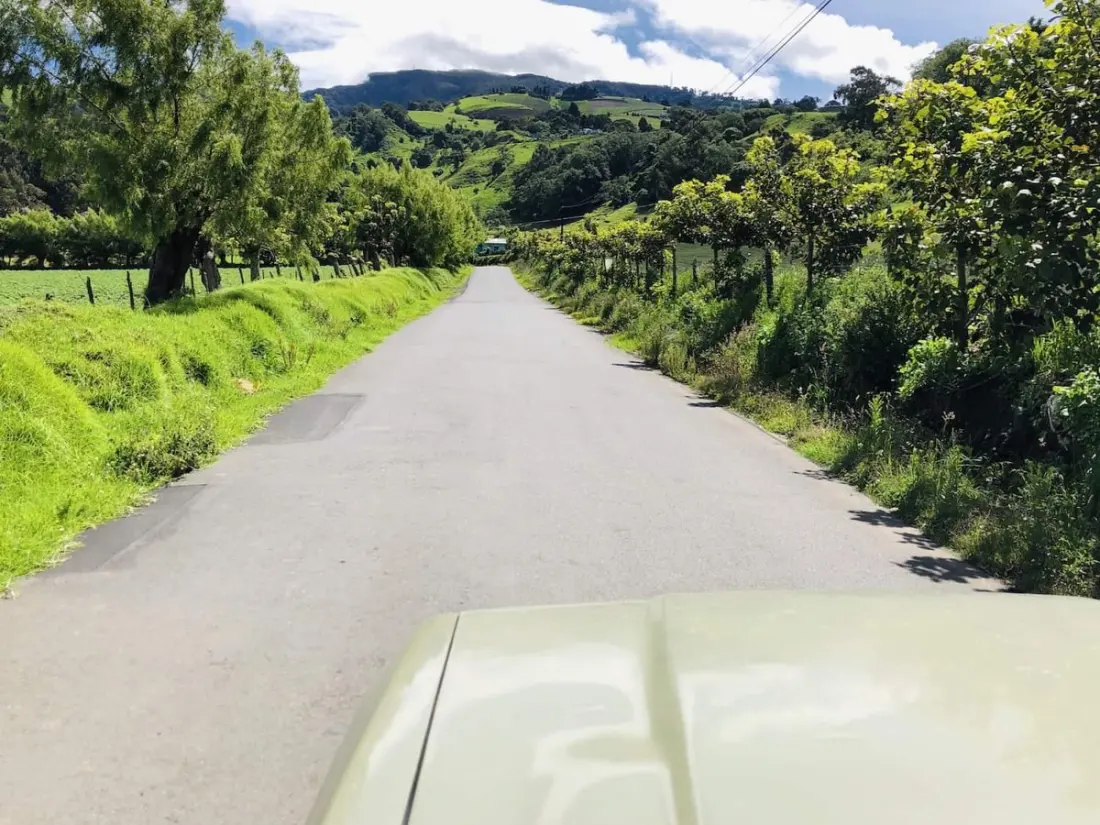
For visitors, the volcano itself is a non-story: no changes in gas emissions, ground swelling or crater-lake temperatures were reported, and Irazú remains under constant watch by OVSICORI and the National Seismological Network. The real obstacle to a visit is on the ground — literally. A landslide closed Route 219, the main road from Cartago to the national park, on Saturday evening after heavy rain, briefly trapping about 30 people. Nobody needed hospital treatment, and crews were mobilising machinery to clear the road. Route 417 via La Pastora has been suggested as the alternative route while work continues.
Why it matters for travellers: Irazú, at 3,432 metres, is Costa Rica's highest volcano and one of its most popular national parks, famous for the moonscape around its main crater and views that can stretch to both coasts on a clear morning. Its last big eruption was 1963–65, with a small steam blast in 1994 — a long quiet stretch that Sunday's swarm does nothing to interrupt. If you're heading up in the coming days, check the park's operating status and road conditions first, since saturated slopes can produce fresh slides even after the rain has stopped. Otherwise, the coffee towns around Cartago and the summit road remain very much open for business.