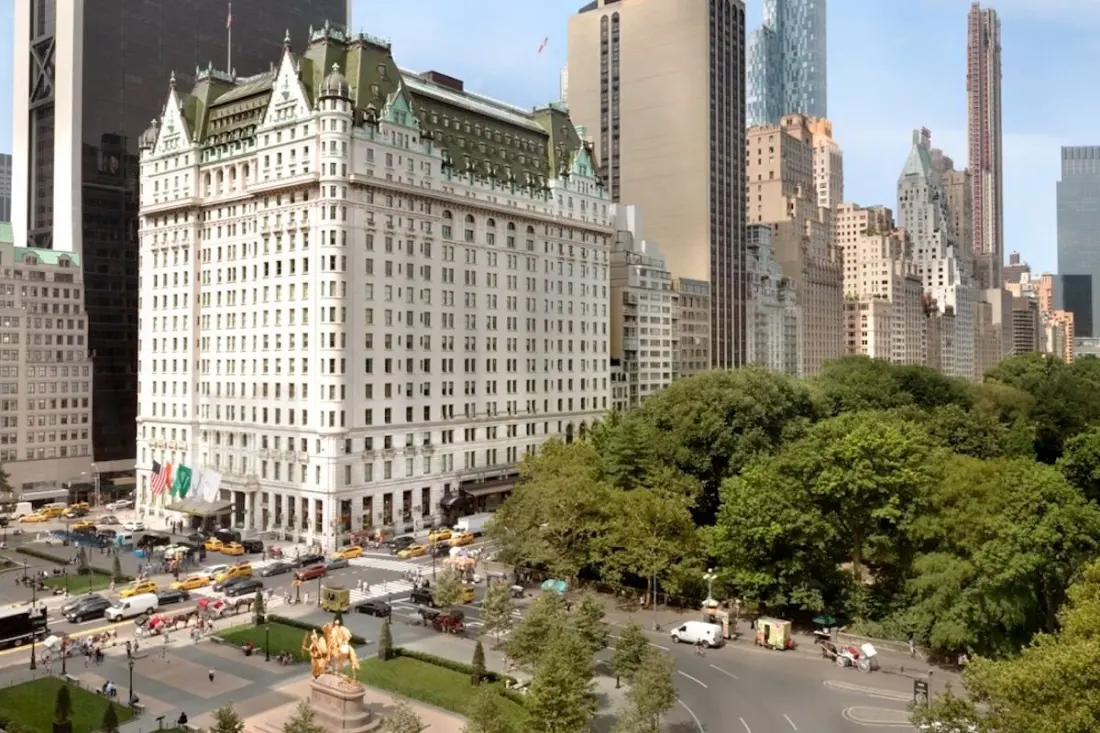
The Plaza — the chateau-style landmark on the corner of Fifth Avenue and Central Park South — will shut its doors in January 2027 and stay closed for at least four years while specialists carry out extensive conservation work on its protected exterior.
Operator Fairmont Hotels & Resorts says the scale and complexity of the façade project make a full shutdown unavoidable. Costs and the detailed programme of works haven't been announced, and planning has to juggle preservation rules, long-term structural care and the building's many stakeholders.
The impact reaches well beyond the 282 hotel rooms. The Palm Court with its stained-glass ceiling, the restaurants and the grand event spaces will all go dark, throwing weddings and existing bookings into disarray. It's also unclear whether the 181 condominium owners will have to vacate during construction — no public answer on that yet. For staff, there's at least some certainty: the Hotel & Gaming Trades Council says 378 union members will return at the same rate of pay when the hotel reopens.
The building, which turned 118 in October, opened on 1 October 1907. Architect Henry Janeway Hardenbergh designed it in an exuberant French Renaissance style — an 18-storey chateau dropped onto Manhattan. Its guest list and ownership history read like a century of American celebrity, from F. Scott Fitzgerald to Donald Trump, who was both a guest and a one-time owner.
What makes the closure so noticeable is that the Plaza is as much a destination as a hotel. Afternoon tea, the ballrooms and the ornate interiors have put it in films, TV shows and countless New York itineraries. Losing it for four years takes a piece of the city's visitor mythology off the map, not just a chunk of luxury room inventory.
If a Plaza stay or event is on your wishlist, the window is closing: book and confirm any reservations or celebrations well before January 2027, and plan alternatives — The St. Regis, The Carlyle or the Ramble Hotel-style newer openings all trade on classic New York glamour — for trips after that date. For the city itself, the project is a high-profile reminder that even icons need patient, expensive upkeep.