Your flight's two hours late and the gate agent has mumbled something vague. What actually happened? In the US, the FAA sorts every delay into five buckets: weather, carrier-caused issues, security events, National Airspace System problems, and the biggest one of all — late-arriving aircraft. Knowing the categories helps you predict which delays you can plan around and which are pure bad luck.
Weather is the one most travellers expect. Summer thunderstorms are the real nemesis: cumulonimbus clouds pack windshear, severe turbulence and lightning, and aircraft simply won't fly through them. When a storm parks itself near an airport, ground stops follow, inbound flights hold or divert, and the schedule unravels. Winter brings snow and ice; fog cuts visibility and forces extra spacing between approaches. Hurricanes do the same damage, just over a wider area and for longer.
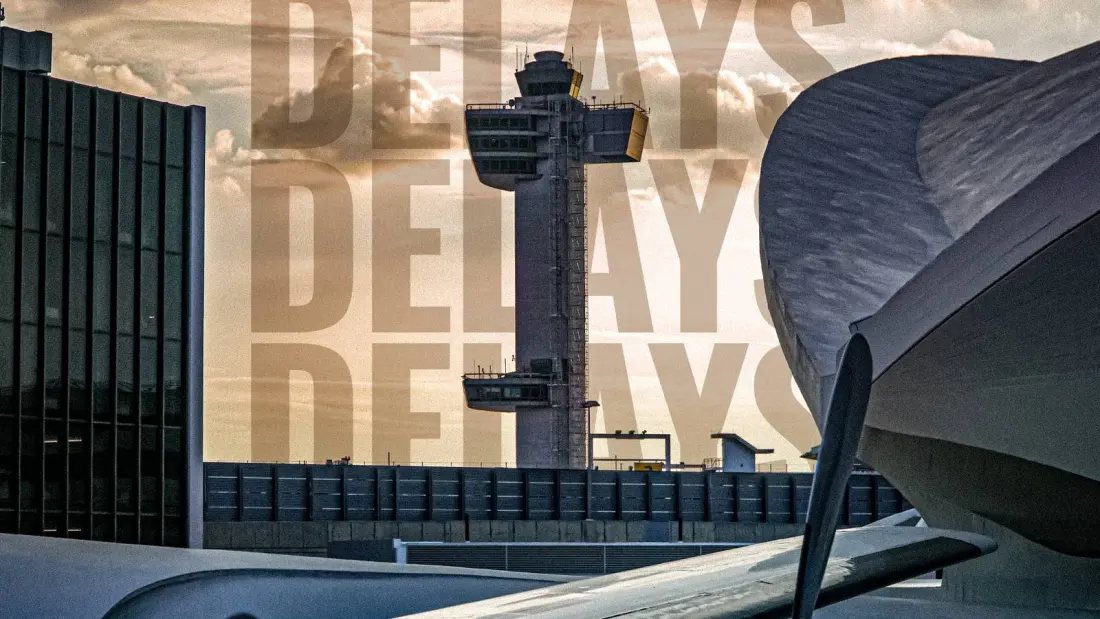
National Airspace System delays come from the infrastructure side: congestion, airport construction, software failures or understaffed control towers. These have been making headlines — a 2025 data outage at Newark approach control froze for 90 seconds and triggered mass cancellations, and a botched NOTAM software update in January 2023 grounded more than 10,000 flights nationwide, the first such stop since 9/11. Air traffic control staffing remains a chronic weak point as flight volumes grow.
Security delays are the rarest category, under 1% of the total, and cover things like terminal evacuations, fence breaches or screening equipment failures. Oddly, a disruptive passenger doesn't count here — removing someone is the airline's call, so it's logged as a carrier delay. Carrier delays also include cleaning, catering, mechanical issues and late bags, and they're the numbers airlines watch most closely because they're within their control. Delta, which trademarked the phrase 'On-Time Machine', topped US carriers with 82.5% on-time arrivals in September 2026, per Cirium, while Southwest sat at the bottom on 71.1%.
Then there's the sleeper cause: late-arriving aircraft. Narrowbody jets hop between four or five flights a day with barely any ground time, so one morning delay cascades through the entire schedule — the FAA calls it delay propagation, and it's the single largest cause of delays in the US. This is where hub-and-spoke networks help: at a hub, an airline can swap in a spare aircraft and reset the day, something that's far harder on point-to-point routes.
Why does any of this matter to you? Because it shapes smarter booking. Morning departures are less likely to inherit an aircraft that's already late. Hub routings give an airline more chances to recover when things slip. And when a storm rolls in, how quickly you get rebooked says a lot about which carrier you chose — reliability during disruption is exactly where the strong operators earn their reputation.