New figures from Colombia's Ombudsman's Office show just how unevenly safe the country remains. Between 2017 and 2026, more than a third of all people affected by mass forced displacement — 35.7% — belonged to ethnic groups: Indigenous, Afro-Colombian, Raizal, Palenquero and Roma communities. During that span, the office recorded 1,002 mass displacement events affecting 394,839 people, driven by armed groups, illegal mining and drug trafficking.
The trend has continued into 2026. In the first eight months of the year, 111 mass displacement events affected 23,931 people, while 63 confinement events — where communities are effectively trapped and unable to move freely — restricted the movement of 80,369 more. A fresh early warning for the eastern department of Guainía flagged risks to the Curripako, Yeral, Baniwa, Sikuani and Puinave peoples, including the threat of child recruitment.
Cauca is the department with the most people displaced this year (over 6,700), followed by Norte de Santander, Antioquia, Nariño and Magdalena. For confinement — a different but related risk — Chocó leads with 15,641 people affected, ahead of Cauca, Putumayo, Caquetá and Bolívar. Several of these names will be familiar to travellers: Cauca and Chocó in particular hold some of Colombia's most compelling scenery and culture, from the Pacific coast rainforests to coffee-zone foothills, and they are precisely the areas where overland travel can be unpredictable.
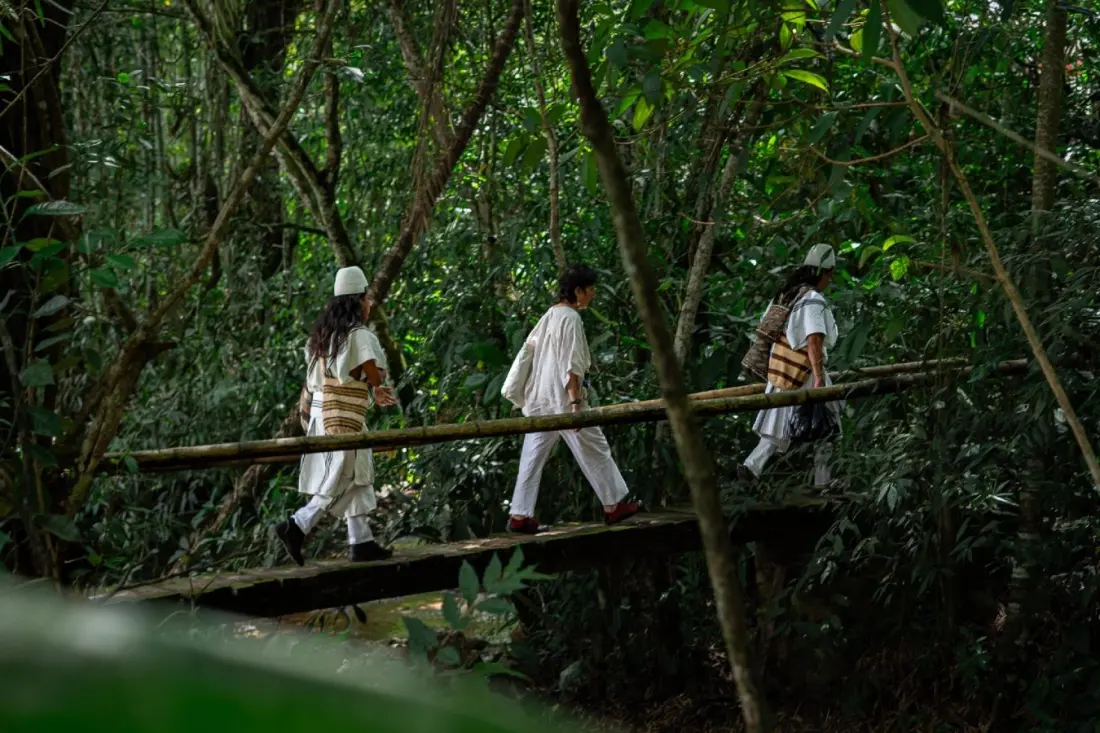
The broader picture: Colombia is home to 1.9 million Indigenous people across 115 distinct peoples, plus 4.67 million Afro-descendant Colombians, and 65 Indigenous languages are spoken alongside Creole, Palenquero and Romani. Community leaders have long argued the true displacement toll among ethnic groups is undercounted — a form of statistical invisibility they tie to structural discrimination.
There is one glimmer of movement data worth noting: irregular migration through Colombia dropped sharply this year, with 69,072 migrants recorded between January and August 2026, down 39.1% from the same period in 2025.
So what does this mean if you're planning a trip? Colombia's main tourist corridors — Bogotá, Medellín, Cartagena, the coffee axis, Tayrona, San Andrés — operate normally, and millions visit without incident. But if your itinerary stretches into rural Cauca, Chocó, Catatumbo in Norte de Santander, or border zones, check current advisories, stay flexible on routes, and consider flying rather than driving through remote areas. Confinement events in particular can cut off road access with little warning, and Indigenous territories such as the Sierra Nevada de Santa Marta have their own access rules that visitors are expected to respect.
Travelling with registered local operators, especially in areas with Indigenous and Afro-Colombian communities, is both the safer and the more respectful approach — these are communities managing enormous pressures on their land, not simply stops on a route.