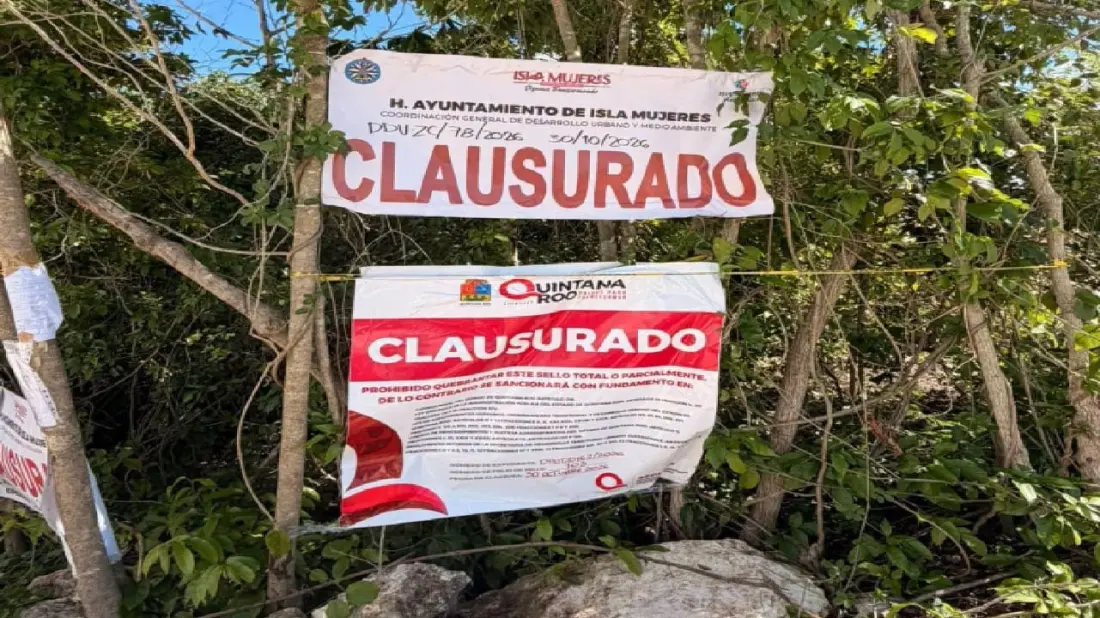
Isla Mujeres city hall has closed nine housing developments in the island's Continental Zone after inspectors found they were selling land without the paperwork required to do so. The operation was carried out with state urban development authorities, and the message to buyers was blunt: check before you buy.
The developments named in the closures include Jardines de Pandora, Gran Isla Continental, Isla Continental II, Fraccionamiento Yahwe, Valles del Ramal, Costa Continental, La Esperanza and Bahía Continental. Municipal officials said each was being promoted and sold without the permits, official assessments, certificates and authorisations that must come from federal, state or municipal bodies.
The inspections were run by Isla Mujeres' General Directorate of Urban Development, Public Works and Planning, working alongside the state's Secretariat for Sustainable Territorial and Urban Development, known as SEDETUS. City hall framed the sweep as an attempt to stop irregular land sales, protect family savings and keep urban growth in the Continental Zone orderly. It also stressed that policing land use takes all three levels of government, since legal, environmental and planning rules each have different authorities behind them.
Why should a traveller care? The Continental Zone is the mainland strip facing Isla Mujeres island, and it has become a magnet for cheap land offers pitched at both locals and foreigners dreaming of a base near Cancún and the Caribbean coast. Plots marketed as ready-to-build in developments like these often turn out to lack legal standing, which means no services, no title and no recourse. Anyone considering land or a pre-construction purchase in the area should verify the development's permits first. The municipal government has set up a channel for exactly that: enquiries can be sent to dirgraldu@islamujeres.com.mx.
The wider takeaway is that enforcement in the Cancún-to-Tulum corridor is tightening, which is good news for buyers but also a reminder that glossy sales offices can outpace regulation. If a deal on Mexican coastal land looks unusually cheap, the missing piece is usually the paperwork. Use a notary, ask for the development's authorisations in writing, and check with the municipality before signing anything.
This story was first reported by Riviera Maya News.