
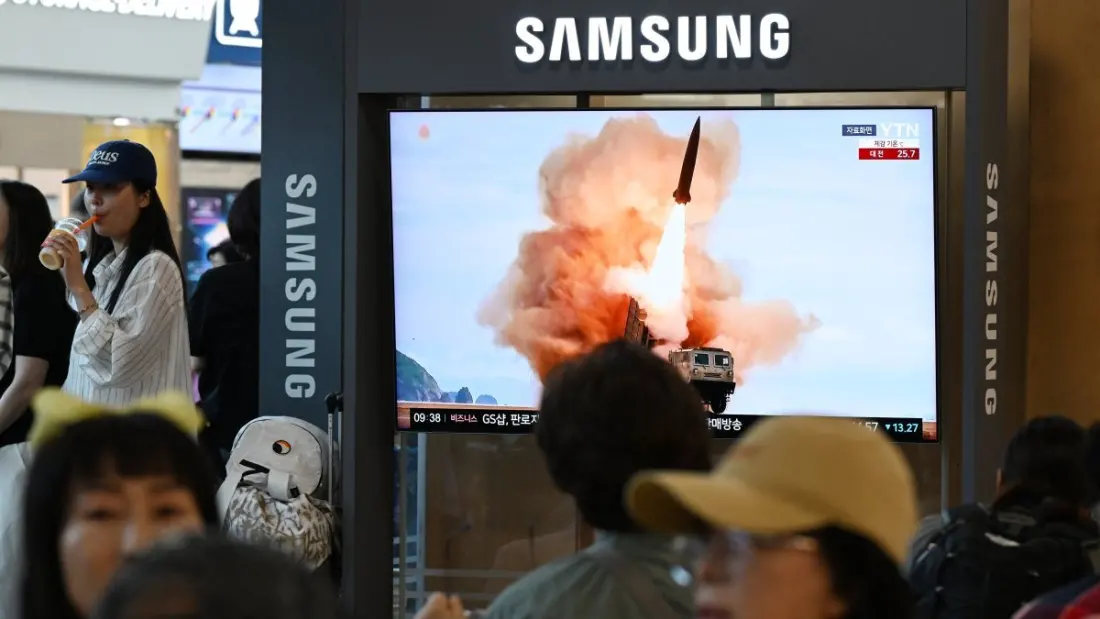
North Korea launched an unidentified projectile toward the waters east of the Korean Peninsula on Saturday, according to South Korea's Defense Ministry. No details were immediately released about what type of weapon was fired or its flight path, and South Korea's Joint Chiefs of Staff — cited by the Yonhap news agency — began analysing its specifications and range.
The timing is not random. The launch came a day after South Korea, Japan and the United States wrapped up joint military drills on Friday, exercises designed to test their readiness against North Korea's missile and nuclear programmes. Pyongyang has a long habit of answering these drills with shows of force.
In fact, this follows a busy August. Last month alone, North Korea fired more than 10 short-range ballistic missiles and ordered its military to stay at full readiness while the United States and South Korea ran their own joint exercises. Saturday's launch suggests that pattern is continuing into September.
For travellers, what does this actually mean? Day-to-day life in South Korea — Seoul included — carries on normally despite these events, and millions of visitors move through the country each year without incident. The practical takeaway is awareness rather than alarm: missile launches are announced quickly by South Korean authorities, and the country has a well-practised public alert system. If you're travelling to South Korea or Japan, it's worth keeping an eye on official guidance from your foreign ministry and local emergency alerts, especially around periods of joint military exercises, when launch activity tends to spike.
It's also a reminder that tourism to North Korea itself remains effectively off the table for most Western passport holders, and border regions like the Demilitarized Zone operate under their own security protocols with tours sometimes affected by the wider news cycle. Anyone with trips booked to the region should simply stay informed — flights, trains and city life in South Korea are not typically disrupted by these launches, but checking travel advisories before and during your trip is sensible practice.