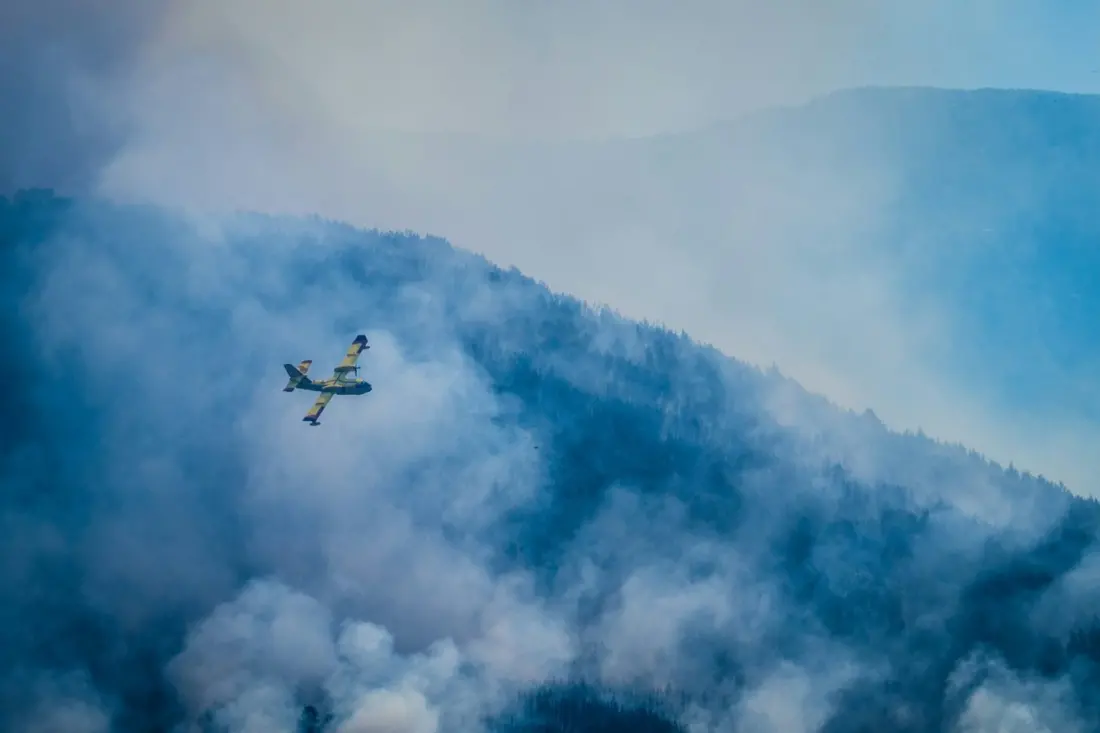
It has been more than two months since the wildfire that tore through the Omiš area of Croatia's Dalmatian coast, and the town is still living with the aftermath. Six people died, dozens were injured, and the damage is estimated at around €100 million. The fire started near Lokva Rogoznica and spread fast; among the victims were a 79-year-old retired Omiš firefighter, Drago Lelas, and two seasonal workers, Dragana Antešević (34) and Katica Nikolić (58). The most recent death came in a Split hospital, well over two months after the flames were out.
For residents who survived, the struggle has shifted from escape to bureaucracy. Marina Ozretić, who lost her home and only escaped because she chose to run when she did, says she has been stuck in limbo ever since, bouncing between the city, county and state authorities with no clear answer on who funds or coordinates reconstruction. Local business owner Goran Lović, whose beach bar in Lokva Rogoznica burned, describes a similar picture: an initial wave of volunteer clean-ups that has since stalled, tangled property rights preventing clearing work on both private and state land, and no state money for rebuilding yet paid out. He points at national bodies — Croatian Waters, Croatian Roads, Croatian Forests — asking why hydrants haven't been installed and roadsides cleared, and warns that with the summer season roughly five months away, time is running short.
Two questions keep residents angry. First, the cause: 75 days on, police have opened a criminal investigation and seized CCTV footage (including from Lović's property near the ignition point), and Lović suspects the fire was set, but nothing has been communicated publicly. Second, the warning system: SRUUK, the country's public alert infrastructure, reportedly worth around €8 million, was never activated in Omiš — even though it was used during a fire on Brač. Residents point out that most of the deaths occurred in Mala Luka, some distance from where the fire began, and believe timely alerts could have changed the outcome.
For travellers, this is a reminder that the Omiš and Lokva Rogoznica stretch of the Dalmatian coast, popular in summer for rafting on the Cetina river and its beaches, is a community in mourning and mid-recovery. Local businesses — beach bars, small restaurants, family accommodation — took a direct hit, and the people who run them say visitor support in the coming season will matter. If you're planning a Dalmatian coast trip, this coast is also a case study in why wildfire risk and emergency preparedness are now part of travelling in the Mediterranean in late summer.