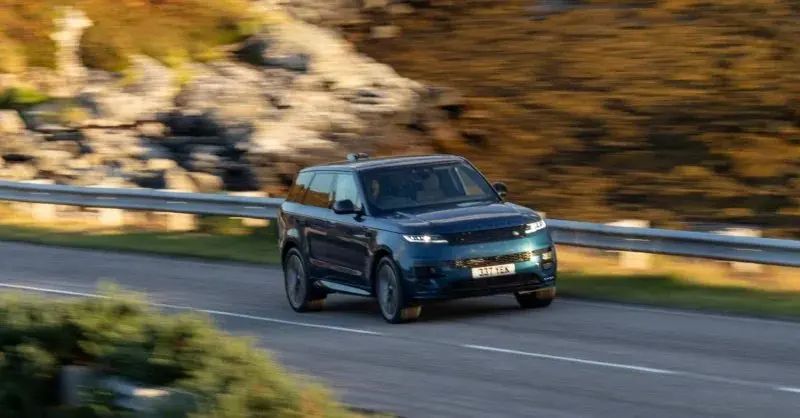
Range Rover chose its homeland to launch its first electric car, and for good reason. Back in 1947, Rover's managing director Spencer Wilks tested prototype off-roaders on his Islay estate, where his gamekeeper supposedly coined the phrase that gave the brand its name. Nearly eight decades later, the company returned to Scotland to show off the Range Rover Electric — priced at £154,070 (roughly $206,000) and a decade in development.
The first surprise is how ordinary it looks. Parked in a line at Inverness Airport, the electric models are nearly indistinguishable from petrol versions; only subtle EV badging and a smoother grille give the game away. Once moving, though, the difference is obvious in the best way. Rather than stripping the car of its character, electrification turns up what luxury SUVs are really about: hush, calm and control.
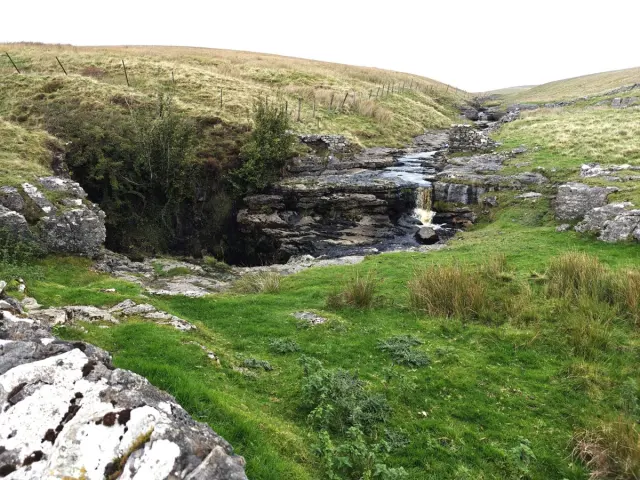
The Highlands proved an ideal test. On the 20,000-acre Novar Estate, with 150 miles of tracks, wind turbines and mist for company, the 2.8-tonne car handled waterlogged, rutted gravel with impressive composure. The trick is speed of response — the electric powertrain can redistribute torque to individual wheels in 50 milliseconds, ten times faster than the combustion model. JLR's engineering director Matt Becker sums it up: the point isn't that it can go further off-road, but that it does so more smoothly. Descending a slick slope toward Loch Morie, the big SUV barely flinched, its flat underfloor hiding a double-stacked 118.5kWh battery.
On tarmac the story continues. Rear-wheel steering makes the car shrink around you on tight backroads, 542bhp arrives as a silent surge, and twin-chamber air suspension flattens broken surfaces. A well-tuned single-pedal mode brings the car to a smooth, complete stop while harvesting energy.
The practical numbers: JLR claims up to 372 miles of range (WLTP), or 333 in real-world driving — though cold, wet Highland motoring with the heating on eats into that. Fast charging is genuinely quick, with a 10-to-80 percent top-up taking around 22 minutes on a 350kW charger, and North American owners get access to Tesla's Supercharger network.
For travellers, this is worth watching even if you'll never buy one. Electric luxury SUVs like this are set to become the default hire-car and chauffeur option at high-end hotels and safari lodges, and the pitch here is that going electric actually improves the experience — quieter game drives, smoother rides, no lost capability. And if the backdrop tempted you: the launch route itself is a lovely Highlands itinerary, from Inverness across the Kessock Bridge to the Novar Estate, the 1782 Fyrish Monument on the hilltops, and Aldourie Castle on the shores of Loch Ness as a fairytale base. Scotland, it turns out, remains the right place to see what a Range Rover can do — electric or otherwise.
First published by Elite Traveler.