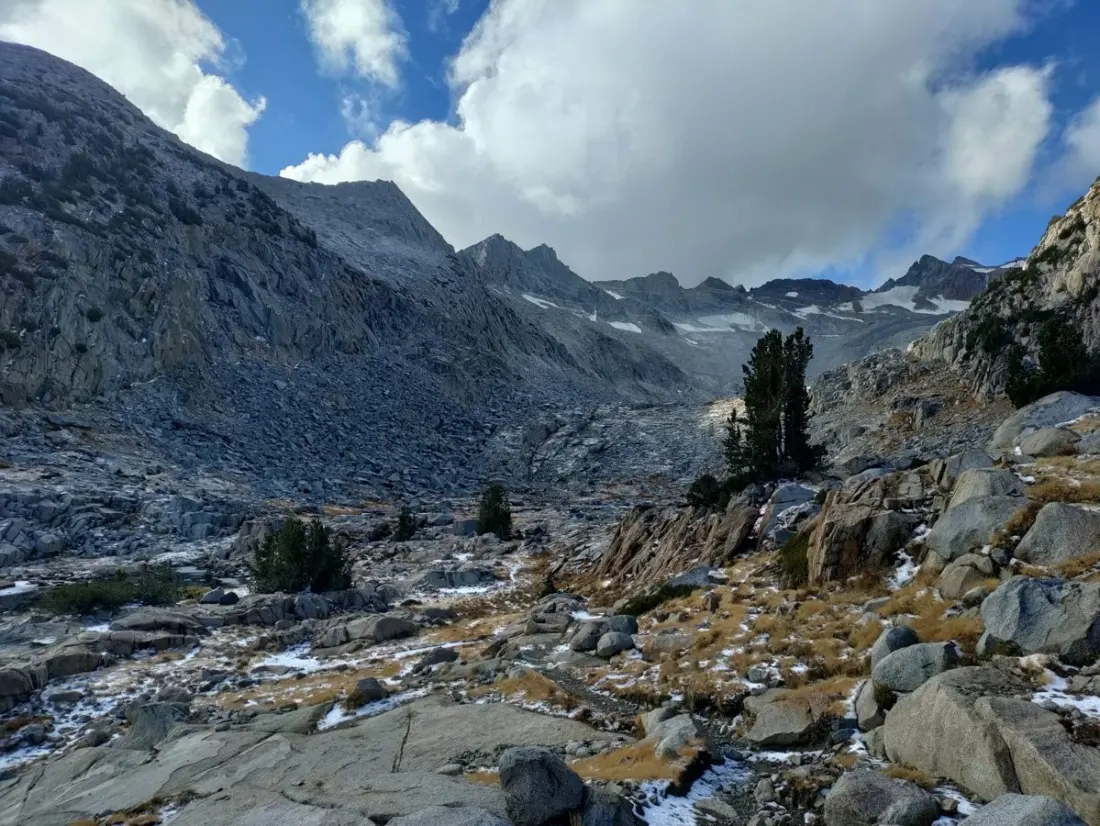
A backpacker's first two days on the high route out of Yosemite's Tuolumne Meadows offer a tidy lesson in how fast conditions swing in the Sierra Nevada — and why it pays to listen to your body over your mileage plan.
Day one started in freezing darkness with a 7:15am departure, following the Tuolumne River through the meadows of Lyell Canyon before the trail tilted sharply upward. Ten miles were done by noon. Rather than honour a self-imposed 10-mile cap, the hiker pushed on toward Donahue Pass, then wisely bailed on the final push when a gorgeous alpine basin appeared at 2pm. It was the right call: mild altitude symptoms — a headache, dizziness standing up, heavy breathing — set in that evening.
The mountains added their own drama overnight. Around 2:30am came a soft pattering, building by 4:15am into a full storm of graupel — the soft, in-between precipitation that sits between hail and snow — leaving a couple of inches coating the tent by morning.
Day two brought a later 9am start, a successful crossing of Donahue Pass, and snow flurries that drifted in and out all the way past Island Pass. The weather couldn't settle: sunshine, then cold wind, then clouds, forcing constant layer changes. The plan to make up lost miles meant a long push past Thousand Island Lake and its neighbouring lakes to Rosalie Lake, finishing a 15.5-mile day on switchbacks the hiker described as far tougher than they look on paper. The night at Rosalie was windy and near freezing, though a warming trend was forecast.
For anyone eyeing this corridor — it's the classic opening stretch for John Muir Trail and Pacific Crest Trail section hikers — the takeaways are practical: don't chase big mileage on day one at elevation, camp early if altitude is biting, and pack for all four seasons even in summer. The Lyell Canyon-to-Thousand Island Lake stretch is also one of the most scenic warm-ups anywhere, with river meadows giving way to a pass and a chain of glittering alpine lakes.
Read the original on The Trek.