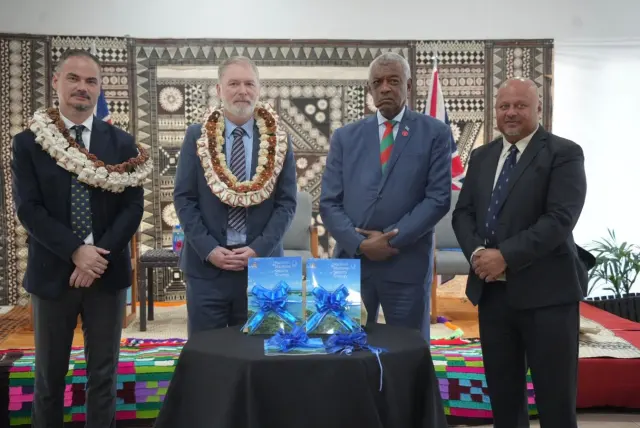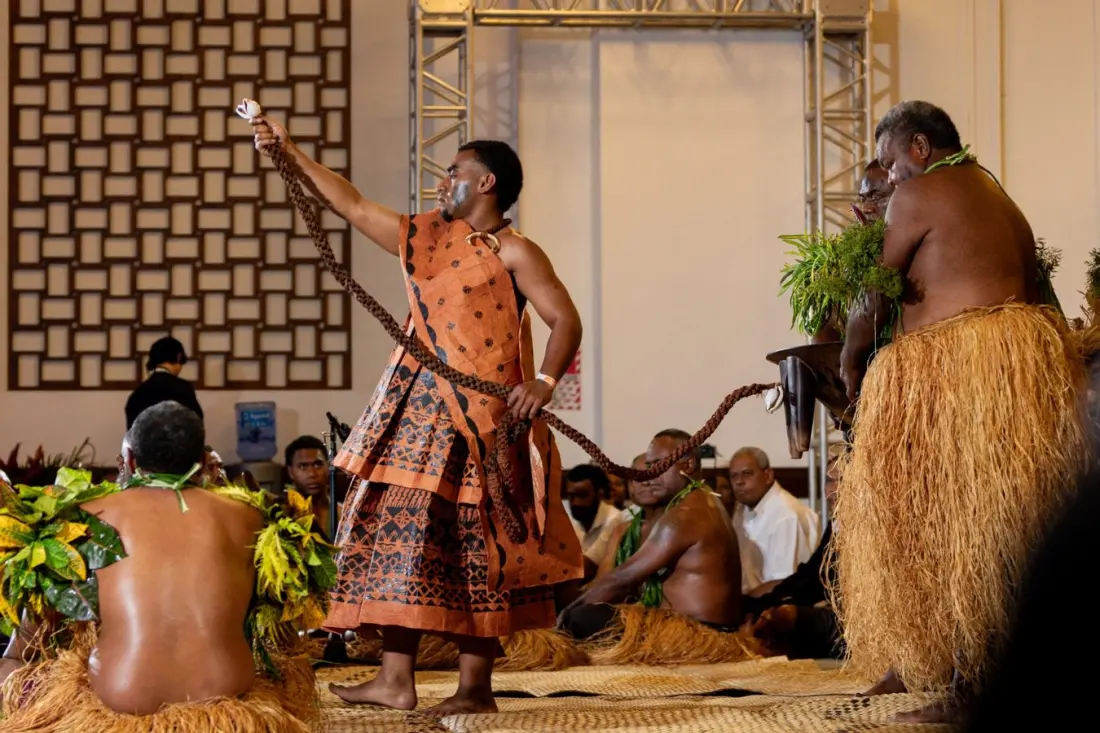
A row of speakers at a recent Pacific ocean forum delivered one consistent message: conservation projects imposed from outside tend not to last. Dr Winifereti Nainoca, a Fijian conservation specialist, was blunt about it — funders should arrive with questions, not finished proposals. Her cautionary example: a community that needed better boreholes was handed machines it had never asked for. Her prescription for donors and NGOs is a four-stage model — co-design, co-implement, co-end, then leave — so projects survive once external money and staff move on.
Backing that up came from Justin Mohamed, Australia's inaugural Ambassador for First Nations People, who argued that customary authority and Indigenous knowledge should shape the Pacific's ocean and climate work at every level — design, governance and delivery. He pointed to Australia's Indigenous Ranger Programme as proof the model scales: traditional owners govern and manage 19 'sea country' protected areas covering more than 9.3 million hectares of Australian marine and coastal environment.
Fijian examples show what community-led restoration looks like on the ground. One traditional leader described replanting 20 hectares of mangroves across four villages and restoring 26 hectares of forest — while flagging the missing piece: reliable revenue streams so community forest-carbon projects can actually pay their way.
Academic voices added a framework for bridging old and new. Alumita Talei Sekinairai, a PhD student at the University of the South Pacific, presented a draft model that starts from relationships — between people, ancestors, the Vanua and the ocean — and weaves customary authority and traditional ecological knowledge together with science, finance and technology. And Steph Lysaght, acting British High Commissioner to Fiji, made a communication point that resonates beyond diplomacy: drop the jargon. Words like 'resilience' can hide real losses — homes, livelihoods, lives — and plain language plus genuine listening should come first.
Why should a traveller care? Because much of what makes the Pacific extraordinary — mangrove coastlines, healthy reefs, managed fishing grounds — is increasingly stewarded by the very communities visitors meet. Indigenous-led conservation often overlaps with community-based tourism: village-guided reef and mangrove visits, ranger-led coastal walks in northern Australia, locally run homestays tied to restoration projects. Understanding that authority sits with customary owners helps travellers choose experiences that put money and decision-making in local hands, rather than supporting glossy outside initiatives. It's also a useful lens for the coming years: as carbon and blue-economy funding flows into the region, expect more community-run projects — and more opportunities to engage with the ocean on Indigenous terms.