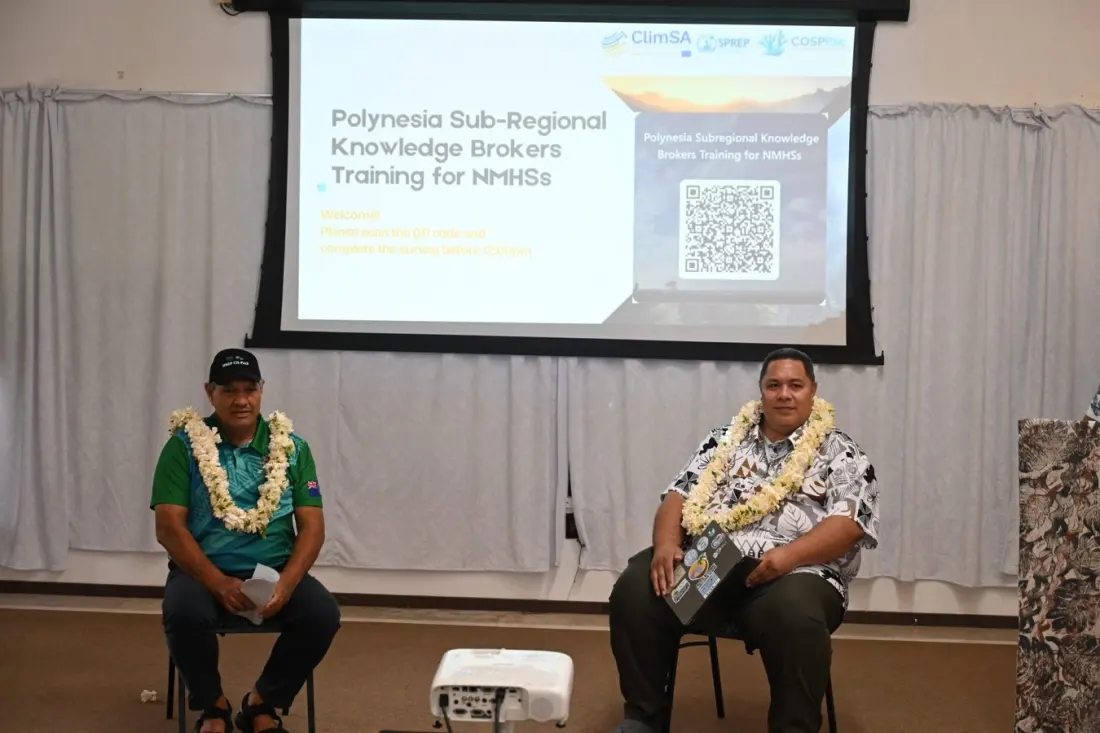
Rarotonga is hosting a five-day gathering of meteorologists and journalists from across Polynesia, all working on the same problem: making sure weather warnings actually reach the people who need them. The Polynesian Sub Regional Knowledge Brokers in Climate Services Training has drawn delegates from Fiji, the Cook Islands, Tuvalu and Tonga, plus regional media and development partners.
The premise is simple. A perfect forecast is useless if nobody acts on it. Sunny Seuseu, climate prediction services coordinator at the Secretariat of the Pacific Regional Environment Programme (SPREP), told participants that the real value of climate information lies in how well it is communicated and used. Pacific islands are dealing with intensifying tropical cyclones, droughts, marine heatwaves and increasing climate variability, so the gap between a weather office and a village can have serious consequences.
Seuseu framed the role of forecasters and journalists as go-betweens rather than just data suppliers — bridges between science and the communities, governments and industries that depend on it. The training is designed to build partnerships, swap experiences and pressure-test ideas, with delegates expected to take the lessons home to their own national services.
Cook Islands Meteorological Service director Maara Vaiimene opened the event, with backing from SPREP and the European Union. His message: nothing learned in the room stays there. Knowledge has to translate into practical benefits for people across Polynesia and the wider Pacific, and the region needs to work as what he called one Pacific family so no community gets left behind.
So why should a holidaymaker care? Because if you are planning a trip to the Cook Islands, Fiji, Tonga or Tuvalu, your safety in cyclone season depends on exactly these systems — and on local media and forecasters being able to turn a storm track into a clear instruction. Stronger early warning networks mean better information before and during your trip, faster responses when weather turns, and communities better able to recover after events. Travellers heading to the Pacific between November and April should already be checking forecasts and hotel cyclone policies; this kind of regional training makes that information more reliable and better distributed. It is also a reminder that Pacific tourism depends on resilient local infrastructure, so supporting destinations that invest in preparedness pays off for everyone.