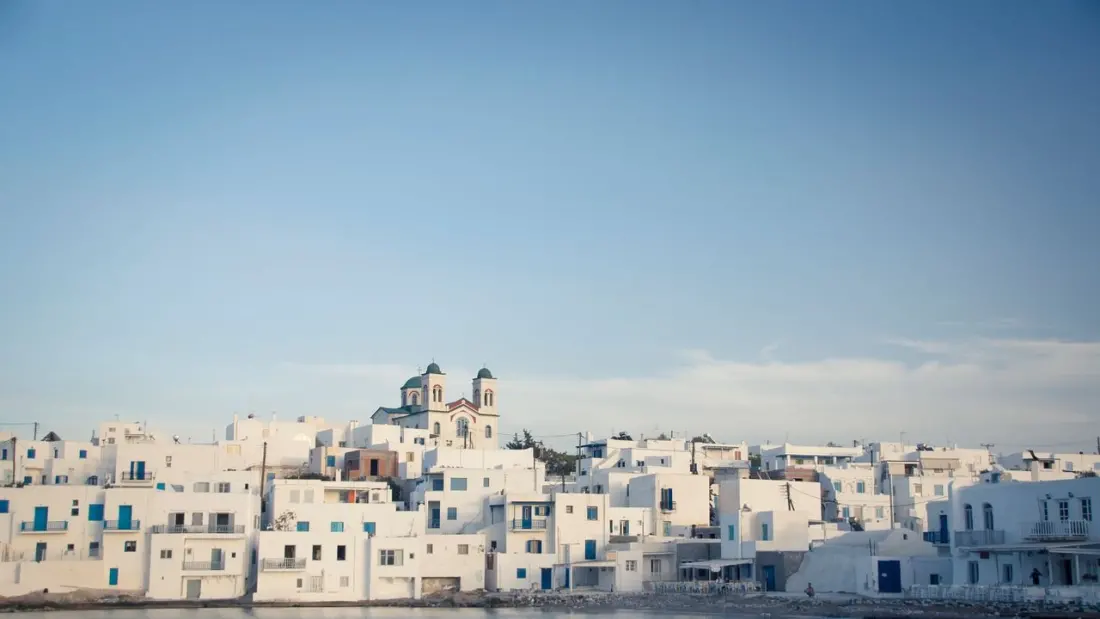
Most people meet Paros in August, wedged between beach umbrellas on the ferry from Athens. Ceramic artist Christiane Smit met it differently — on a 2008 holiday that turned into a permanent move. Nearly two decades later, she runs a ceramics studio in the hilltop village of Lefkes and rents out Moonhouse, a minimalist clifftop villa, and her advice to travellers is simple: come when the summer crowds don't.
The sweet spots, she says, are late spring and early autumn. Everything is open, but nothing feels rushed. Mornings smell of jasmine and bakery bread; the light does dramatic things to whitewashed walls; locals set the pace. Cafés fill with familiar faces rather than tourists, fishermen head out at dawn, and Athenians sneak over for long weekends. There are visitors, but a different kind — people who want the island at half speed.
Winter is quieter still, with its own rewards. Rainstorms turn the hills unexpectedly green, and tavernas shift to seasonal cooking: revithada, a slow-baked chickpea stew, braised goat or lamb in local wine, and mageirefta — whatever is simmering in the pot that day, which is what locals actually order. The main catch is that strong winter weather can delay ferries, and many seasonal businesses shut until spring.
Smit's calendar is a useful template. Wander the inland villages — Lefkes, Marpissa, Prodromos, Kostos and Dryos — where seasonal festivals and religious celebrations reveal a side of the island that Parikia's summer scene never shows. Hike the ancient Byzantine paths linking the villages; with hardly anyone on the trails, you get the Aegean all to yourself. And for lunch, she swears by the family-run taverna at Hotel Julia in Drios: swim in the clear water below, then walk up for a long, unhurried meal that hasn't changed in generations.
Why it matters: shoulder-season Greek islands are having a moment, and Paros is one of the few big names that stays genuinely lived-in outside July and August. Ferries run, villages function, and prices drop. If you'd rather hear church bells than beach DJs, this is the version of the island worth booking. Full credit to Condé Nast Traveller UK for the original interview.