Rangers across America's national parks keep seeing the same problems: litter in Yellowstone's hot springs, squirrels biting people at the Grand Canyon, illegal campfires in Joshua Tree. Nearly all of it comes down to one framework — the seven principles of Leave No Trace.
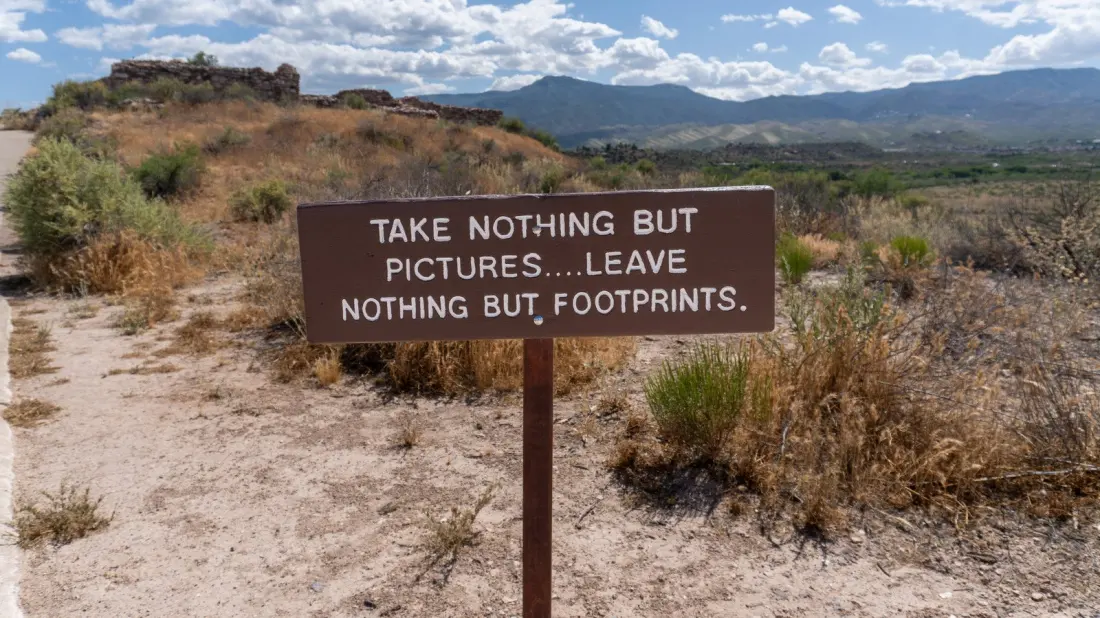
The idea has been around since 1994, when the Leave No Trace Center for Outdoor Ethics formed in Boulder, Colorado. The non-profit now works with the National Park Service, U.S. Forest Service and Bureau of Land Management to spread the word. And crucially, as traveling team member Jeanelle Soland points out, these aren't rules you can break — they're a mindset. It's about small, achievable habits, not perfection.
The first principle is planning ahead. Rangers say the most common rookie mistake is simply not preparing: wrong shoes, no water, no backup plan. Check park websites or the NPS app for closures and weather, aim for quieter periods, travel in small groups, pack the NPS's "10 Essentials," and tell someone your route — then stick to it. As one Canyonlands ranger puts it, if you said you'd be at Chesler Park, don't turn up somewhere else.
Second, stay on durable surfaces. Use established trails, designated tent pads and existing campsites, pitch your tent on gravel or bare ground rather than plants, and camp at least 200 feet from lakes and streams in undeveloped areas. Yosemite rangers note that even a few steps off-trail during a short growing season can kill rare plants or disturb ground-nesting birds.
Waste disposal is principle three, and it covers more than crisp packets. Bag your dog's waste, bury human waste in a cat hole or use a WAG bag, and think twice about even toothpaste — the recommended trick is to spray your spit wide across a large area at the edge of camp so animals can't gorge on it. The scale of the litter problem is real: one NPS geologist has documented over 23,000 pieces of trash in Yellowstone's hydrothermal features alone.
Fourth, leave what you find. Rocks, plants and artifacts stay where they are — removing artifacts is illegal, metal detectors get confiscated, and building cairns is banned because official cairns are navigational aids on routes like those in Acadia and El Malpais. Fifth, minimise fire impact: keep fires small in established rings, follow the "Four D's" for firewood (dead, down, dinky, distant), and use the "drown, stir, drown, feel" method to fully extinguish it. Prefer a stove and lantern if you can.
Finally, respect wildlife and be considerate of others. Feeding animals is illegal in every park — and it backfires. Rock squirrels cause more injuries at the Grand Canyon than any other animal, and Death Valley rangers report coyotes that stand in the middle of roads begging for food. At Glacier, you may not approach a wolf or bear within 100 yards. Keep dogs leashed, use a zoom lens instead of creeping closer, and let wild things stay wild.