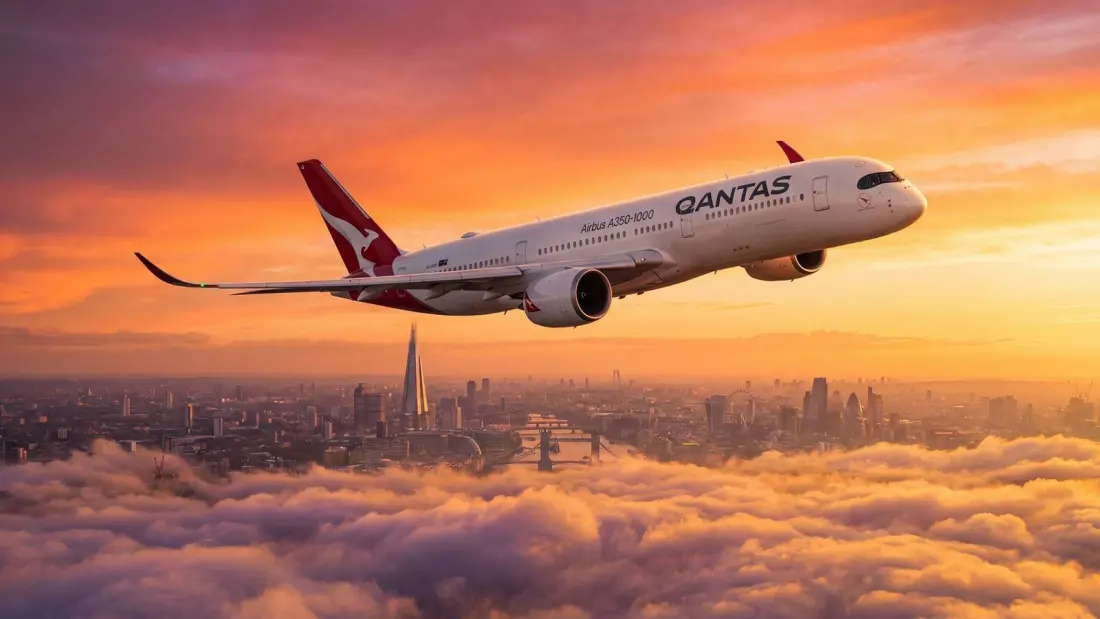
Qantas is about to break the record for the world's longest commercial flight. From 2027, Project Sunrise will link Sydney and London Heathrow nonstop — roughly 17,000 km and around 21 hours 40 minutes in the air. No stop in Singapore or Dubai, no connecting flight, and about four hours shaved off the journey. The question hanging over the whole venture: will enough people actually want to sit on one aircraft for the better part of a day?
Qantas clearly thinks so, or at least needs to. The airline expects the route to add AU$400 million in earnings, and it's betting on passengers paying roughly 20% more per seat than they would for a one-stop itinerary. To make that work, it has ordered 12 bespoke Airbus A350-1000ULRs, with the first delivery expected in April 2027. More than 360 pilots and 1,200 cabin crew are being trained on Australia's first A350 simulator in Sydney, with extra crew required by regulators for these marathon sectors.
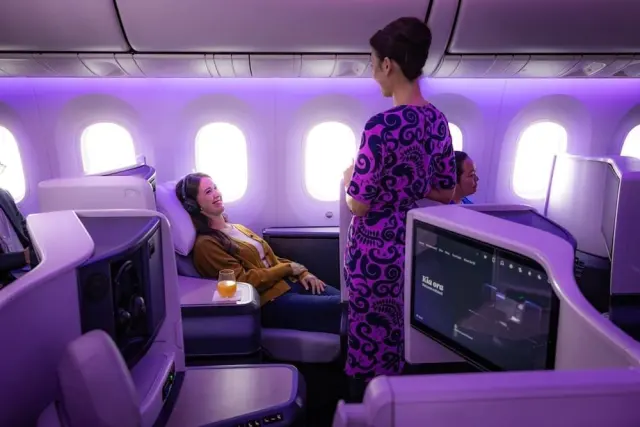
The cabin design tells you who Qantas is really chasing. A striking 41% of the 238 seats are premium — six first suites with a separate armchair and a genuine flat bed, 52 business suites with privacy doors and 2-metre beds, and a redesigned 40-seat premium economy in a roomy 2-4-2 layout with new winged headrests. First class is the real rarity here: Singapore Airlines' ultra-long-haul A350s skip it entirely.
Economy is where things get interesting. There are 140 seats in a 3-3-3 configuration, with 42 of them in Economy Plus, which adds priority boarding, better overhead bin access and a bit more legroom. Seat pitch was initially promised at a generous 33 inches, though Qantas has since softened that to "varies by section". Even so, analysts expect strong demand, partly because the cabin is deliberately small.
Qantas' answer to 20-plus hours in a budget seat is the Wellbeing Zone — a dedicated space at the back for economy and premium economy passengers to stretch, grab self-service drinks and snacks, and follow guided movement exercises on monitors. It's a genuinely novel idea; no other airline has built a purpose-designed movement area like it.
Why does this matter for travellers? If you can afford business or first, Project Sunrise is a no-brainer — a flat bed for a single straight-through flight beats a stopover. If you're flying economy on a budget, the maths is more personal: four saved hours and no transit hassle versus the chance to walk around mid-journey, or even turn a stopover in the Gulf or Singapore into a mini trip. From 2027, you'll get to make that choice for the first time.