Archaeologists in Gunma Prefecture, northwest of Tokyo, have pulled a rare piece of ancient Japan out of the mud: a hollow clay statue of a woman who may have been a shrine maiden, or miko, buried near a tomb around 1,500 years ago.
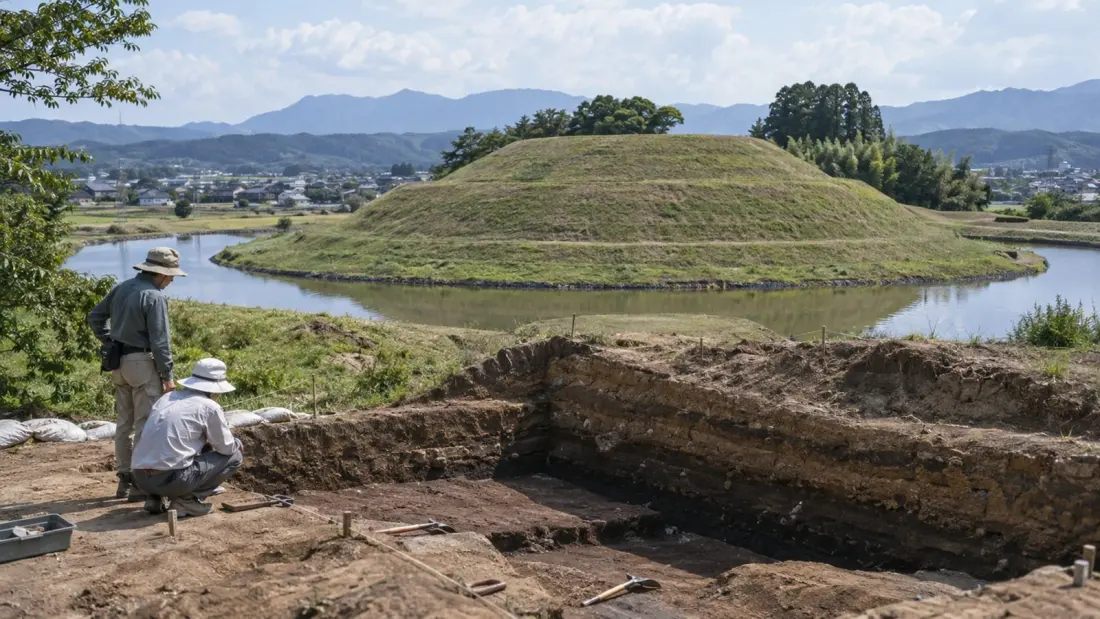
The figure is a haniwa — one of the clay sculptures placed on and around burial mounds during the Kofun period (roughly 300 to 710 A.D.), an era named for the giant tombs its elites left behind. This one surfaced at Nishikaminomiya in Isesaki, where teams have been digging since 2020 ahead of river works on the Tone River. Only the head and torso survive, but the statue stands about 40 centimetres tall and clearly was once larger. It was found in the moat of the site's biggest tomb, a circular mound some 45 metres across, apparently after slipping from its summit over the centuries.
Why do researchers think she was a priestess? The details. Her hair is styled in a shimada topknot linked to shrine maidens of the period. Both wrists carry clay bracelets tinted with red pigment, a red sash crosses her torso, and her left hand grips a rod-shaped object read as a ritual implement. Even her fingers are finely modelled — and notably, the sculptors lavished care on details no distant viewer could see, which officials say points to how much the community valued the figure. Excavations in 2026 also revealed a projecting section on the mound's southern side, suggesting the statue once stood near a boat-shaped sarcophagus found inside, and forcing a rethink of the monument's original shape.
Haniwa began appearing in the third century and spread across Japan as powerful clans raised enormous mounds for their dead. Many scholars believe the figures were thought to house souls, and since miko performed funeral rites and offered spiritual guidance in Shinto tradition, a priestess in clay could be rare evidence of women's religious authority in early Japan — a period usually known only through its monumental architecture.
For travellers, this is a good excuse to look beyond Tokyo and Kyoto. Gunma is under two hours from the capital by rail and is rich in Kofun-era sites, including tombs in the nearby city of Takasaki. One catch: reports disagree on where the statue will be displayed — some name an excavation museum in Shibukawa, others the Gunma Prefectural Museum of History in Takasaki — so check ahead before planning a visit. The dig at Nishikaminomiya has finished, and the statue is expected to stay on public display, where you can get close to that red sash and those carefully made hands.
Anyone fascinated by ancient Japan, archaeology or Shinto tradition will find this a compelling detour — a small clay figure that says as much about early Japanese beliefs as the colossal tombs she once guarded.
Story first reported by Colombia One.