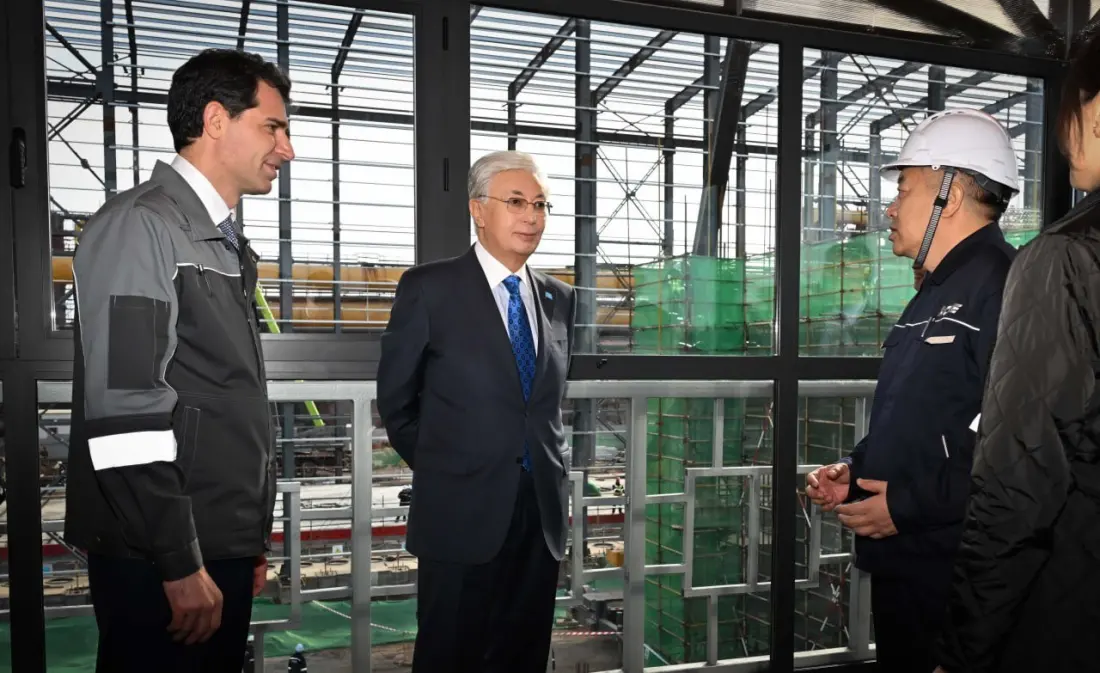
Kazakhstan is about to look very different for anyone planning a trip. The government has unveiled a nationwide infrastructure programme worth around 6.5 trillion tenge (US$14.3 billion) that runs through 2029, with 2027 officially designated the Year of Nationwide Large-Scale Construction. It goes by the name Khalyktyq Qurylys — the People's Construction program — and it covers just about everything a traveller touches: roads, airports, railway stations, hospitals, schools, sports venues, water systems and heating networks.
First Deputy Prime Minister Nurlan Nalybayev laid out the numbers at a government briefing in early November. Some 262 projects worth 1.5 trillion tenge (US$3.3 billion) have already been approved through the Infrastructure Development Fund, and 1.1 billion dollars has actually been disbursed — this isn't all paperwork. Healthcare takes the biggest social slice at about US$758 million, followed by transport with US$813 million across 48 road, bridge and reconstruction projects. Water supply and wastewater get US$626 million for 55 facilities, and 67 heating and gas projects receive US$300 million. A state commission including journalists, volunteers and public figures will monitor spending.
For visitors, the transport details matter most. Rail freight transit through the country rose 15% to 33.8 million tons, underscoring Kazakhstan's ambition to be Eurasia's logistics hub. Work is underway to modernise 37 automobile border crossings by the end of 2027 — good news if you're driving in from Kyrgyzstan, Uzbekistan or Russia. The Aral-Caspian highway, begun in August 2026 and due by the end of 2028, is designed to cut cargo times to three days, and the Kokshetau-Petropavlovsk road expansion starts in the first half of 2027. There are now 1,465 roadside service facilities along international corridors, with 221 new ones built in the past three years — fuel, hotels, shops and mechanics, which makes long-distance road trips far more viable than they used to be.
The construction boom is already visible in the numbers: building work hit US$17.2 billion in the first nine months of 2026, up 11.5%, and more than 20 million square metres of housing should be commissioned by year-end. Separate state fund projects include major hospitals in Astana, Turkistan and Petropavlovsk completing in 2027-28, plus a new 380-kilometre fibre-optic link to Azerbaijan that should improve connectivity for travellers and businesses alike.
Why care? Kazakhstan is one of the world's most underrated destinations — the futuristic capital of Astana, the Silk Road sites of Turkistan, the dramatic canyons and steppe of the interior — and chronic infrastructure gaps have long been the barrier. If even part of this programme lands, the country becomes dramatically easier to explore independently, with better roads, more service stops and improved public facilities outside the main cities. Anyone who's been putting off a trip until it got easier may find that window arriving around 2027-2029.