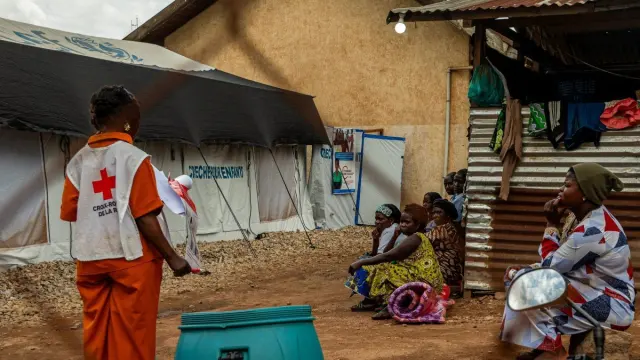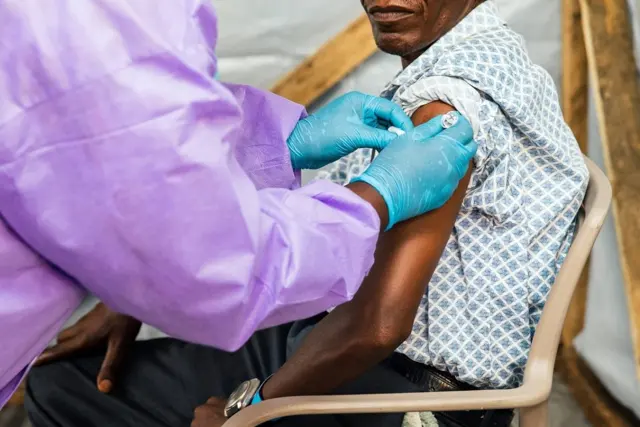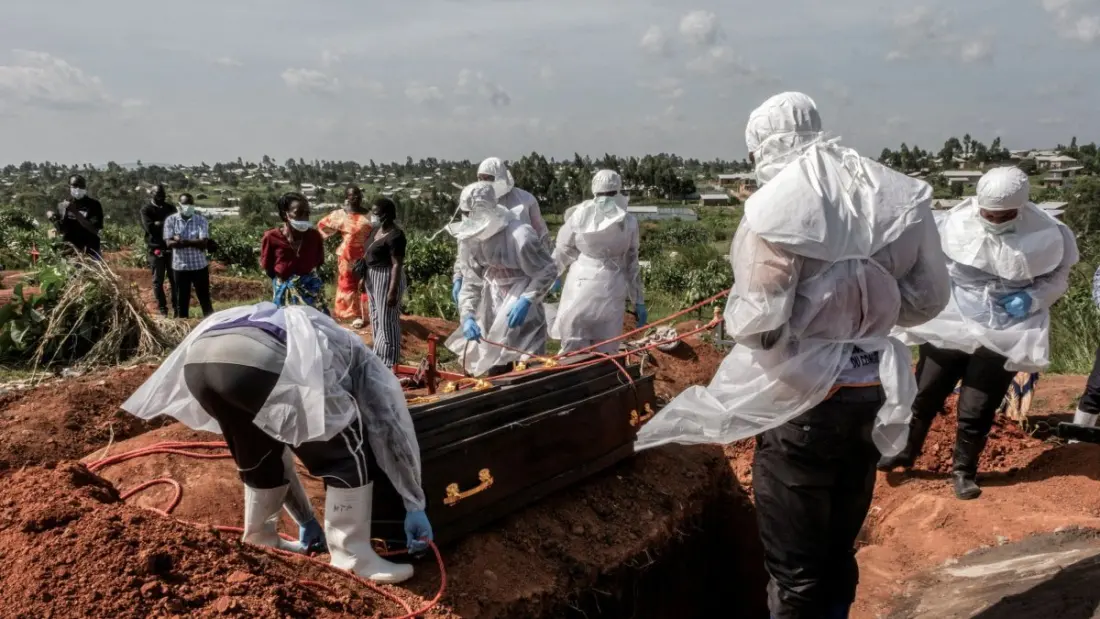
A Reuters investigation, using satellite imagery of cemeteries in eastern Democratic Republic of Congo, has found that far more people have been buried than official Ebola figures account for — pointing to a major undercount in an outbreak that has already killed more than 5,500 people nationwide.
The focus is Bunia, the epicentre of an epidemic formally declared on May 15, and Mongbwalu, a gold-mining town to the north where the outbreak is believed to have started. At Nyamurongo cemetery in Bunia, gravediggers went from a couple of burials a day at the start of the year to 5, 10, sometimes 15 daily once the virus arrived in late April. By July, roughly 600 people had been buried there — yet official figures recorded fewer than 200 Ebola deaths in the city at that point.
Comparing 2026 burial rates with the year before the epidemic, Reuters calculated excess deaths across three major cemeteries. By early November, Bunia had logged over 1,000 excess deaths against an official Ebola toll of 707 — more than 50% higher. In June the gap was starker: about 580 excess deaths, roughly seven times the reported figure. Mongbwalu showed a similar pattern, with excess burials 25% above the official count for the town and surrounding villages by August. The analysis likely understates the true toll, since smaller burial grounds were excluded.
Part of the story is a rare enemy: this outbreak involves Bundibugyo virus, an Ebola strain with no approved treatment or vaccine. Early samples were tested for the wrong species, and by the time the outbreak was confirmed in mid-May, Mongbwalu had already documented 100 unexplained deaths over six weeks. Symptoms initially looked like malaria or typhoid. Fear compounded the problem — some residents avoided hospitals after watching patients die there, and others turned to traditional healers. Migrant gold miners, often far from family, died unregistered. Not every excess death is directly attributable to Ebola; some people likely died of other illnesses after avoiding clinics.
The wider numbers are sobering. The epidemic has infected more than 11,500 people. Data from Africa CDC on November 5 showed it still uncontrolled six months in: over 60% of deaths occurring outside health facilities and fewer than 15% of new cases linked to known contacts. The WHO had warned in July that the outbreak could be two to four times larger than the data suggested — the new analysis broadly supports that.
For travellers, the takeaway is straightforward: eastern Congo — Ituri province and the neighbouring North and South Kivu regions — is not a place to visit while this epidemic is active. The WHO advises against non-essential travel to affected areas, and health infrastructure there is under severe strain. Anyone with essential reasons to travel should check current government advisories, confirm vaccination or entry health requirements, and avoid contact with sick people and burial ceremonies entirely. It's also a reminder of how health reporting in remote, conflict-affected regions can lag reality, so official reassurances deserve scrutiny.
The story was reported by Reuters and published by Daily Sabah Travel.