Spain's best travel advice might be the local saying that what grows together goes together. Order by region and the food-and-wine pairing takes care of itself: zesty Albariño alongside Galician octopus, salty Manzanilla with fried squid in Jerez. A new roundup from Matador Network makes the case for building an entire Spanish itinerary around seven distinct wine cultures, and several of them sit far outside the familiar Rioja-and-Ribera del Duero circuit.
Start in Basque Country, where the local pour is Txakoli, a dry, lightly fizzy white built on Hondarrabi Zuri grapes and poured from a porrón, a goose-necked carafe passed around the table. San Sebastián makes a handsome gateway, and the town of Getaria throws a Txakoli festival every January to mark the new vintage.
In Andalucía, the Sherry Triangle around Jerez de la Frontera trades in fortified wines whose history stretches back to the Phoenicians. Palomino grapes grown in white chalky albariza soil become everything from bone-dry finos to richly sweet styles, best sipped from tulip-shaped copitas in a tabanco, the city's distinctive old-school tavern. Spring's Feria del Caballo bundles horses, flamenco and Sherry into one party.
Galicia earns two entries. The misty Rías Baixas coast produces fragrant, citrusy Albariño that matches the local shellfish pulled from the rías themselves — Cambados celebrates it each August with the Festa do Albariño. Deeper inland, the canyon country of Ribeira Sacra is one of Europe's most dramatic wine settings: hand-built stone terraces above the Sil and Miño rivers yield fresh, perfumed Mencía reds. Around Palm Sunday, the village of Sober hosts the Feira do Viño de Amandi.
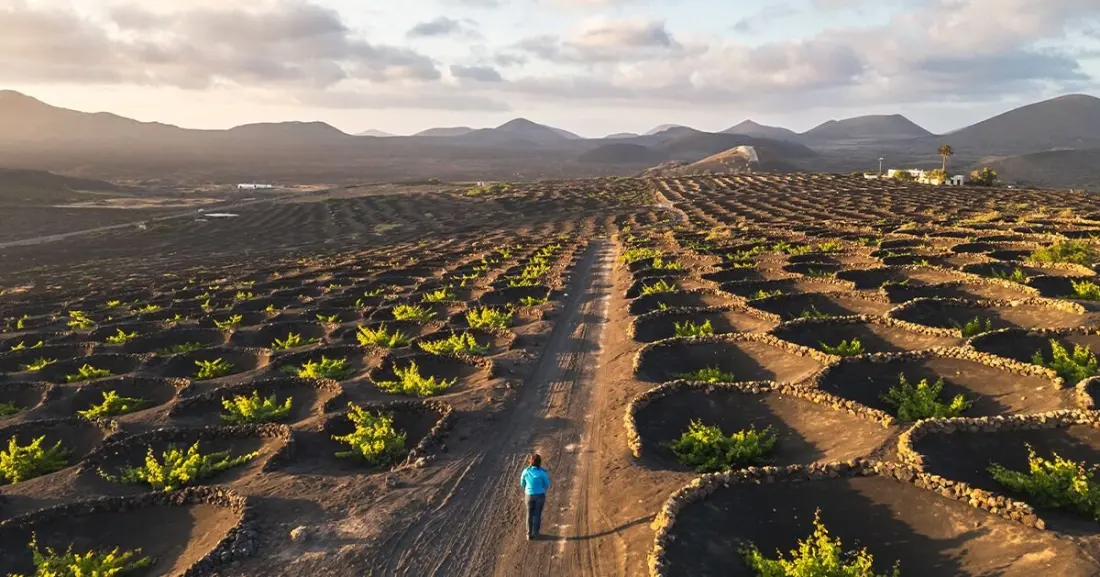
For sheer strangeness, nothing beats Lanzarote in the Canary Islands, where vines grow in individual hollows dug into black volcanic ash and shielded by curved stone walls after the eruptions of the 1730s. The grape is Malvasía Volcánica, and the harvest in La Geria lands in August.
Catalonia's Penedès, under an hour from Barcelona, remains the home of Cava, traditionally made from Xarel·lo, Macabeo and Parellada and aged on lees for everything from fresh bubbly to nutty, complex bottles. Its Harvest Fest in September comes with vineyard picnics. Finally, on the sun-baked plateau of Rueda near Valladolid, Verdejo is picked at night — summer days top 95°F — to preserve the grape's citrus-and-fennel snap. Rueda's Fiesta de la Vendimia each October features traditional grape treading.
Who's this for? Travellers who want their holidays anchored in something local rather than a checklist of sights. Each region pairs wine with a distinct food culture, festival calendar and scenery, and most are reachable by train or short drive from major cities like Barcelona, Bilbao and Seville. Pick one region and go deep — or string a few together for a proper tour of Spanish terroir.