Next time you're planespotting or listening in on a scanner, keep an ear out: not every airline talks to air traffic control under its own name. Callsigns are the word pilots and controllers use to identify a flight, usually an airline identifier plus the flight number. American, Delta and United just use their names. Others get creative, and the ICAO has to sign off on each one. The rules are practical: ideally three syllables or fewer, easy to pronounce across languages, and distinctive enough that two airlines can't sound alike on a busy frequency.
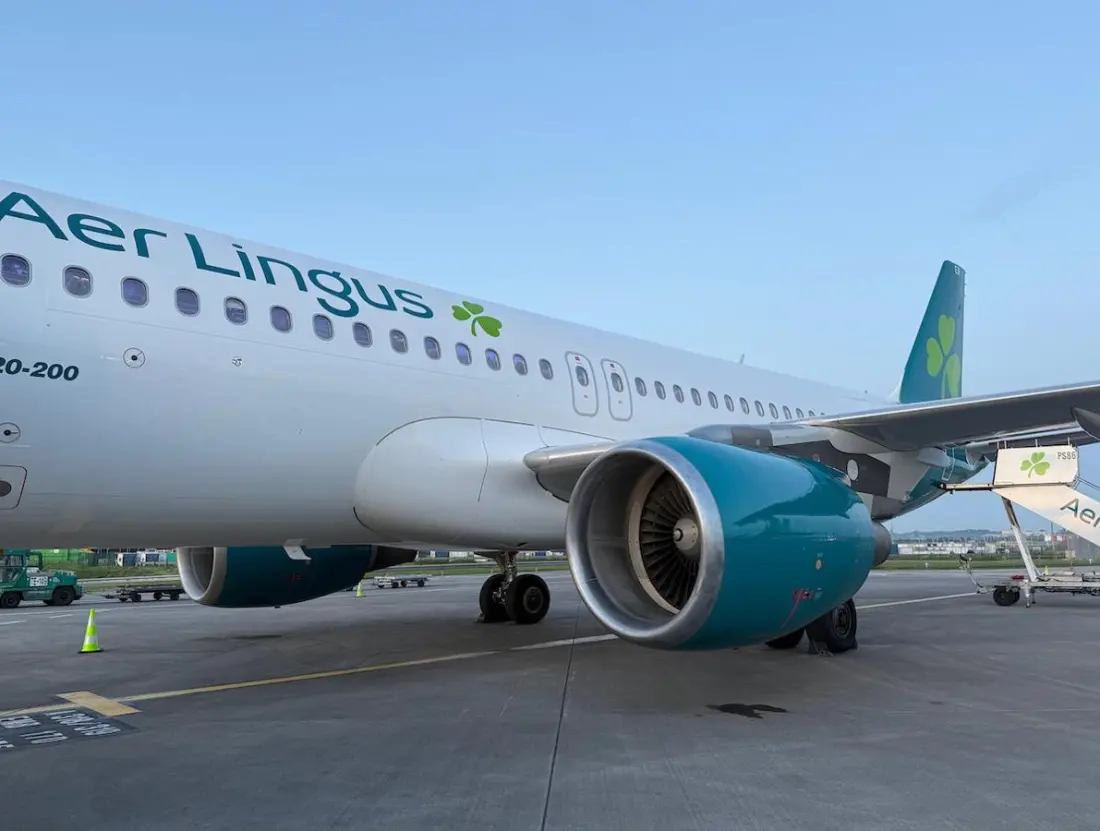
Some of the best-known examples blend branding with necessity. Aer Lingus uses "Shamrock," nodding to Ireland's national symbol that also decorates its tailfins. British Airways' "Speedbird" might be the most famous of all — it dates to Imperial Airways' stylised bird logo and has been in use since BA's 1974 formation. It also solves a problem: "British Airways" is too long and "British" too vague (British Midland used "Midland" for the same reason).
A few US regional carriers hide surprisingly cool history. Republic Airways, which flies for the major airlines' regional brands, uses "Brickyard" — a nod to its Indianapolis home and the Indianapolis Motor Speedway, once paved with three million bricks. PSA Airlines goes by "Blue Streak," a throwback to the 1980s, when its predecessor Jetstream International painted a blue stripe down white fuselages to match Piedmont Airlines' livery. Given today's planes have no such stripe, the name occasionally confuses listeners.
Politics and namesakes shaped others. Taiwan's China Airlines picked "Dynasty" partly to stand apart from the many airlines with "China" in the name, and it leaned into the branding with its Dynasty Flyer loyalty programme. Fellow Taiwanese carrier Starlux ended up as "Starwalker" simply because a small charter outfit, Comlux Aruba, had already claimed "Starlux" — and reportedly because founder Chang Kuo-wei, who sometimes captains the airline's flights himself, is a big Star Wars fan.
Elsewhere, South African Airways chose "Springbok," the national animal, after deciding "South African" was too long — and it had used "Springbok Service" branding for flagship long-haul flights back in the 1950s. Atlas Air, named for the titan of Greek mythology, uses "Giant" (fitting for the world's largest Boeing 747 operator). Cargo carrier Kalitta Air honours founder Conrad "Connie" Kalitta, who started out in 1967 as Connie Kalitta Services. And the most literal of the lot: European Air Transport, a DHL subsidiary, uses "Postman."
Why care? It's a free layer of entertainment on any flight. Listen to the captain's radio chatter during boarding or track flights on an app, and suddenly "Speedbird 117 heavy" or "Brickyard 3241" means something. It's also a reminder of how much history airlines compress into a single word — logos, founders, speedways and national symbols, all squeezed into three syllables so controllers never miss a beat. Aviation nerds, next time you're at an airport viewing deck, this is your party trick.