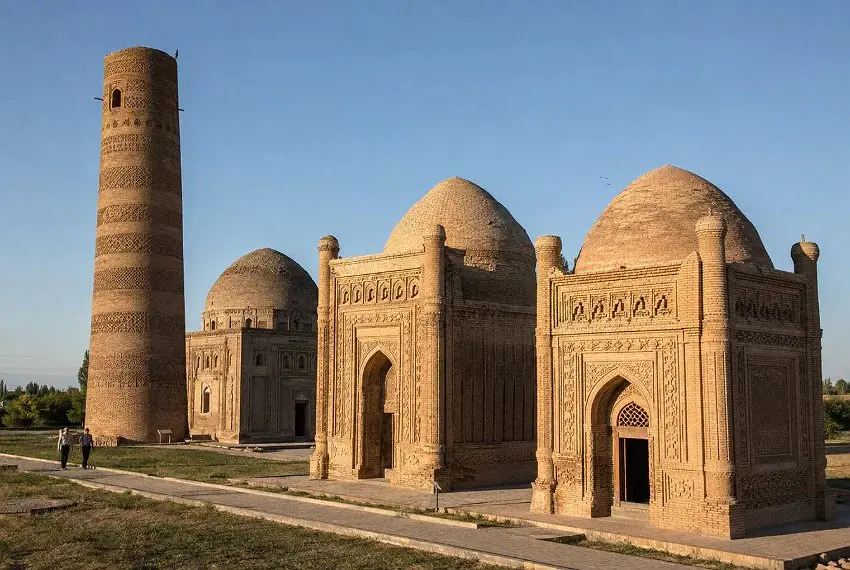
Kyrgyzstan has put forward six historical and cultural monuments in the country's south for inclusion on the UNESCO World Heritage List, all under a joint nomination called "Silk Roads: Fergana-Syr Darya Corridor". The announcement came from Chynarbek Zholdoshov, who heads the Historical and Cultural Heritage Department at the Ministry of Culture.
The sites span three regions — Jalal-Abad, Osh and Batken — and all sit along the ancient trade routes of the Great Silk Road. The list covers a wide sweep of history: the Kulbeskhan archaeological site in Chatkal district, the Safid-Bulan (Shakh-Fazil) complex in Ala-Buka district, the Uzgen archaeological and architectural complex, the Shoro-Bashat site near Osh, the Airymach-Too (Surottuu-Tash) petroglyphs in Kara-Suu district, and the Kara-Bulak burial complex in Batken.
This isn't a quick project. Preparation of the transnational nomination started back in 2015, and it's a genuinely regional effort: Kazakhstan, Kyrgyzstan, Tajikistan and Uzbekistan are all involved, with the goal of jointly recognising Silk Road sites stretching from Kazakhstan across the Fergana Valley.
For travellers, the spotlight is useful. Southern Kyrgyzstan gets far less attention than the trekking hubs around Issyk-Kul and Karakol, yet it holds some of Central Asia's most significant architecture. The Uzgen complex, with its three 11th-12th century minarets and mausoleums of the Karakhanid dynasty, is arguably the standout and an easy add-on to a trip to Osh. The Shakh-Fazil complex at Safid-Bulan combines pre-Islamic and early Islamic heritage in one atmospheric spot. The petroglyphs at Airymach-Too offer rock art that predates the Silk Road caravans entirely.
UNESCO listing, if granted, typically brings better signage, protection and visitor infrastructure — and more reason for tour operators to build these places into itineraries. Until then, the sites remain quietly rewarding to visit, often with few or no other tourists around.
If you're planning a Fergana Valley loop crossing between Kyrgyzstan, Uzbekistan and Tajikistan, these monuments slot neatly into the route — and visiting them now means seeing them before any World Heritage badge changes the picture.