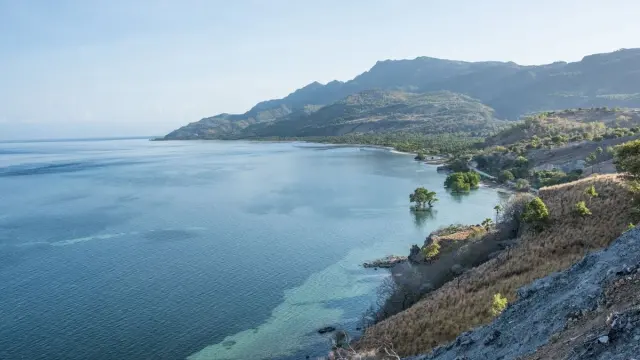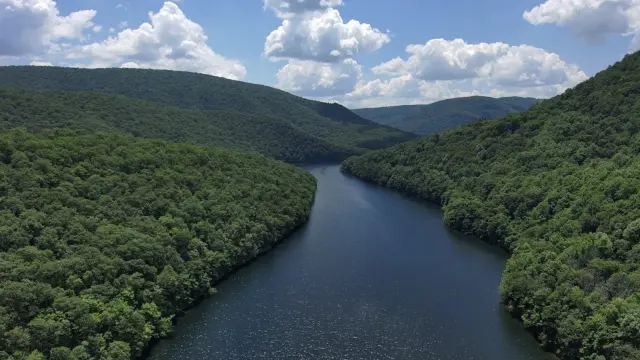
The trip to Yorkín starts with a boat ride up the Río Yorkín, near where Costa Rica fades into Panama along a riverbank rather than a checkpoint. There's no lobby, no wristband. Visitors to this Bribri community in Talamanca might grind cacao, walk a forest trail, and eat a meal grown a few hundred metres from the table. That's community tourism at its most concrete — travel shaped by local people, not just placed next to them.
In its strongest form, community tourism in Costa Rica means the destination's residents own or direct the experience: families, cooperatives, Indigenous communities, women-led enterprises and conservation groups deciding what to share and where the money lands. The formats vary widely — homestays, small eco-lodges, farm afternoons, cooking sessions, birdwatching, community-managed reserves. Some are polished; others are seasonal and gloriously unhurried.
The stakes are real. Costa Rica's national parks and surf breaks draw big investment, but small farming towns and remote regions often sit outside the money trail. Locally led tourism keeps spending circulating nearby — helping families keep farms viable, giving young people a reason to stay, and giving communities a financial stake in protecting forest and wetlands. A village earning steady income from a birding route or a turtle project has every incentive to keep that place healthy.
Where to find it: Talamanca's Bribri and Cabécar territories offer cacao, medicinal plants, river travel and a worldview tied closely to the rainforest. The northern wetlands near Caño Negro trade adrenaline for herons, coffee and farm scenery. On the Central Pacific, communities around Los Campesinos run stays built around suspension bridges, waterfalls and forest trails. Family farms and agricultural cooperatives across the country open their doors to show how coffee, sugarcane, cheese and tropical fruit get made.
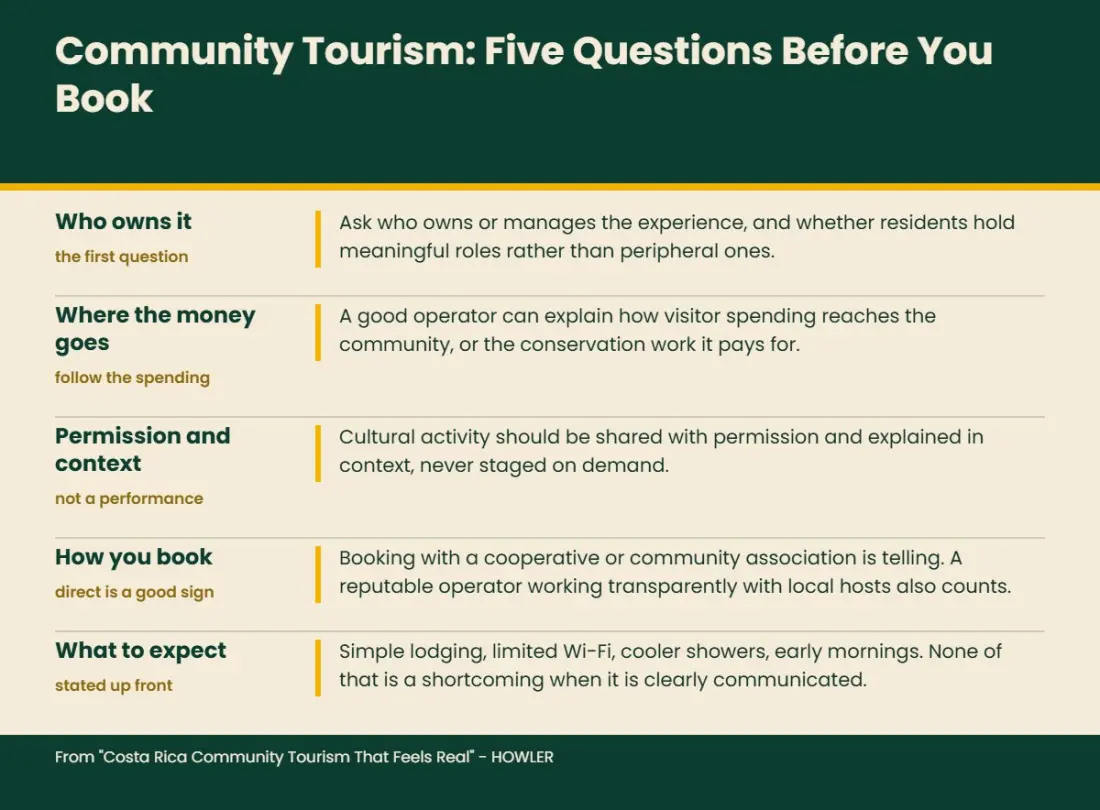
How to book smart: the phrase gets used loosely, so ask who owns the operation, whether residents hold meaningful roles, and how visitor spending supports the community. Booking directly with an association or cooperative is a good sign, though websites may be basic. Operators certified under the Costa Rican Tourism Board's CST sustainability programme have at least been assessed against published criteria. Expect simple lodging — patchy Wi-Fi, cool showers, early mornings, meals based on what's fresh.
Once there, be the guest people hope will return. Learn a little Spanish, ask before photographing people or ceremonies, and treat culture as something offered rather than collected. Overnight stays beat rushed day trips, both for the conversation and for the hosts' bottom line. In remote spots, patience is practical: river transport runs on local time, and the best moments are rarely the scheduled ones.
For a first visit, it works well as a counterweight — a few days of Manuel Antonio or a Caribbean beach, paired with an inland community stay or a cacao experience in Talamanca. The contrast makes both halves of the trip better.