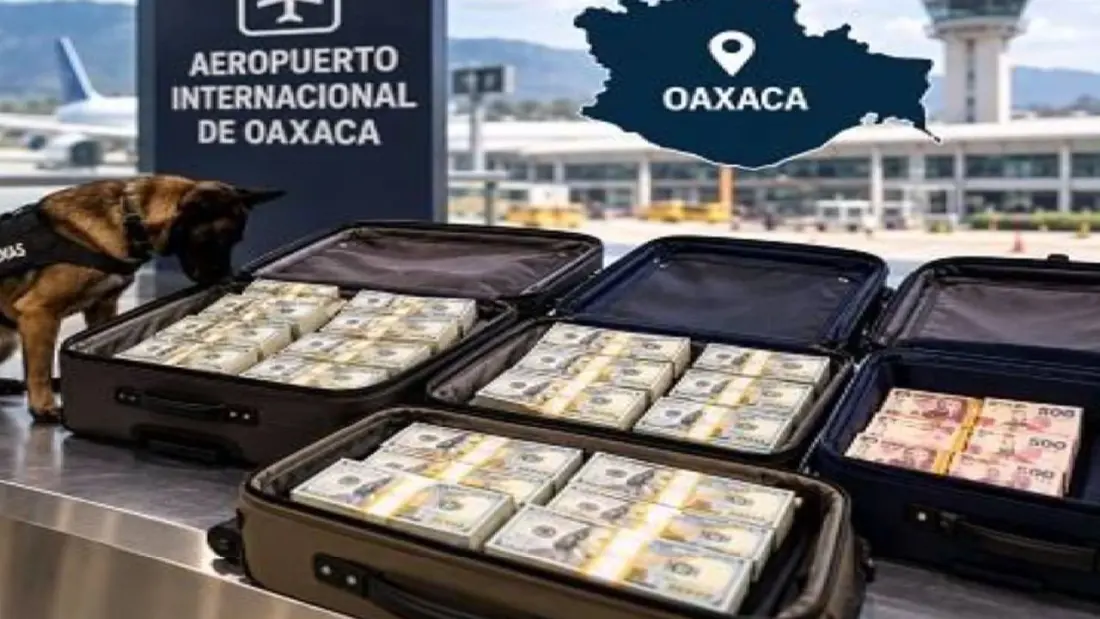
A passenger flying in from Dallas learned the hard way that Mexico's cash declaration rules are enforced. On arrival at Oaxaca International Airport, a customs dog named Cinta flagged his luggage during routine screening — and a physical search turned up $365,865 US dollars plus 5,900 Mexican pesos, packed in bundles and hidden across four suitcases and a backpack.
The traveller had told officials he had nothing to declare. After the dog's alert, staff from the National Customs Agency of Mexico (ANAM) opened the bags and found the packages of bills. National Guard personnel were called in to count and seize the undeclared cash, and the unnamed man was handed over — along with the money — to the Attorney General's Office (FGR) for prosecution.
For anyone planning a trip to Mexico, the practical point is simple. If you bring in more than the equivalent of 10,000 US dollars in cash (or in monetary instruments) per person, you must declare it on entry. Mexico actually allows you to declare and move larger amounts, provided you pay the relevant tax and complete the paperwork. Skipping the declaration is a criminal offence, and this case shows how it usually gets caught: airports run routine canine checks, and dogs like Cinta are trained specifically to pick out large quantities of currency.
Oaxaca International has seen growing international service in recent years, including flights from Texas, as the city has become one of Mexico's most popular destinations for its food scene, mezcal culture and nearby archaeological sites. That means more first-time visitors passing through customs who may not be familiar with the rules — especially those combining a holiday with a bit of informal business.
The honest takeaway for ordinary travellers is reassuring rather than alarming. Nobody carrying a normal holiday budget of a few thousand dollars in cash is going to attract this kind of attention. But the story is a good reminder to fill in customs declarations accurately, keep receipts for expensive purchases, and never carry someone else's luggage or money across a border — the person holding the bag is the person answering questions. In this case, that person is now in custody while prosecutors decide what happens next, and the $365,865 stays with the Mexican authorities.