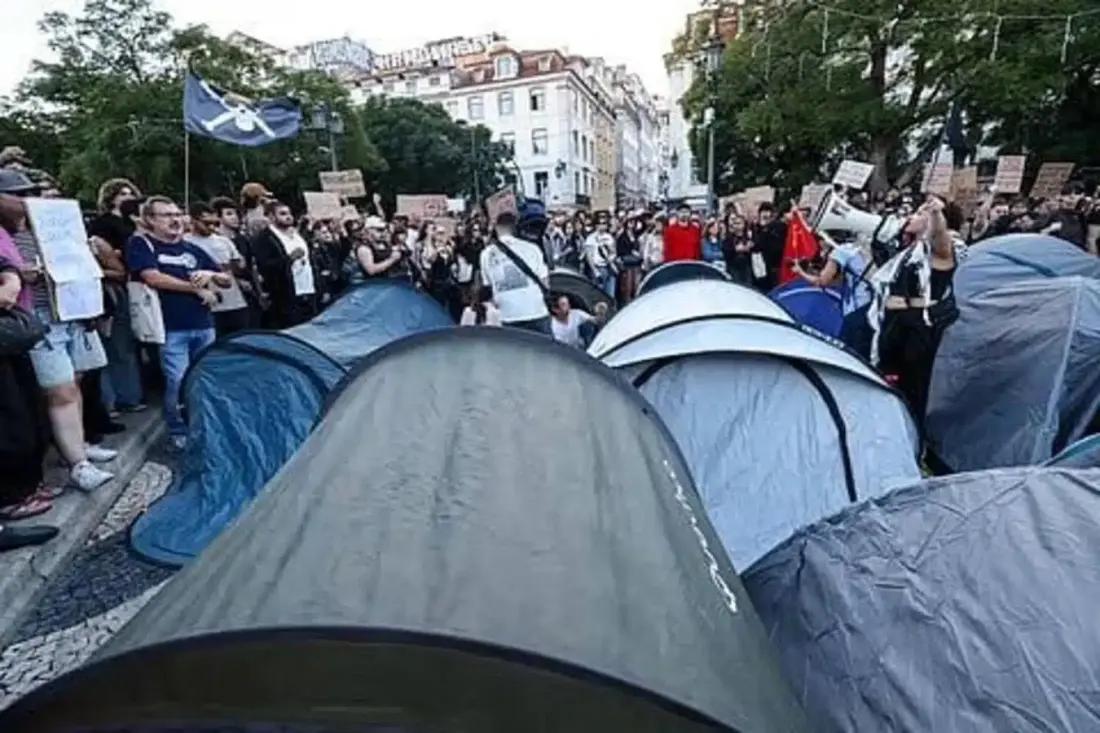
Travellers heading to two of Portugal's most-visited city centres may find their evening strolls interrupted. The 'right to housing' movement, which has been camped out in prominent public squares in Lisbon and Porto, voted on Thursday evening to resume its tent encampments — despite a government warning that police will act to stop them.
The votes came at the movement's Popular Assemblies, held separately in each city. Protesters in Lisbon's Praça de D. Pedro IV — the square better known to most visitors as Rossio, right in the heart of the tourist district — and in Porto's Praça D. João 1, a short walk from Aliados and the city's main shopping streets, both backed a return to camping. The Porto group had announced a two-day pause earlier in the week, while Lisbon's encampment had left the decision to its evening assembly.
The government's response is the wildcard. Minister of Internal Administration Luís Neves said earlier in the day that the PSP, Portugal's public security police, would act "preemptively" at housing demonstrations that refuse orders to move on after 00:30. Asked how officers would handle gatherings appearing in multiple cities, he declined to give specifics, saying only that preemption means not allowing situations to escalate, and stressing that nobody in government wants to see violence. Police, he added, have full operational autonomy to act as they see fit to anticipate events.
For Thursday night at least, the mood in the squares was more festival than confrontation. Organisers had lined up dinner, live music and film screenings through the evening. What happens once tents start going back up is the question everyone — including the camera crews filming live — is waiting to answer.
For visitors, the practical takeaway is modest but real. Rossio and Praça D. João 1 are both high-traffic spots for tourists, ringed by hotels, cafés and metro stops, and both sit on main parade and event routes. If you're in either city over the coming days, expect a visible police presence around these squares, the possibility of tents reappearing, and the chance that access to parts of a square is temporarily controlled. Protests to date have been peaceful, but if you'd rather steer clear, check local news or ask your hotel before heading out in the evening — and consider that metro stations and surrounding streets can get busier than usual when assemblies are in session.