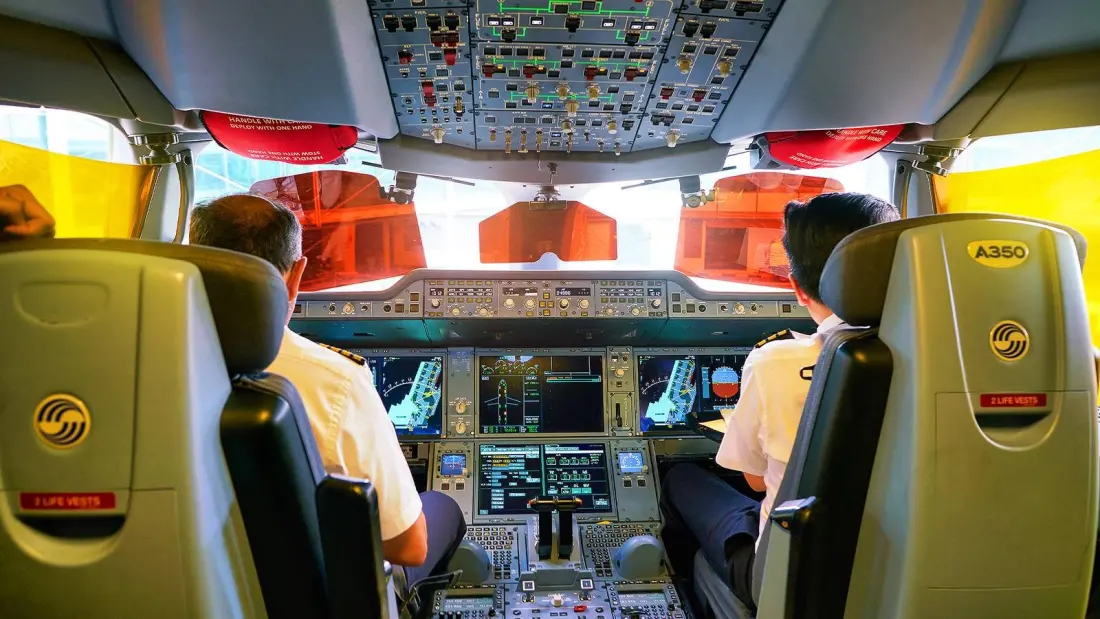
Four pilots, not two. That's the rule of thumb on the longest commercial flights on the planet, and it's not just a formality. US regulations (Part 117) cap a pilot's active flying at roughly eight to nine hours per duty period, and any mission over 17 hours requires a four-pilot crew on board. On those flights, the two relief pilots are actually in the flight deck jump seats during takeoff — the most demanding phase — reading checklists, scanning instruments, and ready to step in if anything goes wrong.
The logic is physiological as much as legal. A widebody on a 17- or 18-hour mission is essentially a fuel depot moving just under the speed of sound, too heavy to land safely in the minutes after takeoff and slow to respond to control inputs. Fatigue, meanwhile, behaves like intoxication and undermines the very ability to notice you're impaired. That's why crews are trained to monitor each other — a junior first officer is empowered to challenge a captain over fatigue-related errors without career consequences.
Crew Resource Management on ultra-long-haul routes is a different discipline entirely from short-haul flying. The hazard isn't adrenaline — it's boredom during a 14-hour cruise over open ocean. Crews fight cognitive drift with fuel-burn checks, alternate-route cross-checks, and 'what-if' diversion discussions, and a 20-30 minute controlled nap is permitted before scheduled bunk rest. Planning starts days in advance too: 48 to 72 hours of local rest is required before and after each ultra-long mission.
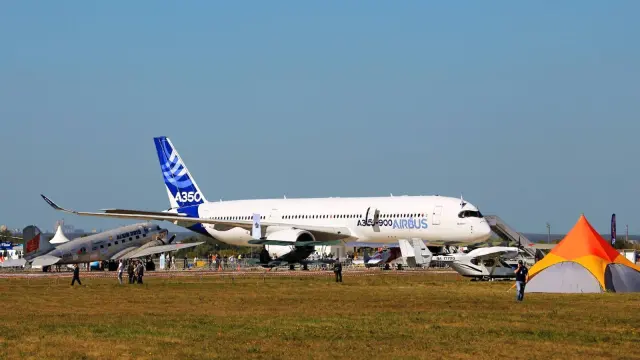
The real-world test case is Qantas' Project Sunrise, set to launch from Sydney to New York JFK and London Heathrow. At 20 to 22 hours each way, it will eclipse Singapore Airlines' JFK-Singapore route (about 18.5 hours), currently the world's longest scheduled flight, by roughly 1,000 miles. The bespoke Airbus A350-1000ULR carries just 238 seats instead of the usual 350-410, with a dedicated crew rest compartment in the roof crown featuring two full-length flat bunks, warm lighting for sleep and blue-wavelength light to help pilots wake.
Crucially, Qantas is staffing the route with two captains and two experienced first officers — no junior relief pilots — rotating in clean team shifts so each pilot gets two proper sleep blocks. Four pilots beat three not just on safety but on sleep quality: a three-pilot rotation produces fragmented bunk time that breaks up REM cycles, while two fixed teams get deep, restorative rest. Well-rested crews also fly smarter, chasing jet streams and altitude changes to save fuel rather than defaulting to rigid, low-effort flight paths.
For travellers, this is quietly reassuring: if you're booking one of these marathon routes, the crew looking after you is regulated, rested and cross-checked to a degree few passengers ever see. Expect premium comfort and fewer seats when Project Sunrise tickets go on sale.