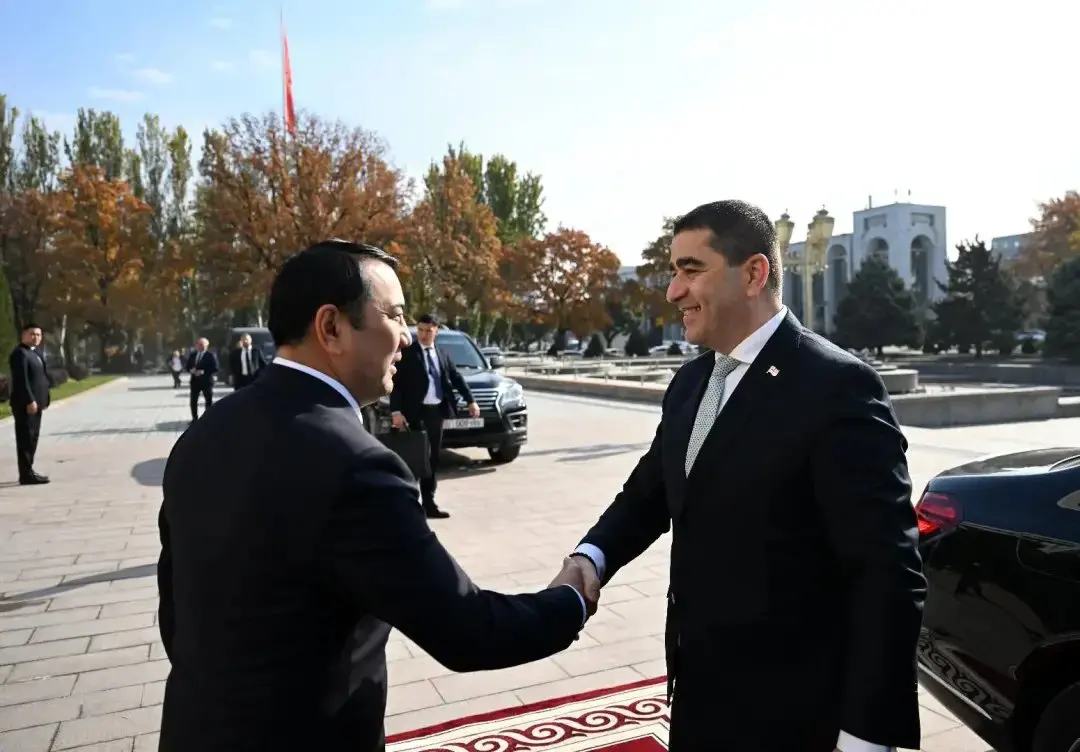
Talks in Bishkek could soon make it simpler for Kyrgyz citizens to visit Georgia. Georgian Parliament Speaker Shalva Papuashvili travelled to Kyrgyzstan on an official visit and met his counterpart, Marlen Mamataliev, head of Kyrgyzstan's Zhogorku Kenesh. Notably, it was the first time the two countries' parliamentary speakers had ever sat down together.
Visas were on the agenda, with both sides addressing the possibility of easing entry requirements given a growing number of Kyrgyz citizens wanting to visit Georgia. Nothing was signed, but the fact it featured in a first-ever speaker-level meeting suggests momentum. For travellers, that could eventually mean smoother trips linking Central Asia's mountains with the Caucasus.
The wider conversation went well beyond borders. The two speakers flagged cooperation in transit, logistics and investment — Papuashvili even floated transport corridors that would revive the ancient Silk Road route between the two countries. Trade turnover was described as falling short of its potential, with energy, agriculture, pharmaceuticals and joint investment projects named as priority areas.
There were warmer touches too. Mamataliev thanked Georgia for naming a park in Tbilisi after Chingiz Aitmatov, Kyrgyzstan's most celebrated writer, and pointed to Georgian athletes taking part in the 6th World Nomad Games. He also proposed holding Culture Days of both countries and building interregional ties, while Papuashvili noted genuine Georgian interest in Kyrgyzstan's tourism offering and invited Mamataliev to visit Tbilisi next.
Why should a traveller care? Two things. First, any visa easing lowers friction on an unusual but rewarding route: fly into Tbilisi, then continue overland or by air to Bishkek for trekking around Issyk-Kul and the Tian Shan. Second, both governments are explicitly talking up tourism as a shared interest, which historically tends to lead to new flights, better infrastructure and easier paperwork down the line. If the Silk Road corridor talk turns into real transport projects, overland travel between the Caucasus and Central Asia gets significantly more practical. Watch this space — for now it's diplomacy, but it's diplomacy aimed squarely at moving people and goods between the two.