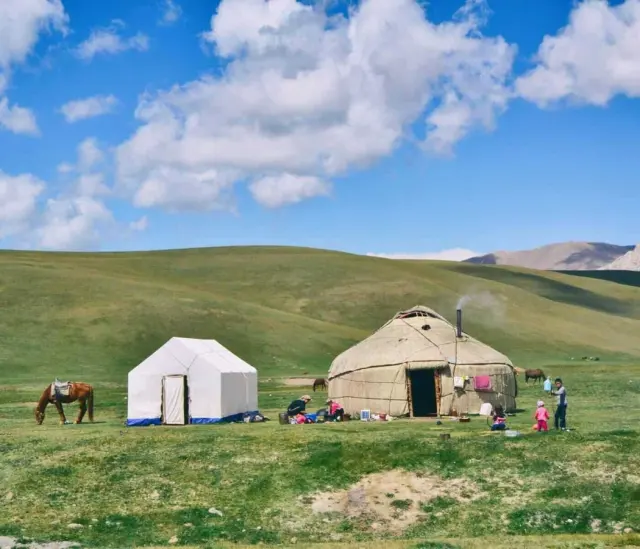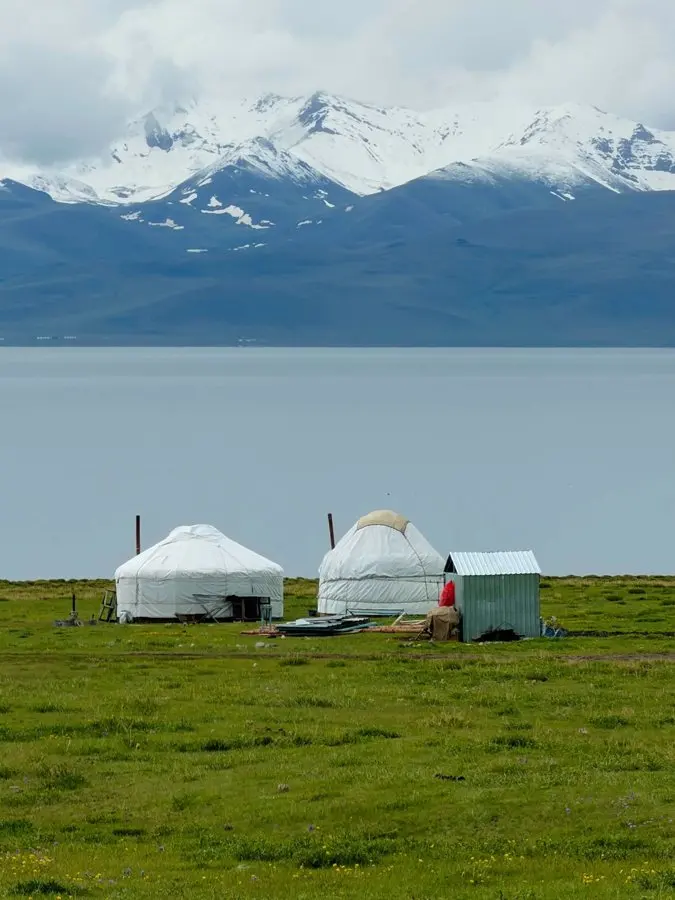
At 3,016 metres in Kyrgyzstan's Naryn region, Song-Kul is an alpine lake where tourism hasn't taken over — because the season barely lasts. Each June, herding families ride up to the surrounding jailoo (high summer pastures) with their horses, sheep and cattle, pitch their felt-covered yurts, and stay until September, when the weather pushes everyone back down to lower ground. For a few short months, travellers can be part of it.
Song-Kul is the country's second-largest lake after Issyk-Kul, and it's protected on two fronts: it sits within the Karatal-Japyryk State Nature Reserve and holds Ramsar status as a wetland of international importance. Migratory and breeding birds share the grasslands with the livestock that local families depend on — this is a working landscape, not a theme park.
The draw for visitors is the chance to stay in a traditional yurt, the collapsible wooden-frame dwelling covered in felt that families have used for generations. Inside, woven textiles and bright felt carpets make the simple structure surprisingly cosy. Some host families cook traditional meals and pour kymyz — fermented mare's milk, the classic drink of Central Asian pastoral life. One night usually costs a modest sum paid directly to the family, and horseback treks to the lake can be arranged from the nearby village of Kochkor.
Don't expect infrastructure. There are no hotels or promenades here, roads in are rough mountain tracks, and even in July the nights bite. Pack warm layers and waterproofs, acclimatise for the altitude, and confirm road conditions and yurt availability before you go.
Because the ecosystem and the herders' livelihoods are intertwined, how you travel matters. Keep your distance from wildlife and livestock, ask before photographing people, and carry your rubbish out with you.
Why it matters: if you want culture rather than just scenery, Song-Kul delivers something increasingly rare — a living tradition of transhumance you can sleep inside of, rather than observe from a distance. It suits travellers comfortable with basic facilities, cold nights and long drives, and pairs naturally with Kyrgyzstan's better-known trekking hubs. Go in the June-to-September window or you'll find empty pastures and no yurt camps at all.